14.1 Balanced Diet and Calorific Value
Definition (No Flashcards)
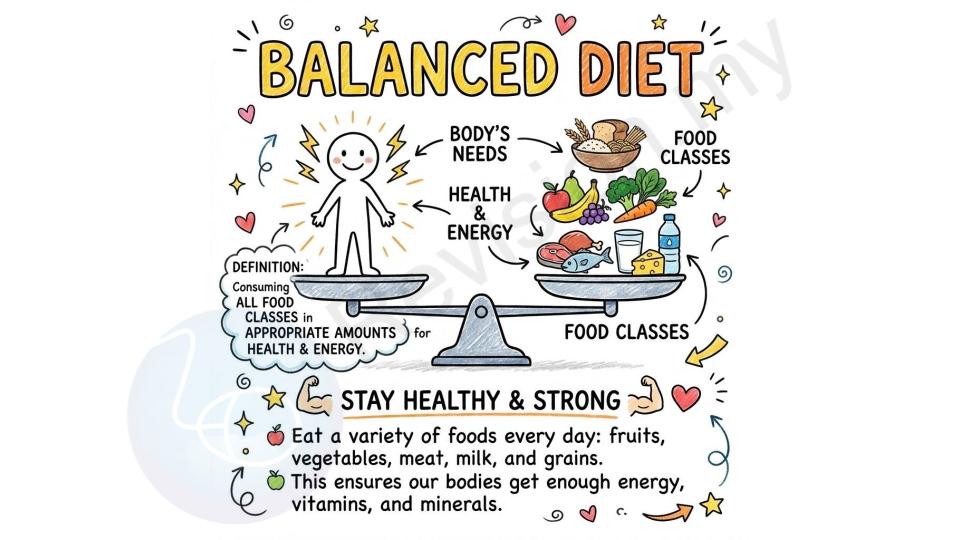
Balanced Diet: Consuming all food classes in appropriate amounts to meet the body’s needs for health and energy. This means eating a variety of foods so that the body gets all the nutrients it needs to stay healthy and strong. To stay healthy, we should eat different types of food every day, like fruits, vegetables, meat, milk, and grains, so our bodies get enough energy, vitamins, and minerals.
Importance of a Balanced Diet
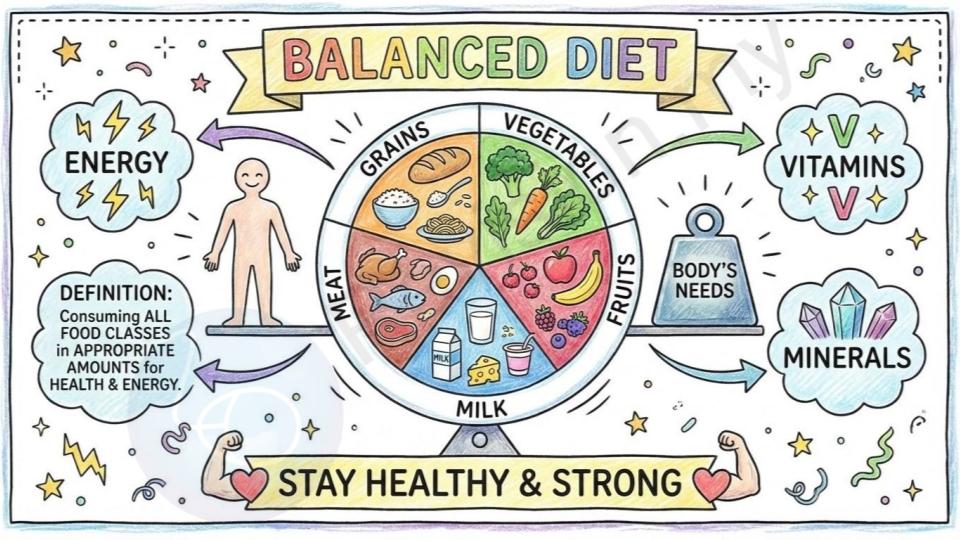
Energy: Provides the energy we need for daily activities like walking, studying, and playing. Food gives us the fuel our body needs to move around and think clearly. If we don’t get enough energy from food, we might feel very tired, find it hard to concentrate on schoolwork, and not have the energy to play or exercise. This shows why it is so important to have enough healthy food every day.
Growth and Repair: A balanced diet supports the growth of our body and the repair of our tissues. It gives us the building blocks to make new cells, which helps our body grow taller and stronger. It also helps to heal injuries, like cuts, bruises, or broken bones, by giving our body the materials it needs to fix itself.
Metabolism: A balanced diet is essential for metabolic processes, which are the activities that happen in our body to keep us alive, like digesting food, breathing, and keeping our heart beating. The food we eat provides the nutrients that our body turns into energy. This energy helps our heart, lungs, and other organs work properly, so we can stay healthy and active.
Factors Influencing Individual Calorie Needs
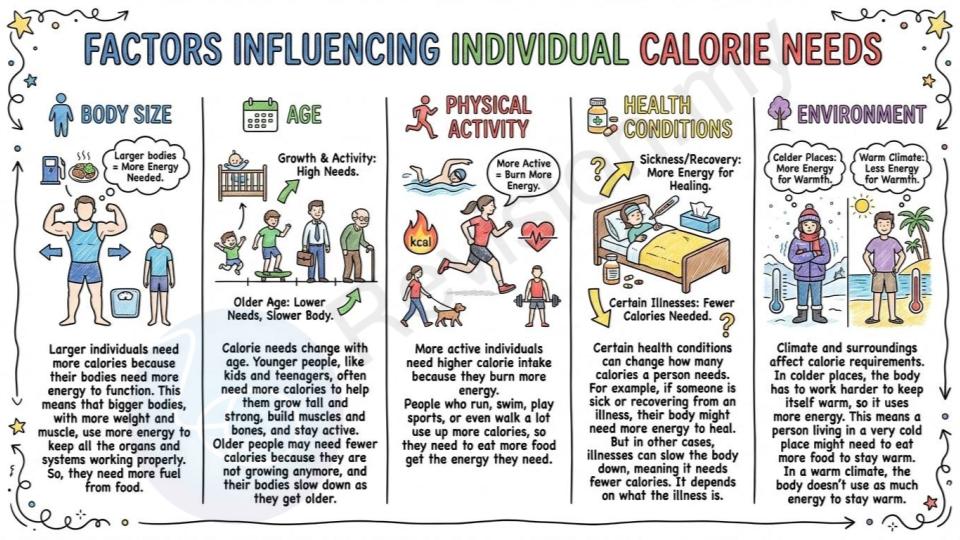
Body Size: Larger individuals need more calories because their bodies need more energy to function. This means that bigger bodies, with more weight and muscle, use more energy to keep all the organs and systems working properly. So, they need more fuel from food.
Age: Calorie needs change with age. Younger people, like kids and teenagers, often need more calories to help them grow tall and strong, build muscles and bones, and stay active. Older people may need fewer calories because they are not growing anymore, and their bodies slow down as they get older.
Physical Activity: More active individuals need higher calorie intake because they burn more energy. People who run, swim, play sports, or even walk a lot use up more calories, so they need to eat more food to get the energy they need.
Health Conditions: Certain health conditions can change how many calories a person needs. For example, if someone is sick or recovering from an illness, their body might need more energy to heal. But in other cases, illnesses can slow the body down, meaning it needs fewer calories. It depends on what the illness is.
Environment: Climate and surroundings affect calorie requirements. In colder places, the body has to work harder to keep itself warm, so it uses more energy. This means a person living in a very cold place might need to eat more food to stay warm. In a warm climate, the body doesn’t use as much energy to stay warm.
Calorific Value
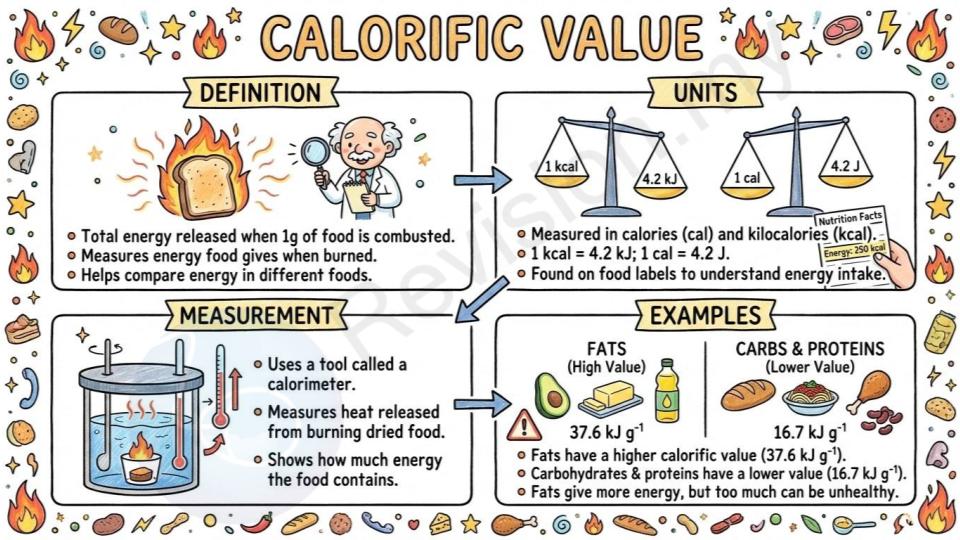
Definition: Total energy released when 1g of food is combusted. This means how much energy food gives when it is burned. Scientists do tests to measure how much heat is given off when food burns, which tells us how much energy is inside the food. This helps us understand why some foods give more energy than others.
Units: Energy from food is measured in units called calories (cal) and kilocalories (kcal). 1 kilocalorie (kcal) equals 4.2 kilojoules (kJ), and 1 calorie (cal) equals 4.2 joules (J). These numbers show us how much energy we can get from eating the food. When we look at food labels, we can understand how much energy we will get from each food we eat.
Measurement: A tool called a calorimeter is used to measure the heat released when burning a dried food sample. This shows us how much energy the food contains. Scientists use calorimeters to compare how much energy different foods can give us.
Examples: Fats have a higher calorific value (37.6 kJ g⁻¹) compared to carbohydrates and proteins (16.7 kJ g⁻¹). This means that fats give more energy than other types of foods. Eating foods with a lot of fat can give us a lot of energy, but we need to be careful because eating too much fat can lead to health problems.
Understanding Food Labels (No Flashcards)
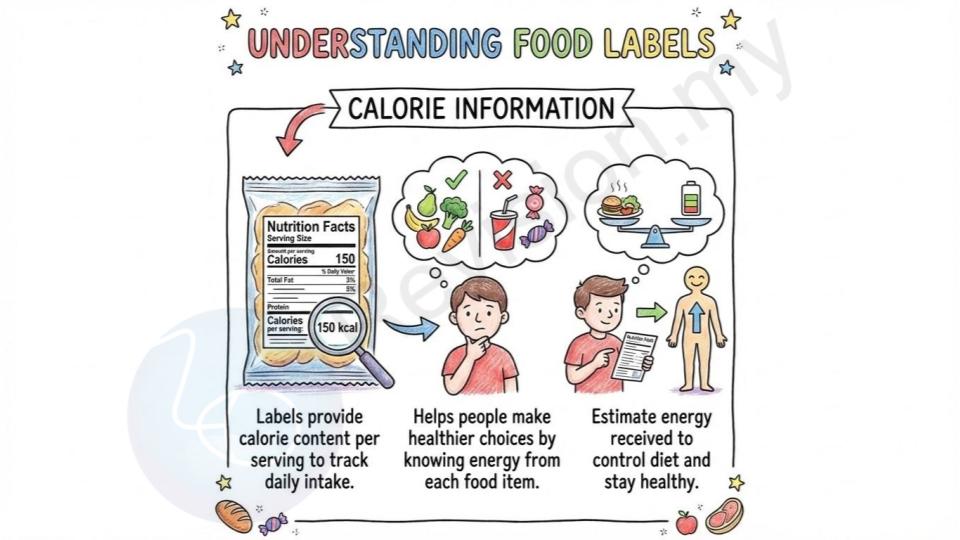
Calorie Information: Labels provide calorie content per serving to track daily intake. This information helps people make healthier choices by knowing how much energy they get from each food item. By reading the label, we can estimate the amount of energy our body will receive from the food, helping us control our diet and stay healthy.
Impact of Calorie Intake (No Flashcards)
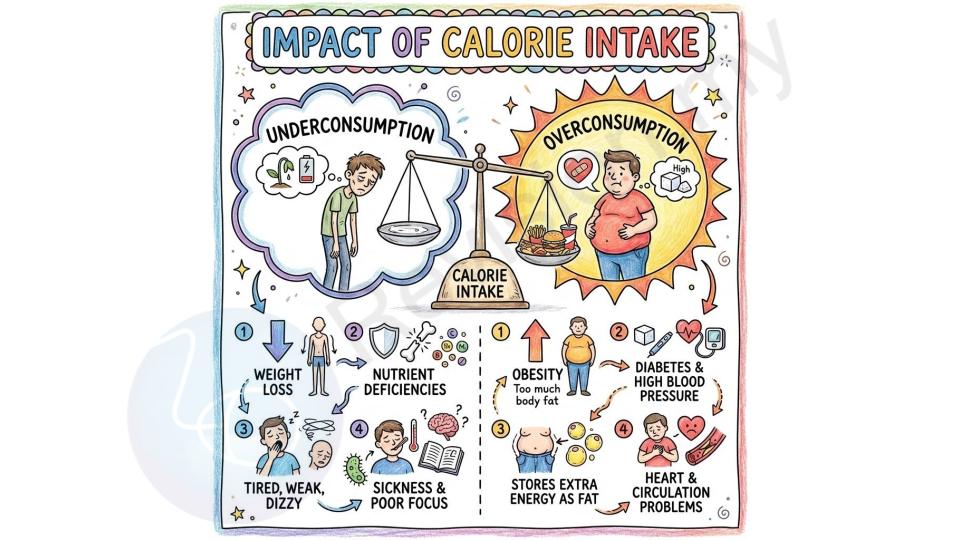
Underconsumption: Eating too little food can cause weight loss and nutrient deficiencies, which means the body doesn’t get enough vitamins and minerals to stay healthy. Not eating enough can make people feel very tired, weak, and dizzy. When we don’t eat enough food, our body won’t have the energy or the nutrients it needs, and we might get sick or have trouble concentrating in school.
Overconsumption: Eating too much food can lead to obesity, which means having too much body fat, and it can also cause health problems like diabetes and high blood pressure. When we eat more food than we need, our body stores the extra energy as fat. This can make us unhealthy, lead to sickness, and cause problems with our heart and blood circulation.
Calculating Calorific Needs (No Flashcards)
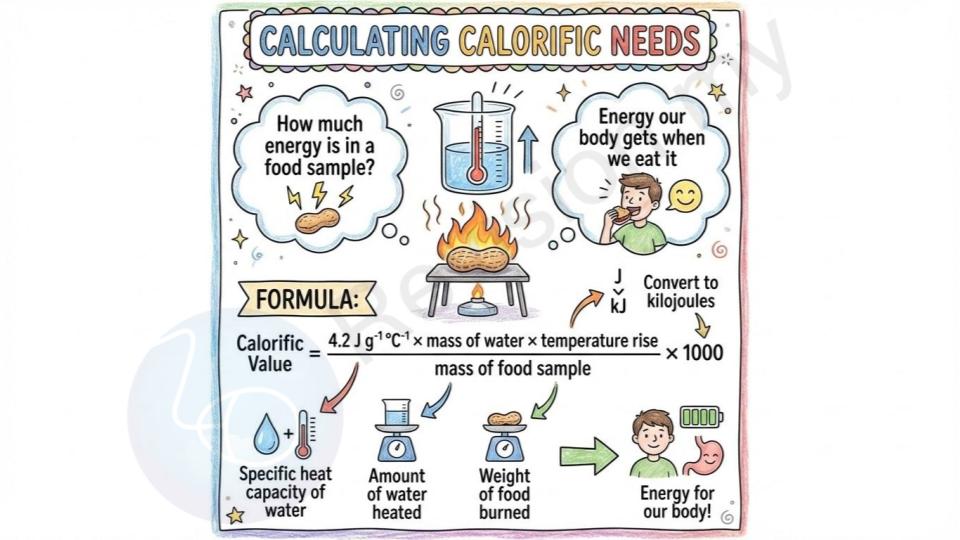
Formula: Calorific Value = (4.2 J g⁻¹ °C⁻¹ × mass of water × temperature rise) / (mass of food sample) × 1000. This formula is used to calculate how much energy is in a food sample by seeing how much heat it gives off when it is burned. It tells us how much energy our body can get from that food when we eat it.
Healthy Eating Practices (No Flashcards)
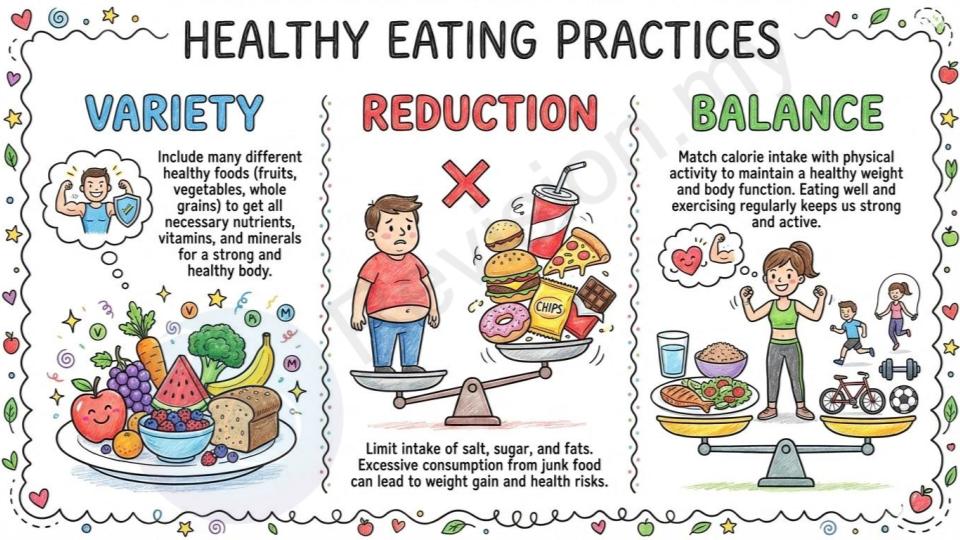
Variety: We should include many different kinds of healthy foods like fruits, vegetables, and whole grains. This helps make sure our body gets all the different vitamins, minerals, and other nutrients it needs to work properly. Eating a variety of foods helps keep us strong and healthy.
Reduction: We should limit the amount of salt, sugar, and fats we eat because too much of these can harm our health. Eating too much junk food, which has a lot of salt, sugar, and fats, can make us gain too much weight and increase our risk of diseases.
Balance: It is important to match the amount of calories we eat with how much physical activity we do. This helps us maintain a healthy weight and keep our body working well. Eating healthy foods and exercising regularly helps us stay strong and active.