13.3 Prevention and Treatment of Diseases Caused by Harmful Microorganisms
Introduction to Pathogens
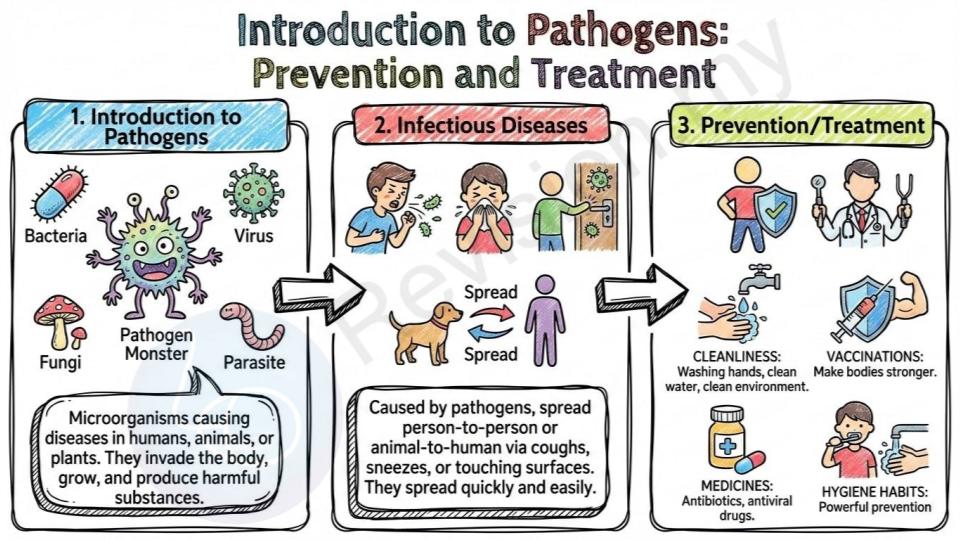
Definition: Microorganisms that can cause diseases in humans, animals, or plants are called pathogens. These pathogens include bacteria, viruses, fungi, and parasites that can invade the body and cause harm. When they get inside a body, they can grow and produce substances that make us sick. This is why it is important to learn about them and how to protect ourselves.
Infectious Diseases: Pathogens are the reason behind infectious diseases, which are illnesses that can spread from one person to another, or from animals to humans. When a person with an infectious disease coughs, sneezes, or touches something, they can leave germs behind that others can catch. This is why these diseases spread quickly and easily.
Prevention/Treatment: We can stop or slow down the spread of diseases caused by pathogens. This can be done by practicing good cleanliness, like washing hands, using clean water, and keeping our environment clean. Vaccinations can help protect people by making their bodies stronger against certain pathogens. Medicines, like antibiotics or antiviral drugs, can help treat infections. Good hygiene habits are a simple but powerful way to prevent sickness.
Disease Prevention Methods
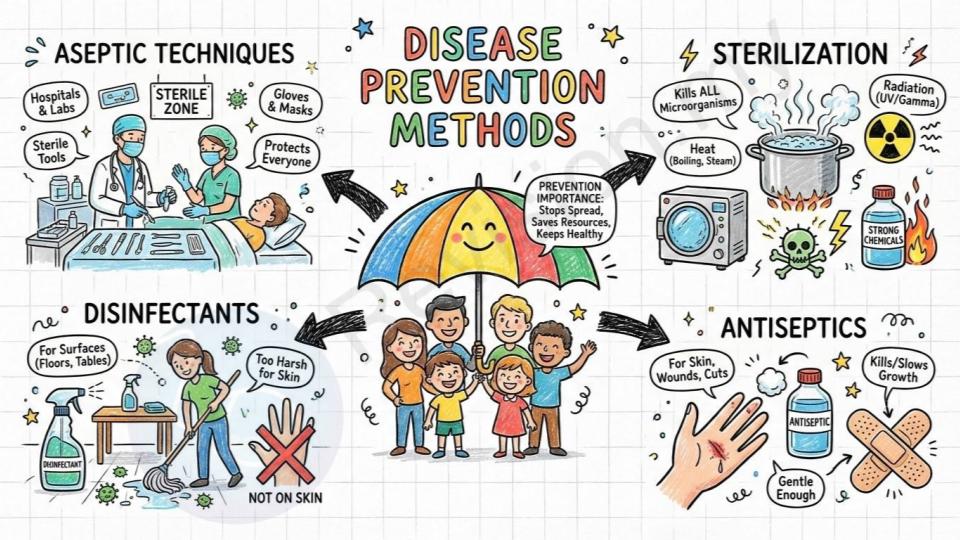
Prevention Importance: It is often much better to prevent diseases from happening in the first place rather than trying to treat them later. This is because prevention stops the disease from spreading to more people and causing harm, which helps keep everyone healthier and saves time and resources.
Aseptic Techniques: In hospitals and laboratories, special methods called aseptic techniques are used to keep areas clean and free from harmful microorganisms. This means using sterilized tools, wearing gloves and masks, and working carefully to prevent infections from spreading during surgeries or laboratory work. It is an important way to protect both patients and healthcare workers.
Sterilization: Sterilization means completely killing all microorganisms from an area or object to make it safe to use. This can be done by using heat, like boiling water or high-pressure steam in an autoclave, by using radiation such as ultraviolet or gamma rays, or by using strong chemicals like formaldehyde. These methods help make sure that equipment and surfaces do not carry harmful microorganisms.
Disinfectants: Disinfectants are strong chemicals like chlorine bleach or hydrogen peroxide that are used to kill germs on surfaces such as floors, tables, and laboratory equipment. These chemicals work by breaking down the cells of microorganisms, but they are too harsh to use on skin or living tissue because they can cause damage.
Antiseptics: Antiseptics are substances like iodine and alcohol that are used to kill or slow down the growth of microorganisms on skin, wounds, or cuts. They are gentle enough to be used on the body, helping to prevent infections from happening when there are injuries.
Disease Treatment Methods
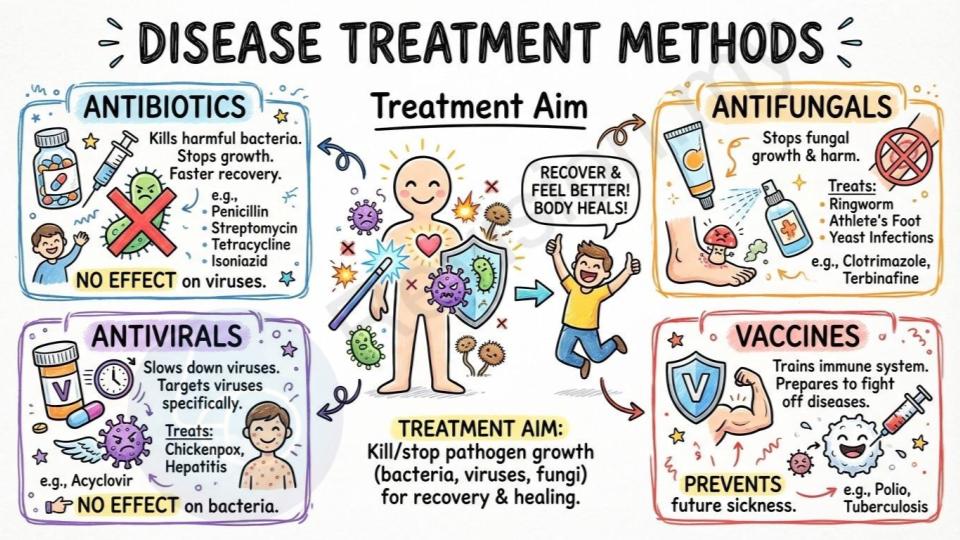
Treatment Aim: The goal of treatment is to kill or stop the growth of pathogens inside the body, like harmful bacteria, viruses, or fungi, so the person can recover and feel better. This helps the body heal from the disease.
Antibiotics: These are medicines made from microorganisms that can kill harmful bacteria causing infections. Examples of antibiotics include penicillin, streptomycin, tetracycline, and isoniazid. These medicines stop bacteria from growing and help people get better faster. However, antibiotics do not work against viruses.
Antifungals: These are medicines like Clotrimazole and Terbinafine that are used to treat fungal infections. Fungal infections include conditions like ringworm, athlete’s foot, and yeast infections. These medicines help stop the fungi from growing and causing harm.
Antivirals: These are medicines like Acyclovir that are used to treat viral infections such as chickenpox and hepatitis. They help slow down the viruses, but they do not work against bacterial infections. Antivirals are designed specifically to target viruses.
Vaccines: Vaccines are made from weakened or dead pathogens and are used to train the body’s immune system to recognize and fight certain diseases, like polio and tuberculosis. Vaccines help prevent diseases from making people sick in the future by preparing the immune system to fight them off.
Antibiotic Resistance
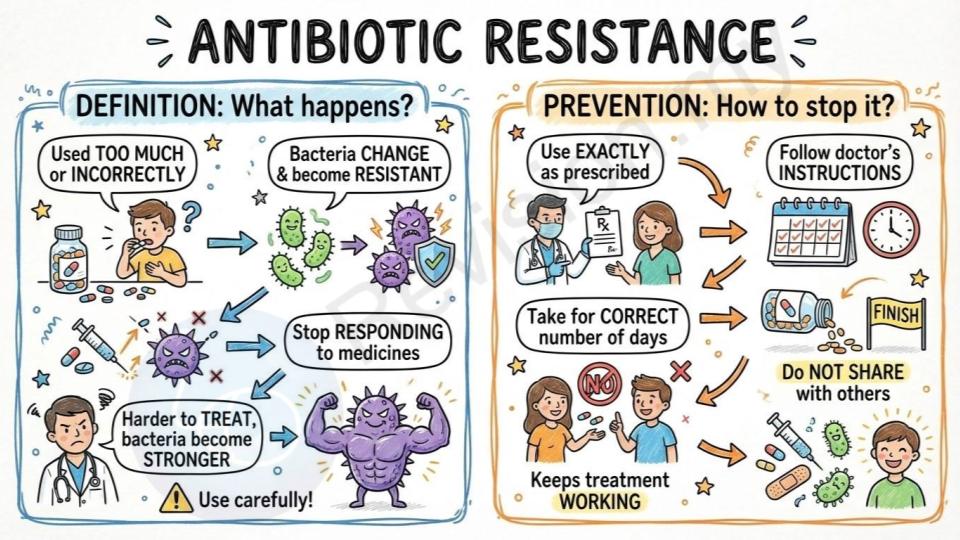
Definition: When antibiotics are used too much or incorrectly, bacteria can change and become resistant to the drugs. This means the bacteria stop responding to the medicines, making it harder to treat infections. The bacteria become stronger and can survive, which makes it much more difficult for doctors to cure the infection. This is why using antibiotics carefully is very important.
Prevention: To stop resistance, antibiotics should be used exactly as prescribed by a doctor. This means following the doctor’s instructions carefully, taking the medicine for the correct number of days, and not sharing it with others. This helps keep bacteria from learning how to resist the medicine and makes sure the treatment works.
Experiments on Microorganisms and Factors Affecting Growth
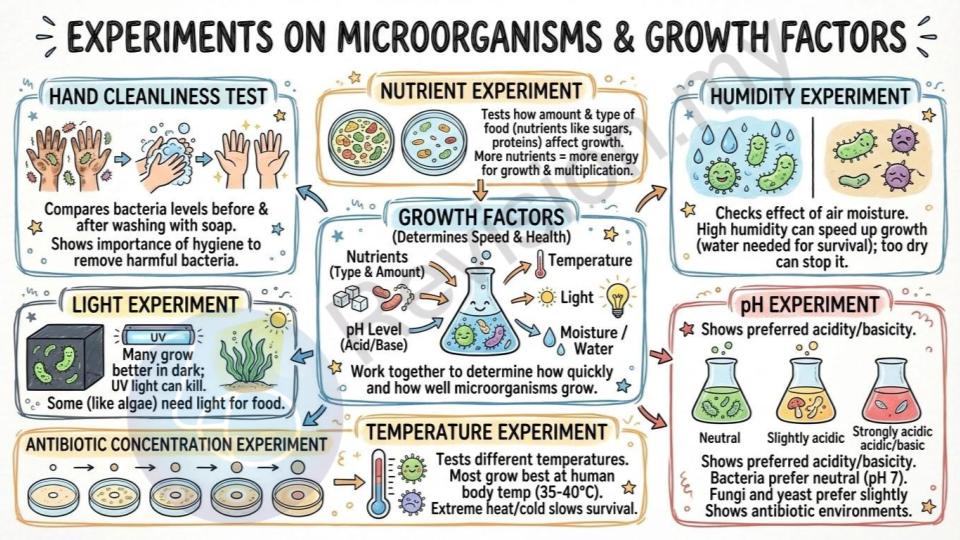
Growth Factors: Microorganisms grow based on certain factors, including the type of nutrients they have, the temperature they live in, the pH level (which tells how acidic or basic the environment is), the amount of moisture or water available, and the amount of light. These factors all work together to determine how quickly and how well the microorganisms can grow.
Hand Cleanliness Test: This experiment compares the levels of bacteria on hands before and after washing them with soap. It helps show how much bacteria can be removed by washing hands properly. When you wash your hands with soap and water, it helps to wash away bacteria that can make you sick, showing the importance of good hygiene.
Nutrient Experiment: This experiment looks at how the amount and type of food (which scientists call nutrients) given to microorganisms affect how much they grow. The more nutrients they have, the more energy they can use to grow and multiply. The type of nutrients, such as sugars or proteins, can also affect how well they grow.
Humidity Experiment: This experiment checks how different levels of humidity (which means moisture in the air) affect the growth of microorganisms. If the air is very moist, some microorganisms may grow faster because they need water to survive. But if the air is too dry, it might stop their growth.
Light Experiment: This test studies how light affects the growth of microorganisms. Many microorganisms grow better in dark places because light, especially ultraviolet light, can kill them or stop them from growing. However, some microorganisms, like algae, need light to grow because they use light to make their food.
Temperature Experiment: This experiment tests how different temperatures affect the growth of microorganisms. Most microorganisms grow best at temperatures between 35 and 40°C because that is the range of human body temperature. Some microorganisms can survive in very hot or very cold environments, but they might grow more slowly.
pH Experiment: This experiment shows how microorganisms prefer different pH levels, which measure how acidic or basic something is. Bacteria often grow best in neutral conditions, where the pH is around 7. Fungi and yeast, on the other hand, like slightly acidic environments, where the pH is lower.
Antibiotic Concentration Experiment: In this test, scientists use different concentrations of antibiotics, like penicillin, to see how well they can stop bacteria from growing. The higher the concentration, the bigger the clear zone where bacteria cannot grow. This shows how effective the antibiotic is at stopping the bacteria.