1.2 Disposal of Waste
Definition (No Flashcard)
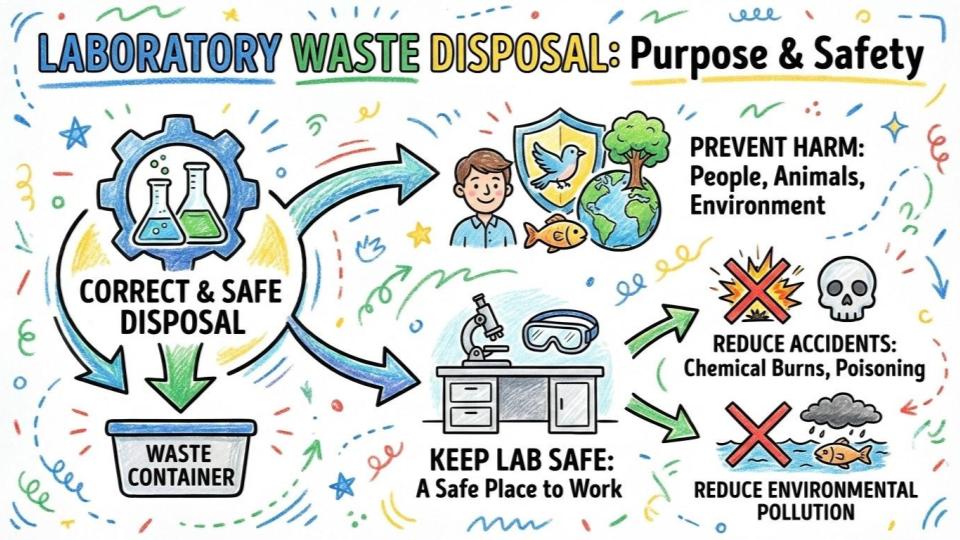
Purpose of waste disposal: Waste disposal in a laboratory means finding the correct and safe way to throw away chemical and biological waste. The goal is to prevent any harm to people, animals, or the environment. When waste is thrown away properly, it also helps keep the laboratory a safe place to work in, reducing the risk of accidents like chemical burns or poisoning, as well as environmental pollution.
Types of Waste
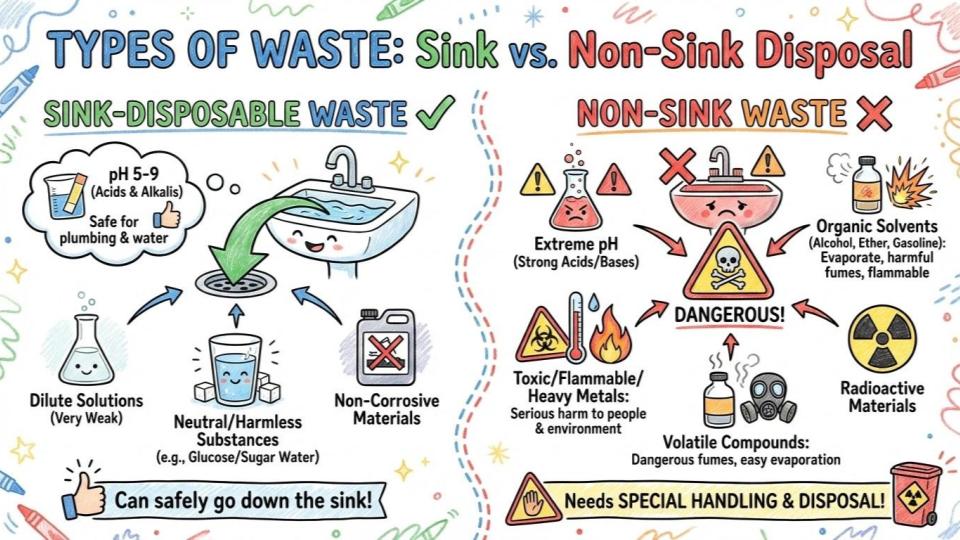
Sink-disposable waste: Some materials can be safely poured down the sink, like acids and alkalis that have a pH between 5 and 9. These are not too strong and won’t damage the plumbing or pollute the water. Other examples are dilute solutions (which are very weak), substances that are neutral and not harmful, like glucose (sugar water), and non-corrosive materials that don’t react with surfaces. These materials can safely go down the sink without causing harm.
Non-sink waste: Other waste should never be poured down the sink because it is dangerous. For example, materials that have extreme pH levels (like strong acids or very strong bases) should never be poured into the drain. Organic solvents, like alcohol, ether, and gasoline, can be dangerous if they evaporate into the air and can cause harm. Toxic or flammable substances, heavy metals like mercury and lead, and radioactive materials need to be disposed of in special ways because they can cause serious harm to people and the environment. Finally, volatile compounds are chemicals that evaporate easily, and their fumes can be dangerous to breathe in. These all need careful handling and disposal.
Biological Waste
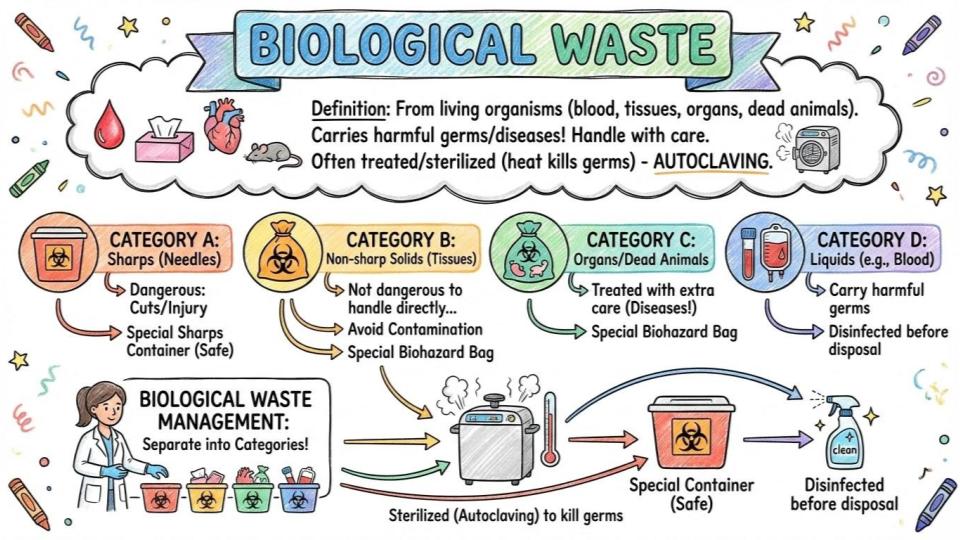
Definition of biological waste: Biological waste refers to things that come from living organisms, such as blood, body tissues, organs, or dead animals. These can carry harmful germs and diseases, so they must be handled very carefully. Often, they need to be treated or sterilized with a process called autoclaving, which uses heat to kill germs before they are thrown away.
Biological waste categories:
- Category A includes sharp objects like needles. These are dangerous because they can easily cut people and cause injury.
- Category B includes non-sharp solids like tissues, which are not dangerous to handle directly but still need to be carefully thrown away to avoid contamination.
- Category C involves organs or dead animal bodies. These are treated with extra care because they might carry diseases.
- Category D includes liquids, like blood. These need to be disinfected before they are safely disposed of because they can carry harmful germs.
Biological waste management: To properly manage biological waste, lab workers must separate waste into the right categories. Sharp objects, such as needles, should go into special containers that are designed to keep people safe. Other contaminated materials, like tissues, should go into special biohazard bags. These bags are then sterilized (usually by autoclaving) to kill any harmful germs. Any liquids, like blood, need to be disinfected before they are thrown away safely.
Managing Chemical Spills
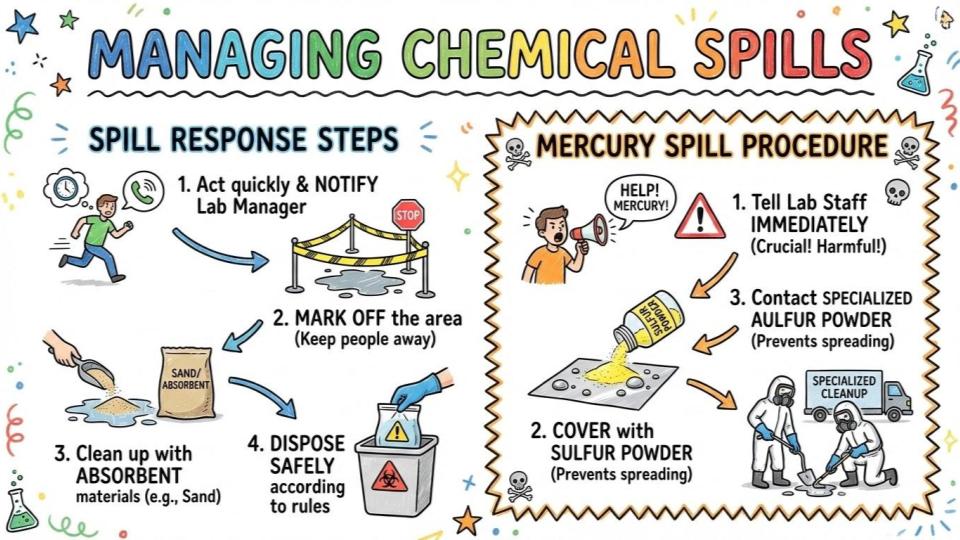
Spill response steps: If a chemical spill happens, it is important to act quickly and notify the right people, like a lab manager. The area around the spill should be marked off to keep people away from it, so no one accidentally walks through it. To clean up the spill, absorbent materials like sand can be used to soak up the liquid. After that, the spilled chemicals and the absorbent material should be carefully thrown away in a safe manner according to safety rules.
Mercury spill procedure: If mercury (a toxic metal) is spilled, it’s crucial to tell the lab staff immediately because mercury can be very harmful. The spill should be covered with sulfur powder, which helps to prevent the mercury from spreading. Specialized authorities or cleanup crews must be contacted to properly remove the mercury and ensure that it doesn’t harm anyone.
General Guidelines
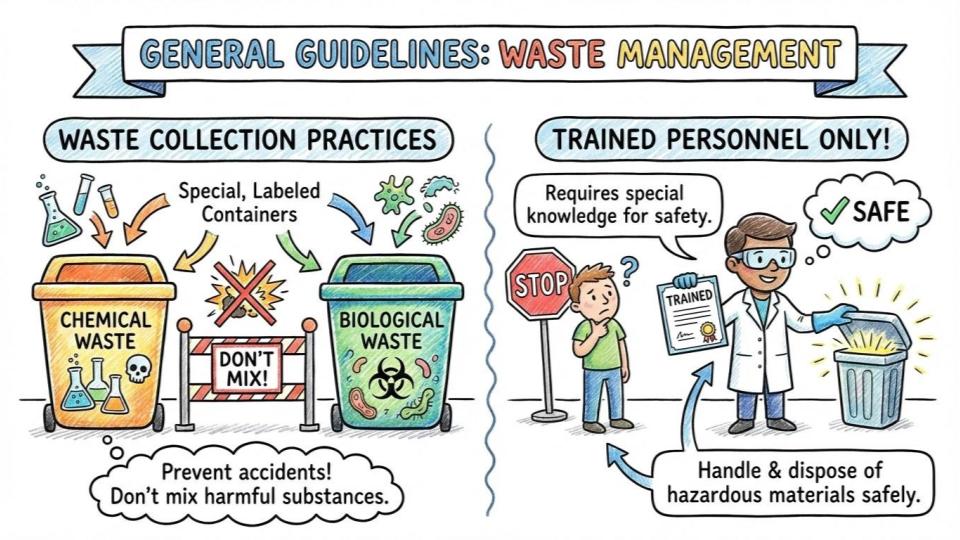
Waste collection practices: Waste should be collected in special containers that are clearly labeled so everyone knows what is inside. Different types of waste need to be stored and handled in specific ways to prevent accidents. For example, chemical waste should be kept in separate containers from biological waste to prevent mixing harmful substances together.
Trained personnel requirement: Only people who have been trained in waste management should be in charge of handling and disposing of hazardous materials. This is because dealing with dangerous chemicals or biological waste requires special knowledge to keep everyone safe.
Importance of Proper Waste Disposal
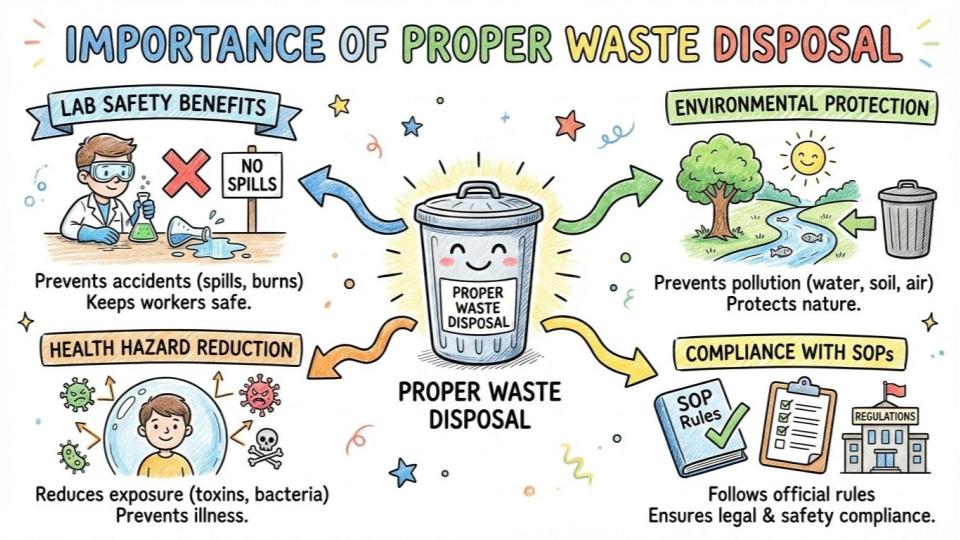
Lab safety benefits: Proper waste disposal prevents accidents in the lab, such as chemical spills, burns, or contact with harmful biological materials. By disposing of waste correctly, workers can avoid getting hurt and keep the lab a safe place to work.
Environmental protection: If waste is not disposed of correctly, harmful substances can end up in the environment. For example, chemicals can leak into water, soil, or the air, which can pollute the environment and harm animals and plants. Proper disposal helps keep the environment clean and safe.
Health hazard reduction: By handling waste properly, we reduce the chances of being exposed to harmful substances, such as toxic chemicals, bacteria, or viruses. This helps protect lab workers from serious health problems, like poisoning, infections, or even long-term illnesses caused by exposure to hazardous materials.
Compliance with SOPs: Standard Operating Procedures (SOPs) are a set of official rules that tell workers the best way to dispose of waste. Following these rules ensures that the lab is complying with safety laws and regulations, which are there to protect people and the environment.
Additional Considerations
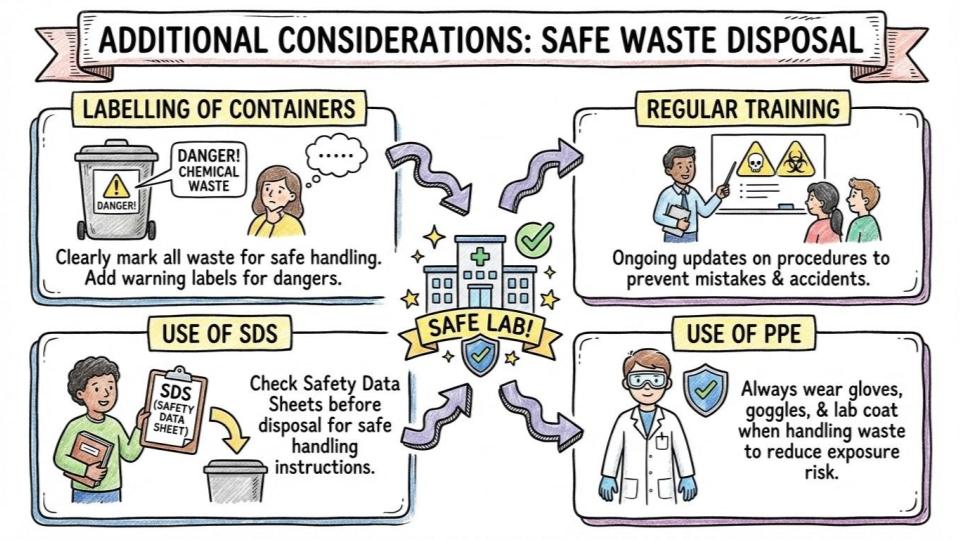
Labelling of containers: All waste containers should be clearly marked with labels that show what type of waste is inside. This helps everyone in the lab to handle the waste safely. For example, a container with dangerous chemicals should be marked with a warning label, so people know not to open it without the proper protection.
Regular training: It is important to have ongoing training for lab workers on how to properly manage waste. This keeps everyone updated on the latest safety procedures and helps prevent mistakes that could lead to accidents.
Use of SDS: Safety Data Sheets (SDS) are documents that provide important information on how to handle and dispose of specific chemicals safely. Before throwing away any chemicals, workers should check the SDS to make sure they know how to dispose of the substance in a way that won’t cause harm.
Use of PPE: Personal Protective Equipment (PPE), such as gloves, goggles, and lab coats, must always be worn when handling hazardous waste. This protective gear helps reduce the risk of being exposed to dangerous chemicals or biological materials. Wearing PPE is an important part of staying safe while working in the lab.