16.2 Meristematic Tissues and Growth
Meristematic Tissues and Their Role in Growth
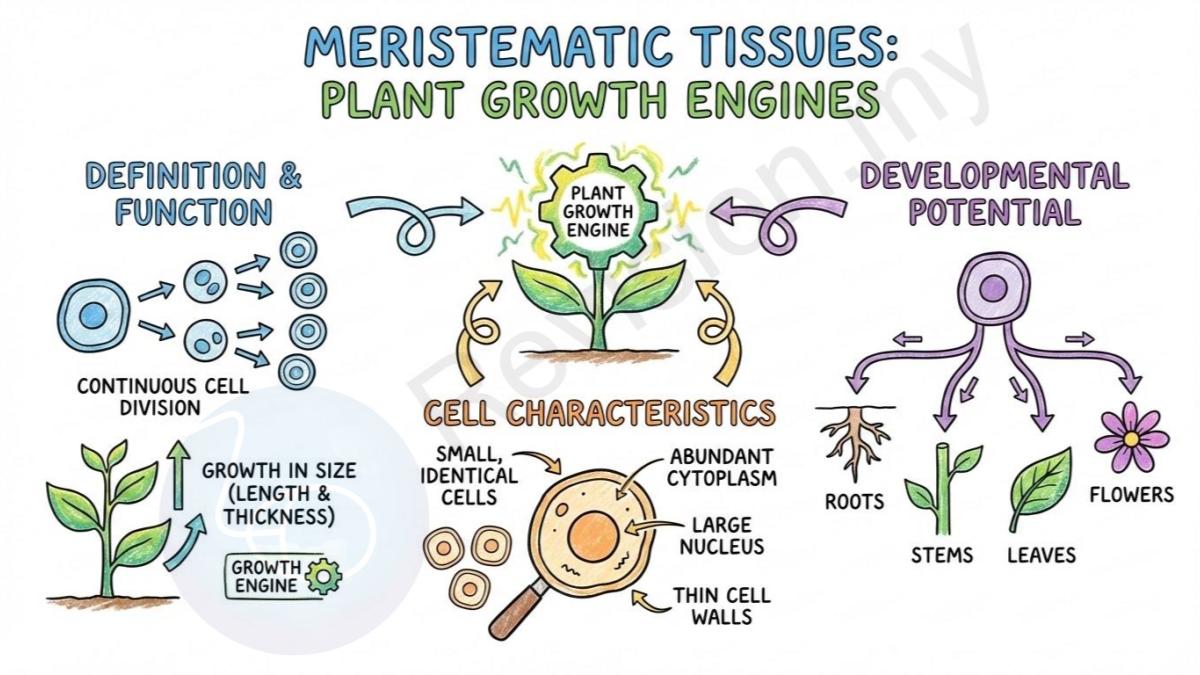
Definition and function: Meristematic tissues are special regions in plants where the cells are always dividing. These divisions help the plant grow in size, either longer or thicker, depending on the type of meristem. These tissues act like growth engines in plants.
Cell characteristics: The cells in meristematic tissues are usually very small and all look the same because they have not yet developed into a specific type of cell. They have a lot of cytoplasm, which is the jelly-like substance inside the cell, and their nucleus is large because it is very active in controlling the cell’s functions. The cell walls are thin to make it easier for the cells to divide.
Developmental potential: Even though all the meristem cells start out the same, they can eventually change into different types of plant cells depending on where they are and what the plant needs. This ability is important for forming roots, stems, leaves, and flowers.
Types of Meristematic Tissue
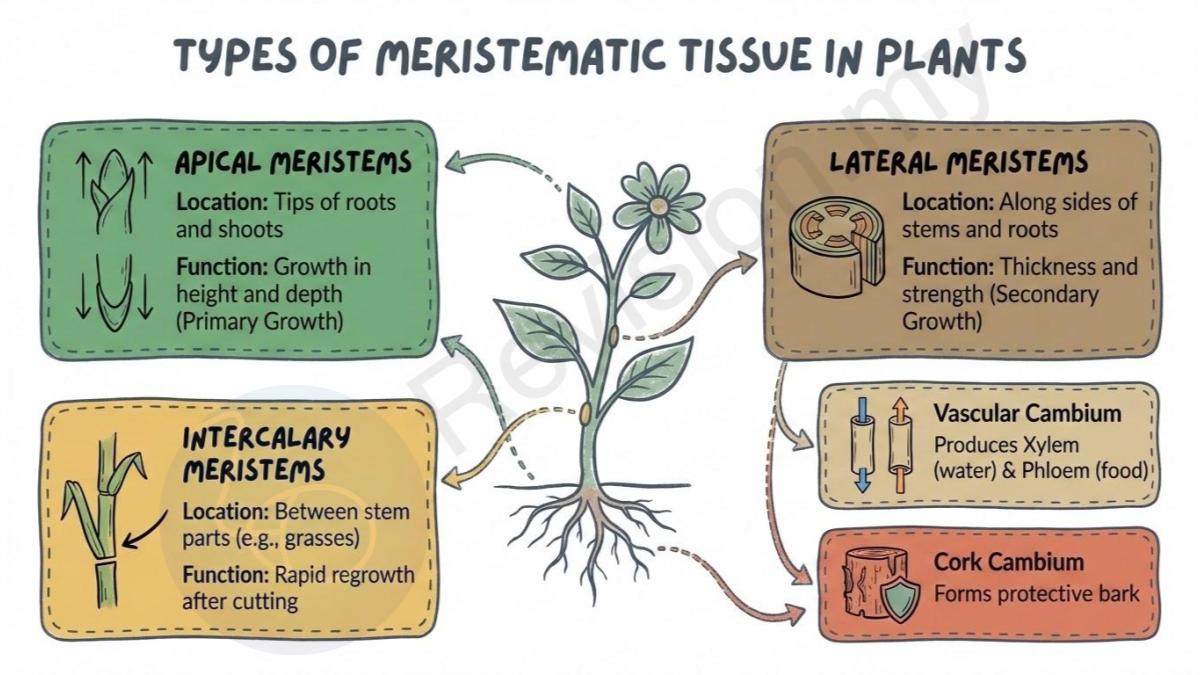
Apical meristems: These are found at the very tips of the plant’s roots and shoots. They help the plant grow taller and the roots grow deeper by adding new cells at these growing ends. This is known as primary growth.
Lateral meristems: These are found along the sides of stems and roots. They make the plant thicker and stronger as it gets older. This type of growth is called secondary growth.
Vascular cambium: This type of lateral meristem makes more xylem (which carries water) on the inside and more phloem (which carries food) on the outside. This helps the plant transport materials and stay strong.
Cork cambium: This meristem makes the outer layer of the plant’s stem and root, which becomes part of the bark. These cork cells help protect the plant from drying out and getting damaged.
Intercalary meristems: These are found in some plants like grasses, between parts of the stem. They help the plant grow quickly in length even after being cut or grazed by animals.
Primary Growth
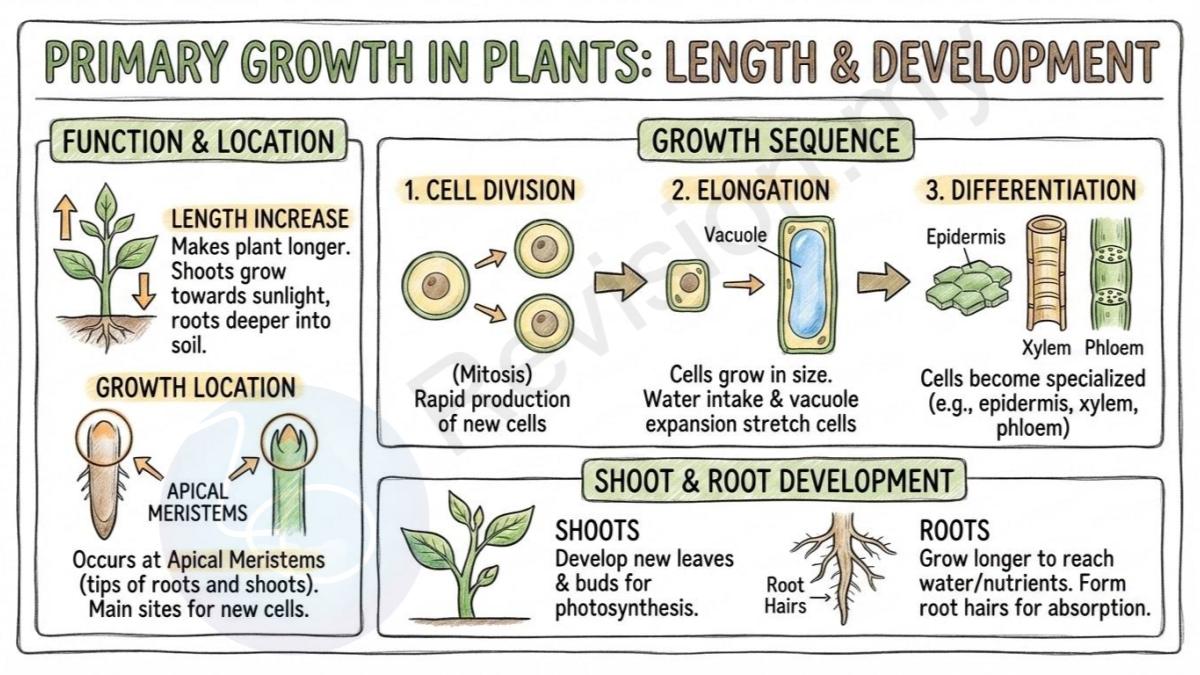
Length increase: Primary growth makes the plant longer. It helps shoots grow towards sunlight and roots grow deeper into the soil.
Growth location: This kind of growth happens at the apical meristems, which are located at the tips of roots and shoots. These are the main places where new cells are added.
Growth sequence: The process of primary growth happens in three main steps: first, the cells divide by mitosis; then, the new cells grow longer; finally, they become specialised for different functions.
Cell division zone: In this zone, cells divide rapidly through mitosis to produce many new cells that will later grow and take on different roles.
Elongation zone: Here, the newly made cells grow in size. They take in water, and their vacuoles (storage bubbles inside cells) get bigger, which makes the cells stretch.
Differentiation zone: In this zone, the cells that have finished growing now start to change into specific types of cells, like those that make up the plant’s skin (epidermis) or transport systems (xylem and phloem).
Shoot development: When shoots grow through primary growth, they develop new leaves and buds. This helps the plant make more food through photosynthesis.
Root development: In the roots, primary growth helps them grow longer so they can reach more water and nutrients. Root hairs also form here to absorb water better.
Secondary Growth
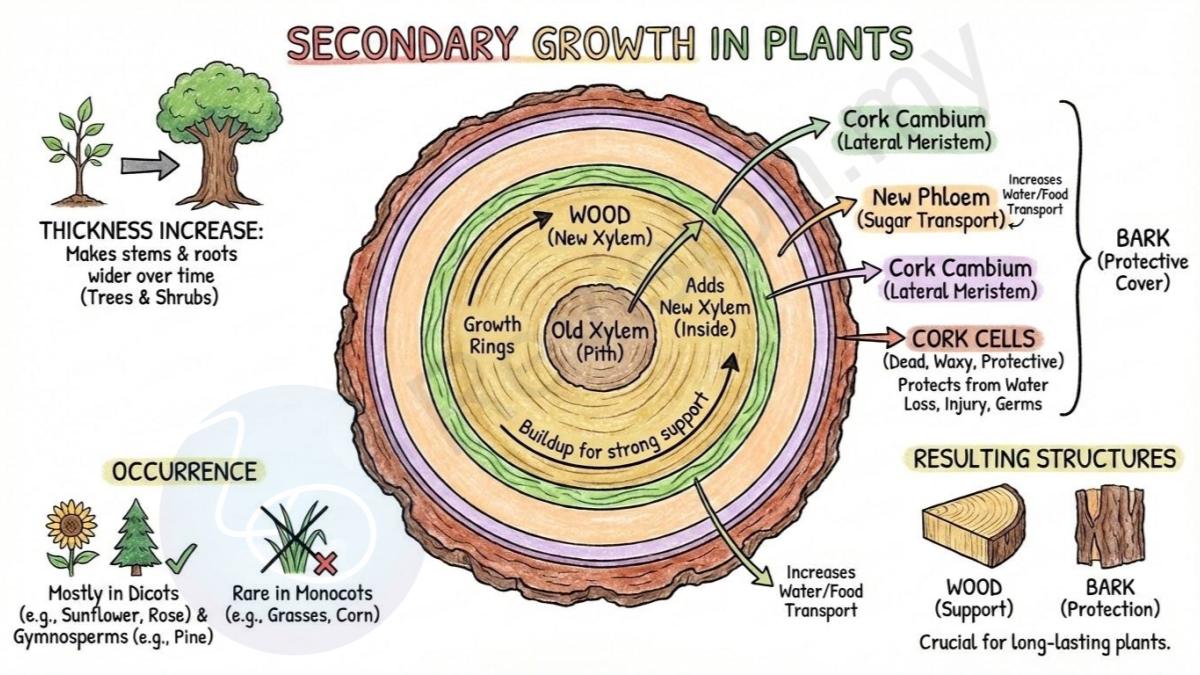
Thickness increase: Secondary growth is what makes plants, especially trees and shrubs, thicker over time. It makes the stems and roots wider.
Lateral meristem role: This type of growth happens because of the lateral meristems, which are the vascular cambium and cork cambium. These add new layers to the stem and root.
Vascular cambium output: The vascular cambium adds new xylem cells on the inside and phloem cells on the outside. This increases the plant’s ability to carry water and food.
Xylem support role: The new xylem that forms during secondary growth builds up over the years and becomes wood. This gives the plant strong support to stand tall.
Phloem transport role: Even as the plant gets thicker, the new phloem made by the vascular cambium continues to move sugars from the leaves to other parts of the plant.
Cork cambium location: The cork cambium is located just beneath the outer layer of the stem or root. It produces cork cells to replace the outer skin.
Cork cell function: The cork cells are dead and filled with a waxy substance called suberin, which helps keep water inside the plant and protects it from injury and germs.
Bark composition: Bark is made up of several layers: the cork cells on the outside, the cork cambium in the middle, and a layer called the phelloderm inside. Together, they form a protective cover.
Occurrence in plants: Secondary growth mostly happens in dicot plants (like sunflowers and roses) and gymnosperms (like pine trees). It doesn’t usually happen in monocots (like grasses and corn).
Resulting structures: As a result of secondary growth, plants develop wood and bark. These are important for long-lasting plants that live many years.
Detailed Look at the Zones of Cell Growth
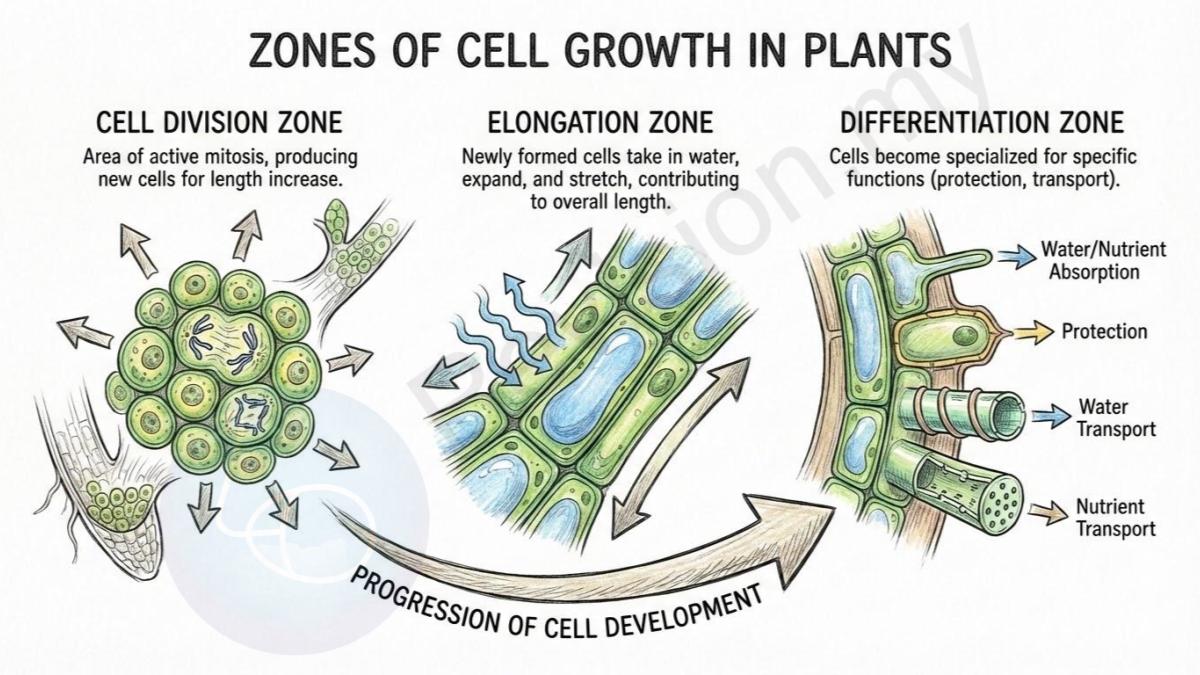
Cell division zone: This is the area where cells are actively dividing by mitosis. It produces many new cells that the plant will use to grow longer.
Elongation zone: In this zone, the newly formed cells take in water and grow larger. This stretching helps make the plant’s roots and shoots longer.
Differentiation zone: After growing, the cells in this area become specialised. They turn into cells that perform important jobs like protecting the plant or moving water and nutrients.