1.4 Scientific Investigation in Biology
Overview of the Scientific Method
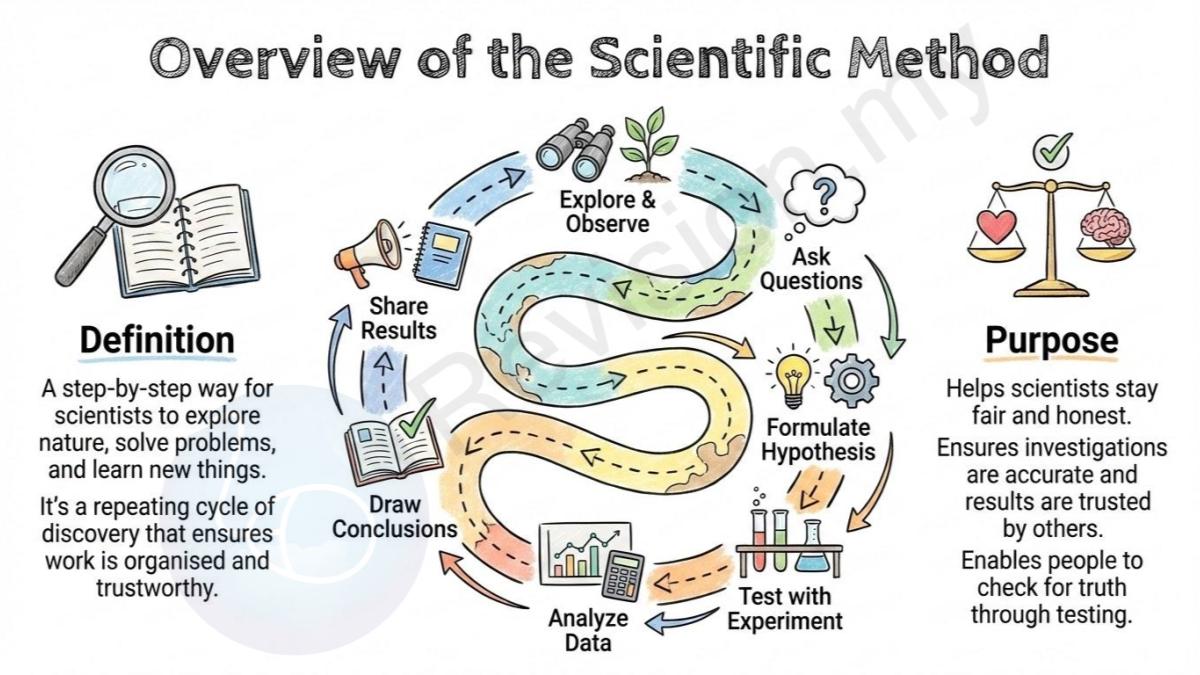
Definition: The scientific method is a step-by-step way that scientists use to explore things in nature, solve problems, and learn new things. It’s like a cycle that repeats as scientists discover more. This method helps scientists stay organised and make sure their work can be trusted.
Purpose of the Method: The scientific method is important because it helps scientists stay fair and honest. It makes sure that their investigations are accurate and the results can be trusted by others. It also helps people check if something is true by testing it.
Steps of Scientific Investigation
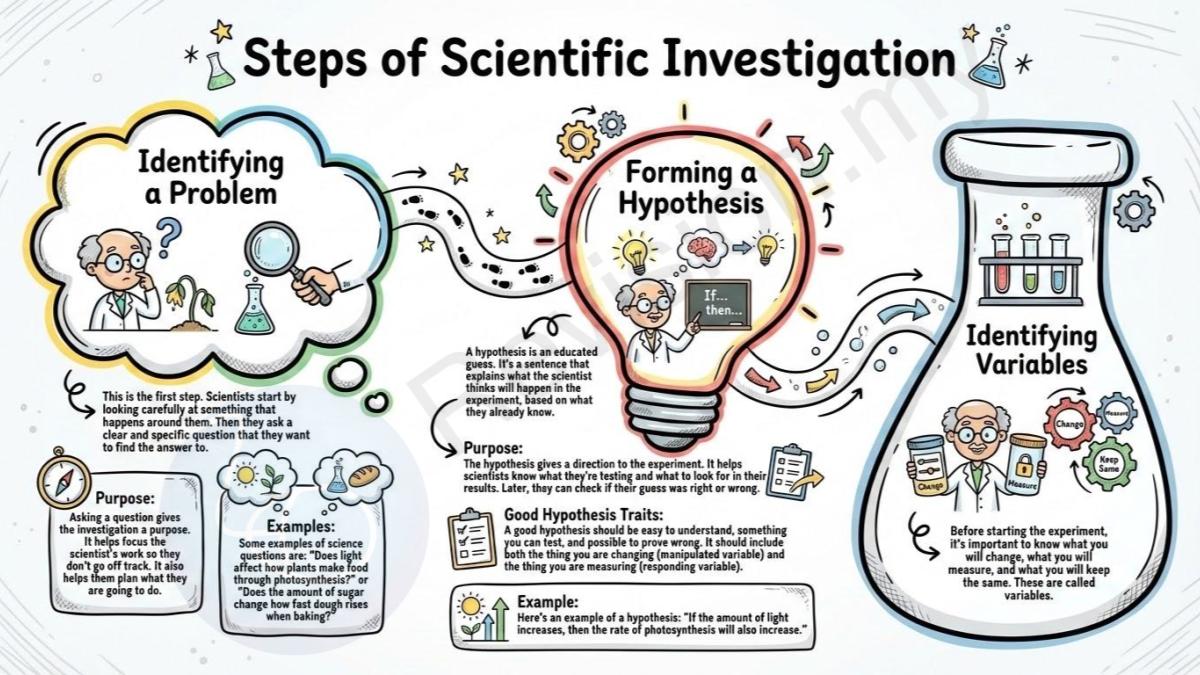
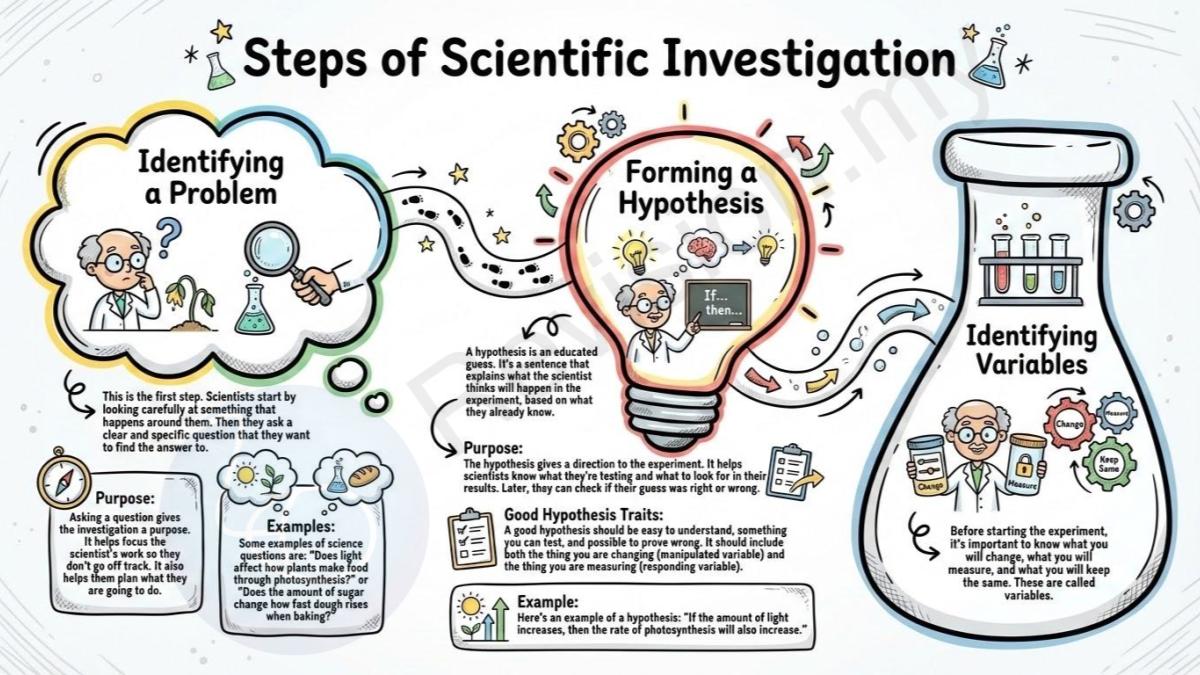
Identifying a Problem: This is the first step. Scientists start by looking carefully at something that happens around them. Then they ask a clear and specific question that they want to find the answer to.
Problem Purpose: Asking a question gives the investigation a purpose. It helps focus the scientist’s work so they don’t go off track. It also helps them plan what they are going to do.
Problem Example: Some examples of science questions are: “Does light affect how plants make food through photosynthesis?” or “Does the amount of sugar change how fast dough rises when baking?”
Forming a Hypothesis: A hypothesis is an educated guess. It’s a sentence that explains what the scientist thinks will happen in the experiment, based on what they already know.
Hypothesis Purpose: The hypothesis gives a direction to the experiment. It helps scientists know what they’re testing and what to look for in their results. Later, they can check if their guess was right or wrong.
Good Hypothesis Traits: A good hypothesis should be easy to understand, something you can test, and possible to prove wrong. It should include both the thing you are changing (manipulated variable) and the thing you are measuring (responding variable).
Hypothesis Example: Here’s an example of a hypothesis: “If the amount of light increases, then the rate of photosynthesis will also increase.”
Identifying Variables: Before starting the experiment, it’s important to know what you will change, what you will measure, and what you will keep the same. These are called variables.
Types of Variables
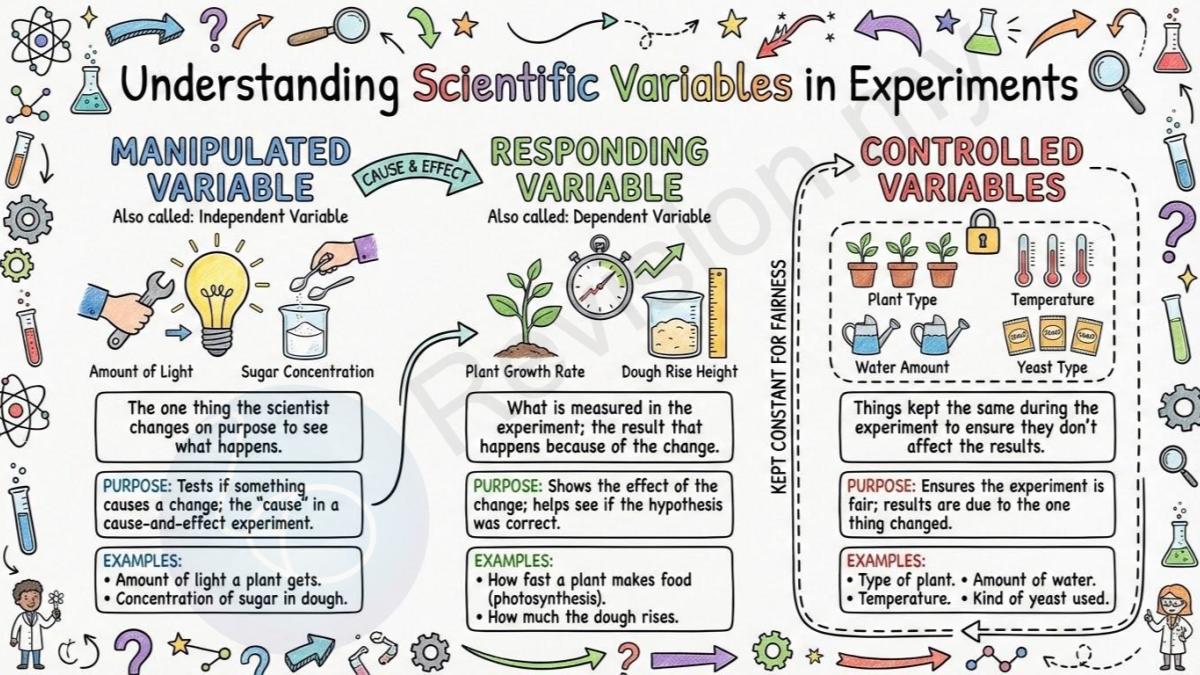
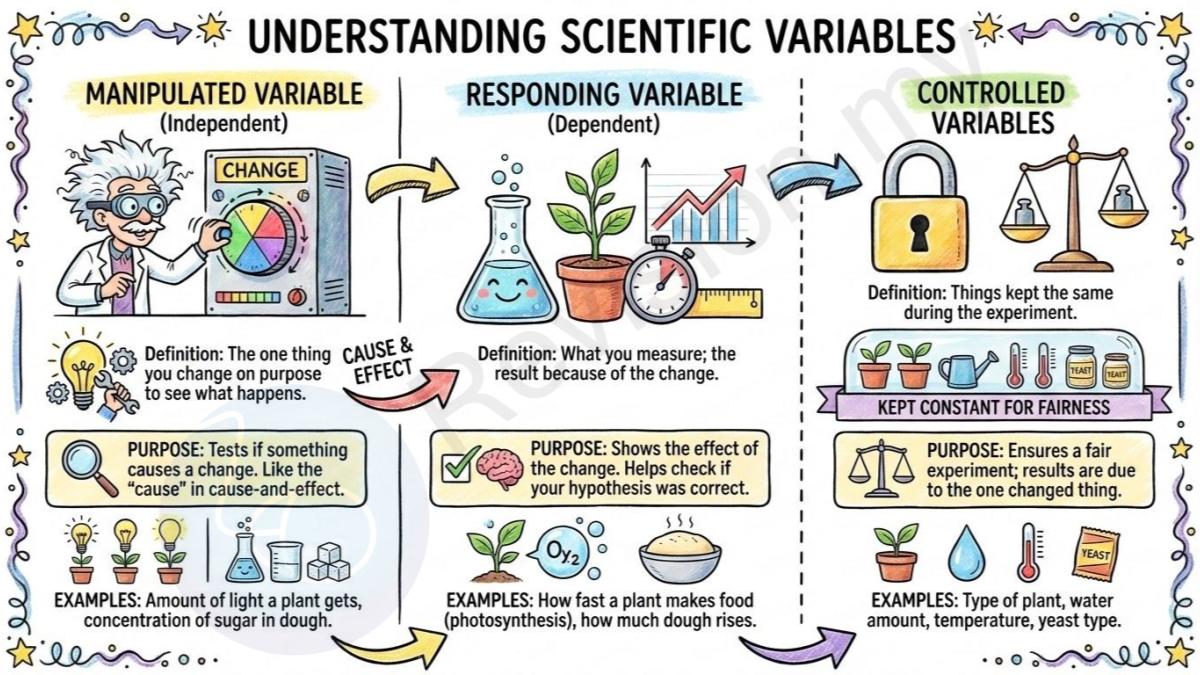
Manipulated Variable: This is the one thing that you, the scientist, change on purpose to see what happens. It’s also called the independent variable.
Manipulated Purpose: This variable helps you test if something causes a change. It’s like the “cause” in a cause-and-effect experiment.
Manipulated Example: Examples of manipulated variables include the amount of light a plant gets or the concentration of sugar in dough.
Responding Variable: This is what you measure in the experiment. It’s the result that happens because of the change you made. It’s also called the dependent variable.
Responding Purpose: This variable shows what effect your change had. It helps you see if your hypothesis was correct.
Responding Example: Examples include how fast a plant makes food (photosynthesis) or how much the dough rises.
Controlled Variables: These are the things you keep the same during the experiment. You don’t want them to change because they might affect your results.
Controlled Purpose: Keeping things the same helps make sure your experiment is fair. That way, you know your results only happened because of the one thing you changed.
Controlled Example: Examples of things you might keep the same are the type of plant, how much water it gets, the temperature, or the kind of yeast you use.
Planning an Experiment
Purpose of Planning: Planning helps you carry out a good experiment. It makes sure your test is fair, repeatable, and gives you useful results.
Experiment Components: A good plan should list all the materials you’ll need, the steps to follow, how to control variables, and ways to reduce errors.
Planning Example: For example, you could use the same kind of plant and give each one a different amount of light. Everything else—like temperature, water, and type of soil—would stay the same.
Conducting Experiments
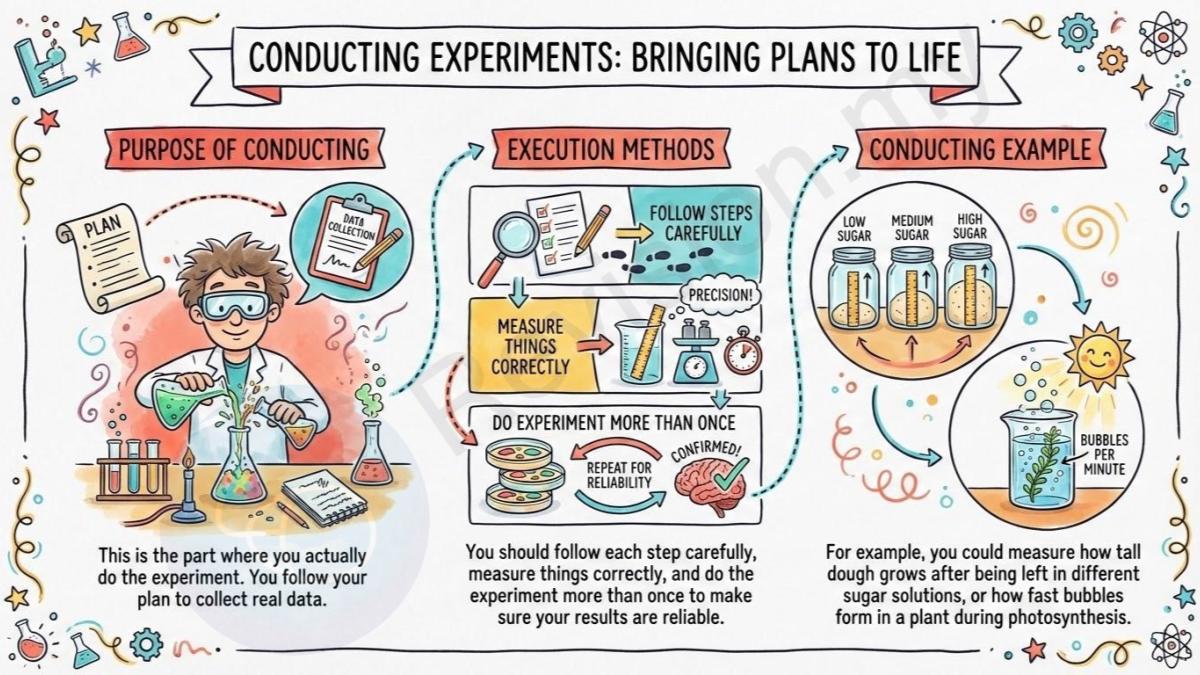
Purpose of Conducting: This is the part where you actually do the experiment. You follow your plan to collect real data.
Execution Methods: You should follow each step carefully, measure things correctly, and do the experiment more than once to make sure your results are reliable.
Conducting Example: For example, you could measure how tall dough grows after being left in different sugar solutions, or how fast bubbles form in a plant during photosynthesis.
Data Analysis and Interpretation
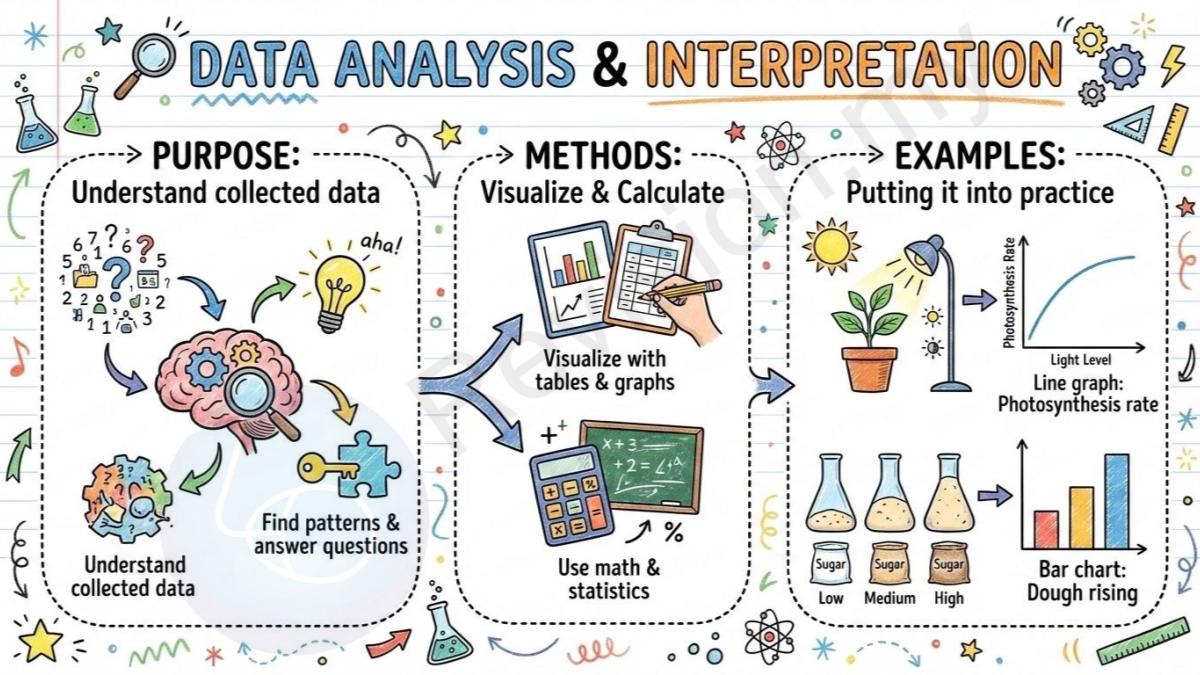
Purpose of Analysis: Once you’ve collected your data, you need to understand what it means. You look for patterns or changes to answer your question.
Analysis Methods: You can put the data into tables or graphs to make it easier to see what happened. Sometimes scientists use math or statistics to help understand the results.
Analysis Example: For example, you could draw a line graph showing how fast photosynthesis happened at different light levels. Or you could make a bar chart to show how much the dough rose with different sugar levels.
Drawing a Conclusion
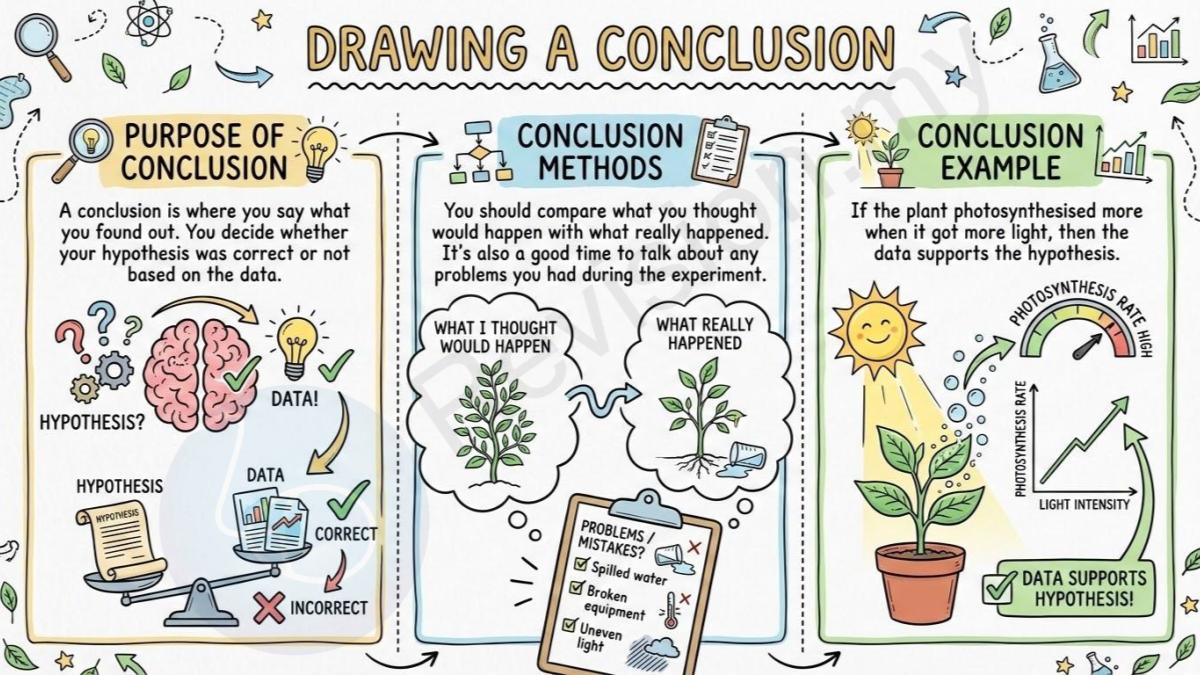
Purpose of Conclusion: A conclusion is where you say what you found out. You decide whether your hypothesis was correct or not based on the data.
Conclusion Methods: You should compare what you thought would happen with what really happened. It’s also a good time to talk about any problems you had during the experiment.
Conclusion Example: If the plant photosynthesised more when it got more light, then the data supports the hypothesis.
Writing a Report
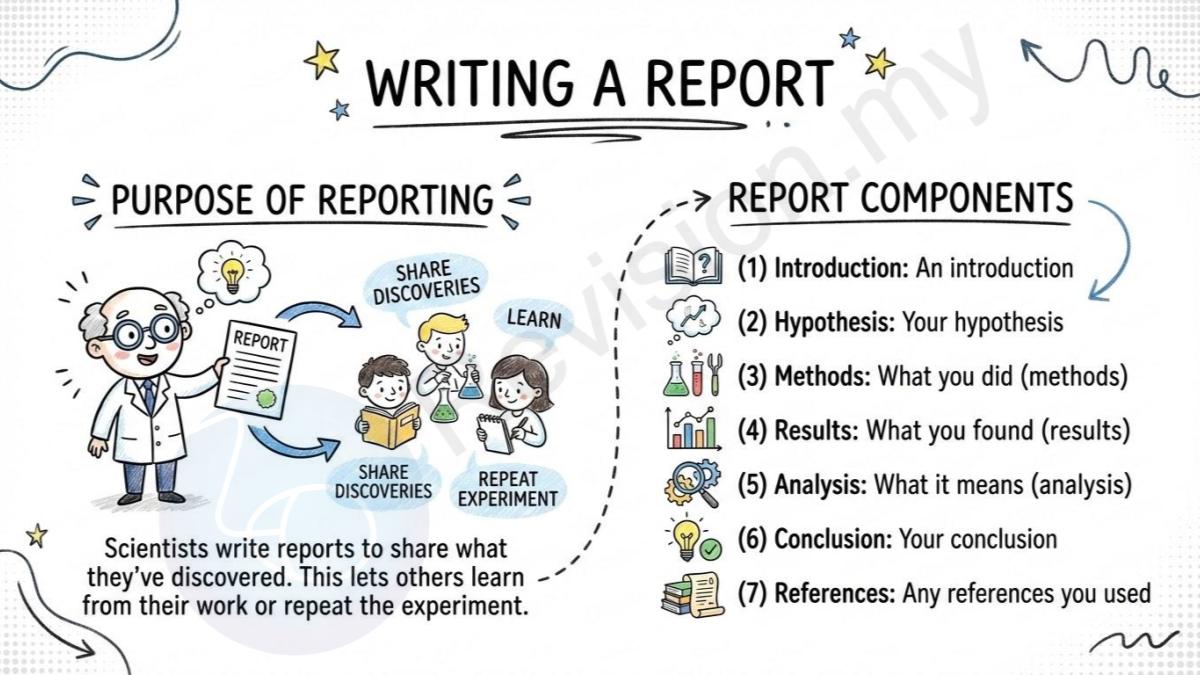
Purpose of Reporting: Scientists write reports to share what they’ve discovered. This lets others learn from their work or repeat the experiment.
Report Components: A good report includes: an introduction, your hypothesis, what you did (methods), what you found (results), what it means (analysis), your conclusion, and any references you used.
Detailed Variable Review
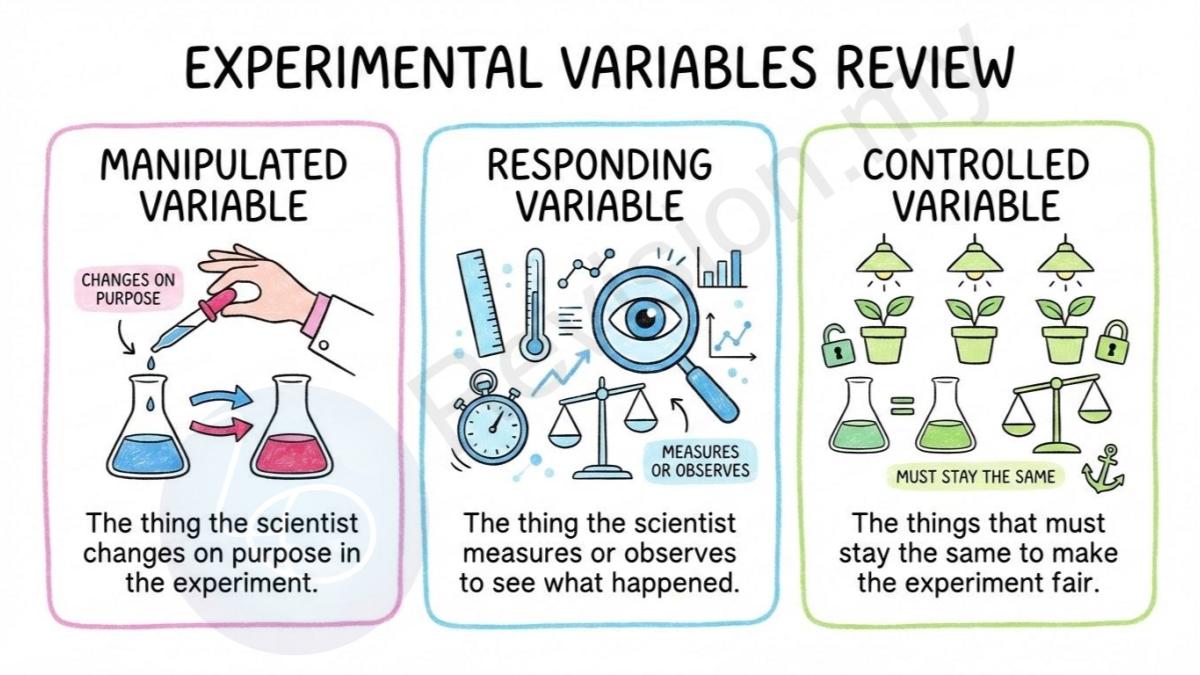
Manipulated Variable: The thing the scientist changes on purpose in the experiment.
Responding Variable: The thing the scientist measures or observes to see what happened.
Controlled Variable: The things that must stay the same to make the experiment fair.
Example Investigation: Exercise and Heart Rate
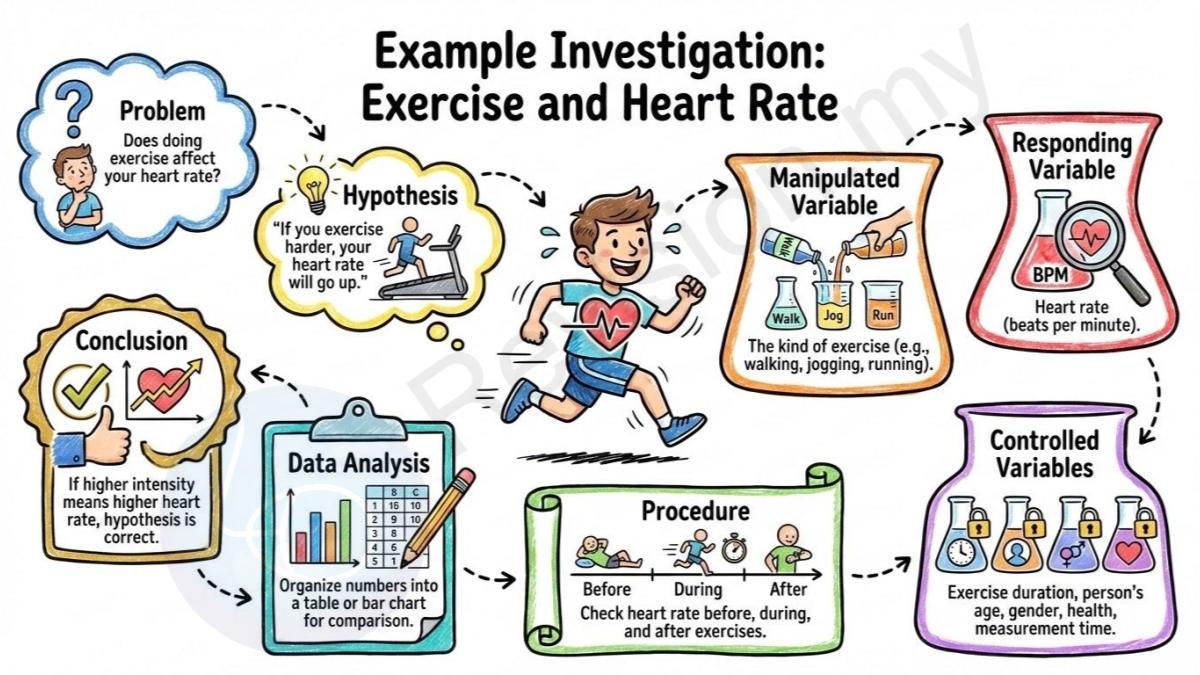
Problem: A student wants to know: does doing exercise affect your heart rate?
Hypothesis: The student guesses: “If you exercise harder, your heart rate will go up.”
Manipulated Variable: The kind of exercise the person does—like walking, jogging, or running.
Responding Variable: The heart rate, measured by counting beats per minute.
Controlled Variables: Things that should stay the same like how long the exercise lasts, the person’s age, gender, health, and when the heart rate is measured.
Procedure: The student checks the heart rate before, during, and after doing different exercises.
Data Analysis: The student puts the heart rate numbers into a table or bar chart to compare.
Conclusion: If the heart rate is higher when the exercise is more intense, then the hypothesis is correct.