1.2 Safety and Rules in Biology Laboratory
Importance of Safety
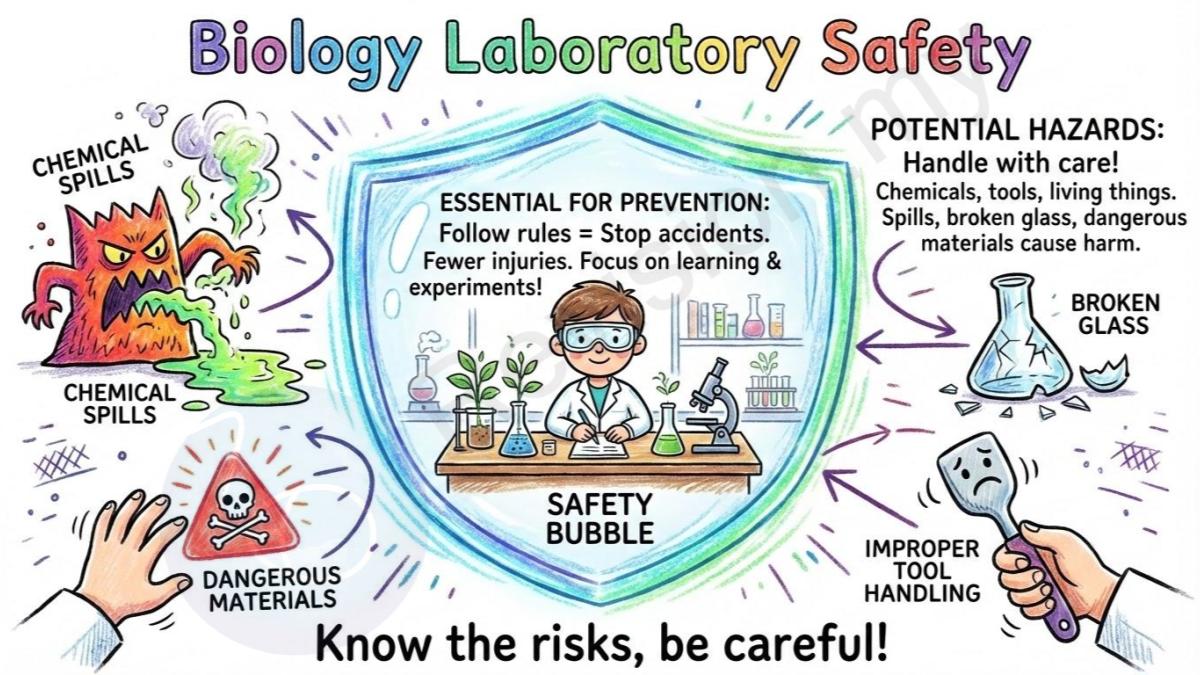
Essential for Prevention: Safety in the biology laboratory is extremely important. When everyone follows the safety rules, it helps stop accidents from happening. This means fewer people get hurt, and everyone can focus on learning and doing experiments properly.
Potential Hazards: Many accidents in the lab happen because people don’t handle chemicals, tools, or living things carefully. Spills, broken glass, or touching dangerous materials can cause harm. So, it’s important to know the risks and be careful while working.
Personal Protective Equipment (PPE)
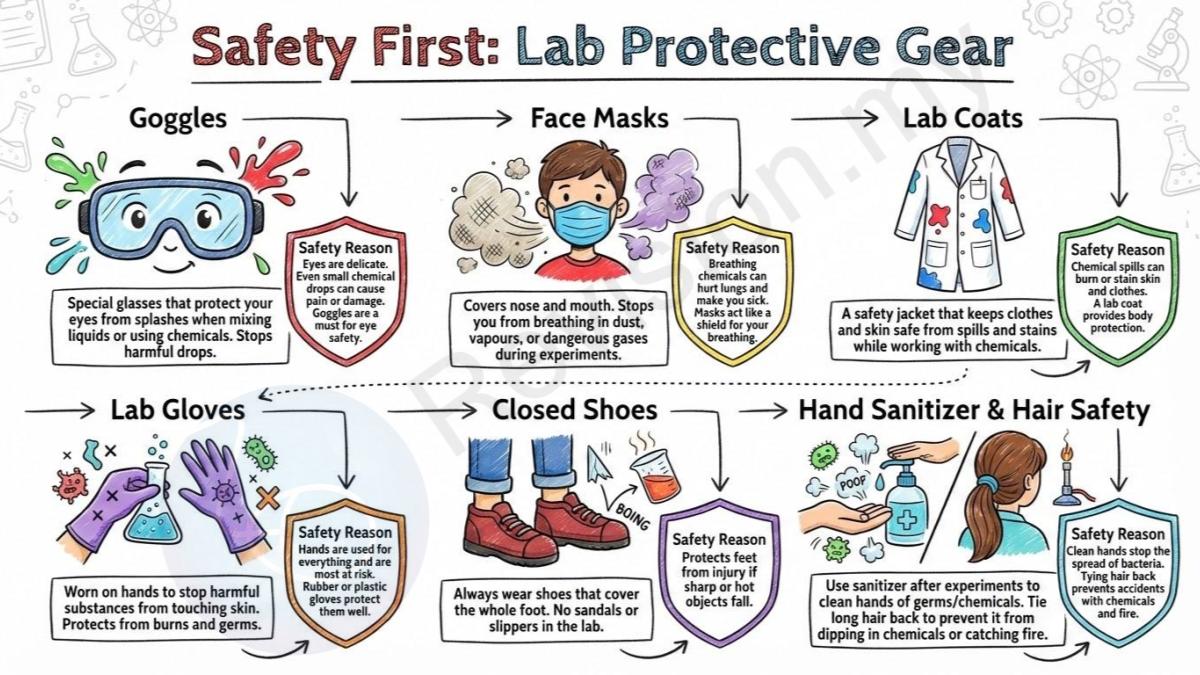
Goggles: Goggles are like special glasses that protect your eyes. When you’re mixing liquids or using chemicals, they might splash. Goggles stop those drops from hurting your eyes.
Eye Safety Reason: Our eyes are very delicate. Even a small drop of a harmful chemical can cause serious pain or damage. That’s why goggles are a must in the lab.
Face Masks: Face masks help cover your nose and mouth. This stops you from breathing in things like dust, vapours, or dangerous gases during experiments.
Breathing Safety Reason: Breathing in chemicals can hurt your lungs and make you sick. Face masks act like a shield to protect your breathing.
Lab Coats: A lab coat is like a safety jacket. It keeps your clothes and skin safe from spills and stains while working with chemicals.
Skin Protection Reason: If a chemical spills and touches your skin or clothes, it can burn or stain them. Wearing a lab coat keeps your body safe.
Lab Gloves: Gloves are worn on your hands to stop harmful substances from touching your skin. Some chemicals can burn, and some materials can carry germs.
Hand Safety Reason: We use our hands for everything in the lab, so they are the most at risk. Gloves made of rubber or plastic can protect them well.
Closed Shoes: Always wear shoes that cover your whole foot. Open sandals or slippers are not safe in the lab.
Foot Safety Reason: If something sharp or hot falls, closed shoes help protect your feet from getting injured.
Hand Sanitizer: After experiments, use hand sanitizer to clean your hands. This helps remove germs or chemicals you may have touched.
Sanitation Reason: Clean hands mean fewer chances of spreading bacteria or harmful substances to others or to your food.
Hair Safety: If you have long hair, tie it back before starting any lab work. Loose hair can dip into chemicals or catch fire.
Safety Equipment
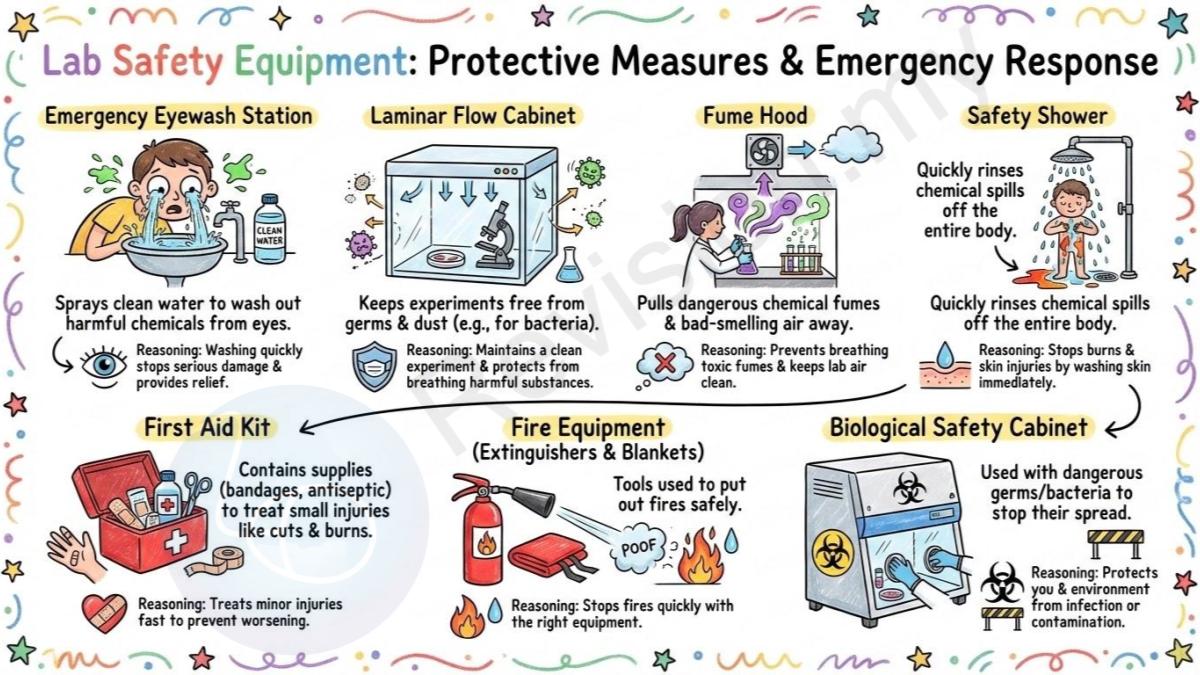
Emergency Eyewash Station: If something harmful gets into your eyes, go to the eyewash station right away. It sprays clean water to wash out the chemical.
Eyewash Reasoning: Washing your eyes quickly can stop serious damage and make you feel better.
Laminar Flow Cabinet: This is a special box that keeps germs and dust away from your experiment. It’s used when working with bacteria or other tiny living things.
Cabinet Reasoning: It keeps your experiment clean and protects you from breathing in harmful substances.
Fume Hood: A fume hood pulls bad-smelling or dangerous air away from you. It’s used when working with strong chemicals.
Fume Safety Reason: Breathing in chemical fumes can be dangerous. A fume hood helps keep the lab air clean.
Safety Shower: If chemicals spill on your body, you can stand under this shower to quickly rinse them off.
Shower Reasoning: Washing your skin quickly can stop burns or other skin injuries.
First Aid Kit: This is a box with bandages, antiseptic, and other things to help treat small injuries like cuts or burns.
First Aid Reasoning: It’s important to treat small injuries fast so they don’t get worse.
Fire Equipment: There are fire extinguishers and fire blankets in the lab. These are used to put out fires safely.
Fire Safety Reason: If something catches fire, you need the right tools to stop it quickly and safely.
Biological Safety Cabinet: This is used when working with germs or bacteria that could be dangerous. It stops them from spreading.
Biological Protection Reason: It keeps you and the environment safe from infection or contamination.
Disposal of Biological Waste
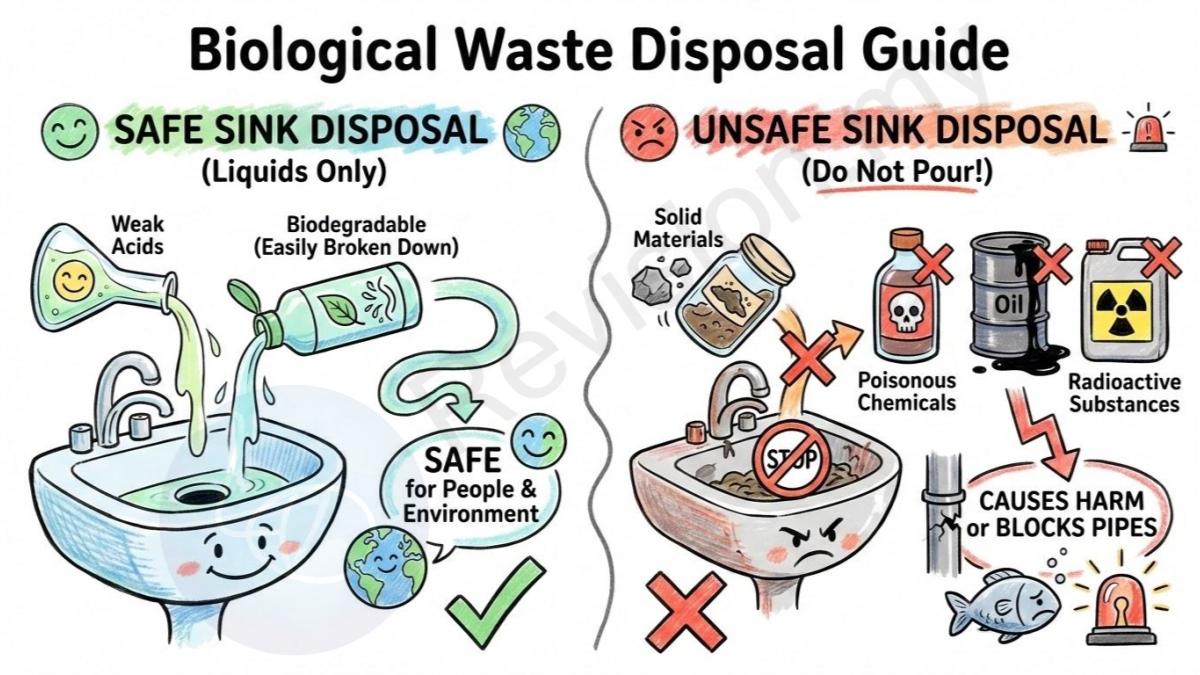
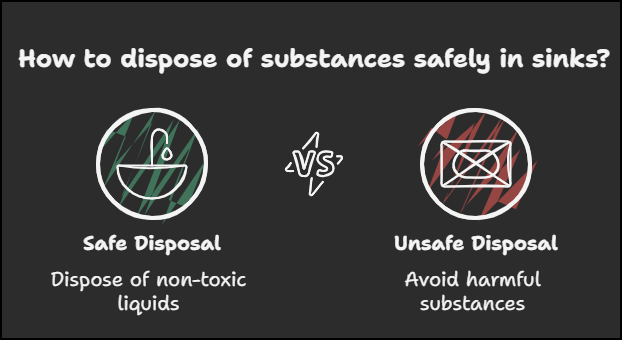
Safe Sink Disposal: Only certain liquids like weak acids or biodegradable (easily broken down) substances can be poured into the sink. These should be safe and not harmful to people or the environment.
Unsafe Sink Disposal: Do not pour things like solid materials, poisonous chemicals, oil, or radioactive substances into the sink. These can cause serious harm or block the pipes.
Categories of Biological Waste
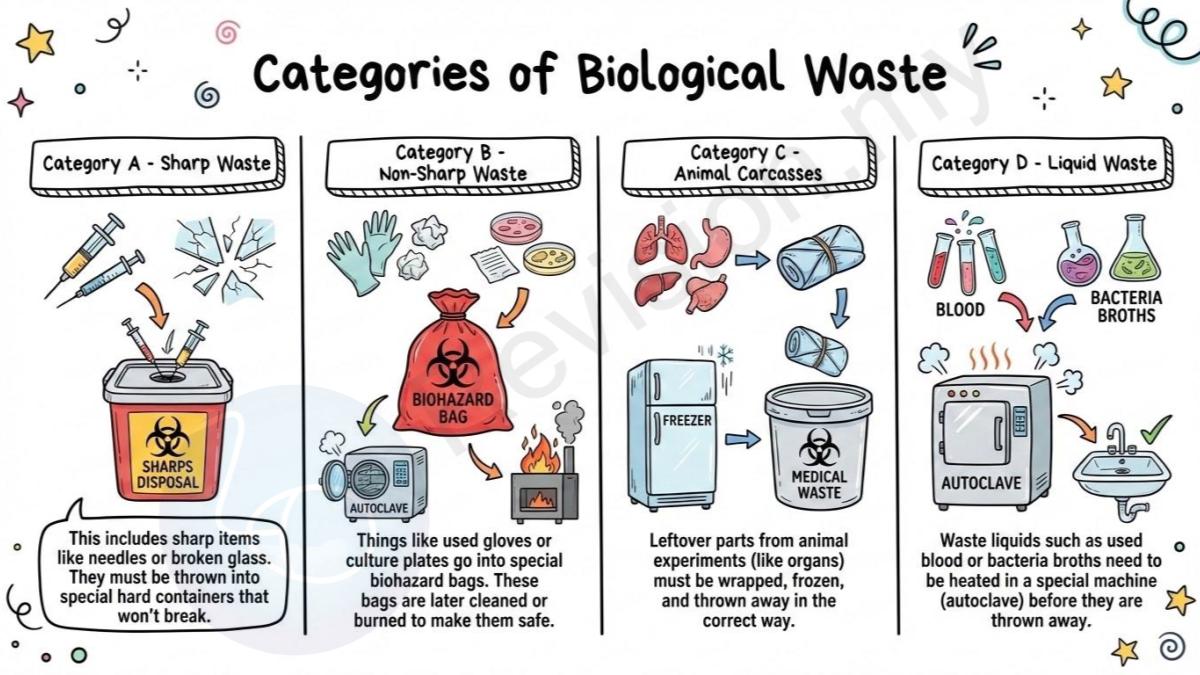
Category A – Sharp Waste: This includes sharp items like needles or broken glass. They must be thrown into special hard containers that won’t break.
Category B – Non-Sharp Waste: Things like used gloves or culture plates go into special biohazard bags. These bags are later cleaned or burned to make them safe.
Category C – Animal Carcasses: Leftover parts from animal experiments (like organs) must be wrapped, frozen, and thrown away in the correct way.
Category D – Liquid Waste: Waste liquids such as used blood or bacteria broths need to be heated in a special machine (autoclave) before they are thrown away.
Laboratory Safety Rules
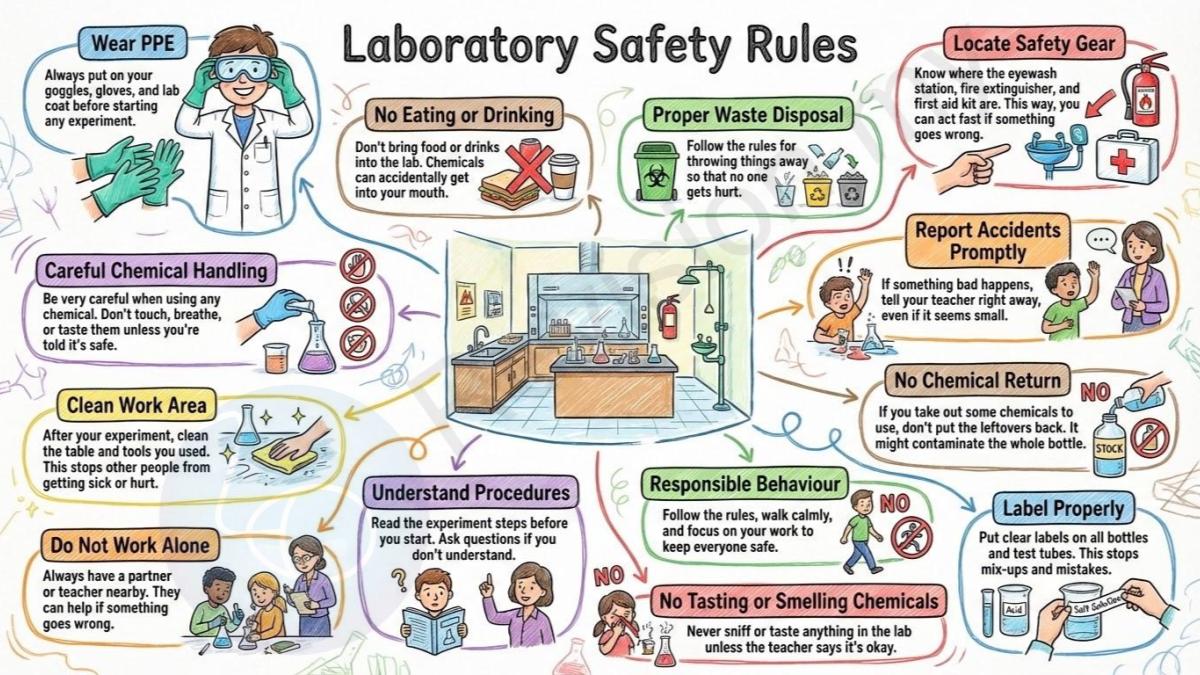
Wear PPE: Always put on your goggles, gloves, and lab coat before starting any experiment.
Locate Safety Gear: Know where the eyewash station, fire extinguisher, and first aid kit are. This way, you can act fast if something goes wrong.
No Eating or Drinking: Don’t bring food or drinks into the lab. Chemicals can accidentally get into your mouth.
Proper Waste Disposal: Follow the rules for throwing things away so that no one gets hurt.
Careful Chemical Handling: Be very careful when using any chemical. Don’t touch, breathe, or taste them unless you’re told it’s safe.
Report Accidents Promptly: If something bad happens, tell your teacher right away, even if it seems small.
Clean Work Area: After your experiment, clean the table and tools you used. This stops other people from getting sick or hurt.
No Chemical Return: If you take out some chemicals to use, don’t put the leftovers back. It might contaminate the whole bottle.
Do Not Work Alone: Always have a partner or teacher nearby. They can help if something goes wrong.
Understand Procedures: Read the experiment steps before you start. Ask questions if you don’t understand.
Responsible Behaviour: Follow the rules, walk calmly, and focus on your work to keep everyone safe.
Label Properly: Put clear labels on all bottles and test tubes. This stops mix-ups and mistakes.
No Tasting or Smelling Chemicals: Never sniff or taste anything in the lab unless the teacher says it’s okay.
Managing Accidents
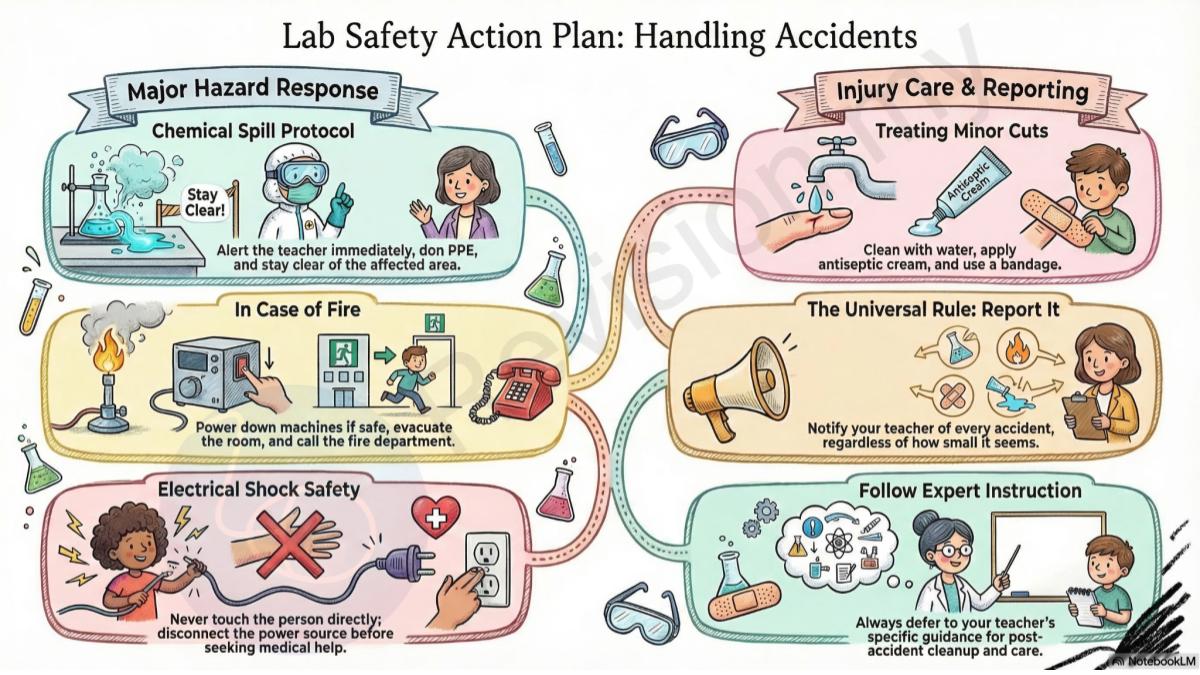
Chemical Spills: If something spills, tell the teacher. Stay away from the area, wear your PPE, and help clean it up safely. Use special powder for things like mercury.
Fire Incidents: If there’s a fire, stop what you’re doing. If it’s safe, turn off any machines, tell others, and leave the room. Call the fire department right away.
Cuts: If you cut yourself, wash the wound with water, put on antiseptic cream, and cover it with a bandage. Ask for help if it doesn’t stop bleeding.
Electrical Shock: If someone gets a shock, don’t touch them directly. First, turn off the power. Then tell the teacher and get medical help.
Other Accidents: No matter how small an accident is, always report it. Follow your teacher’s instructions for what to do next.