1.1 Fields and Careers in Biology
Definition and Scope of Biology
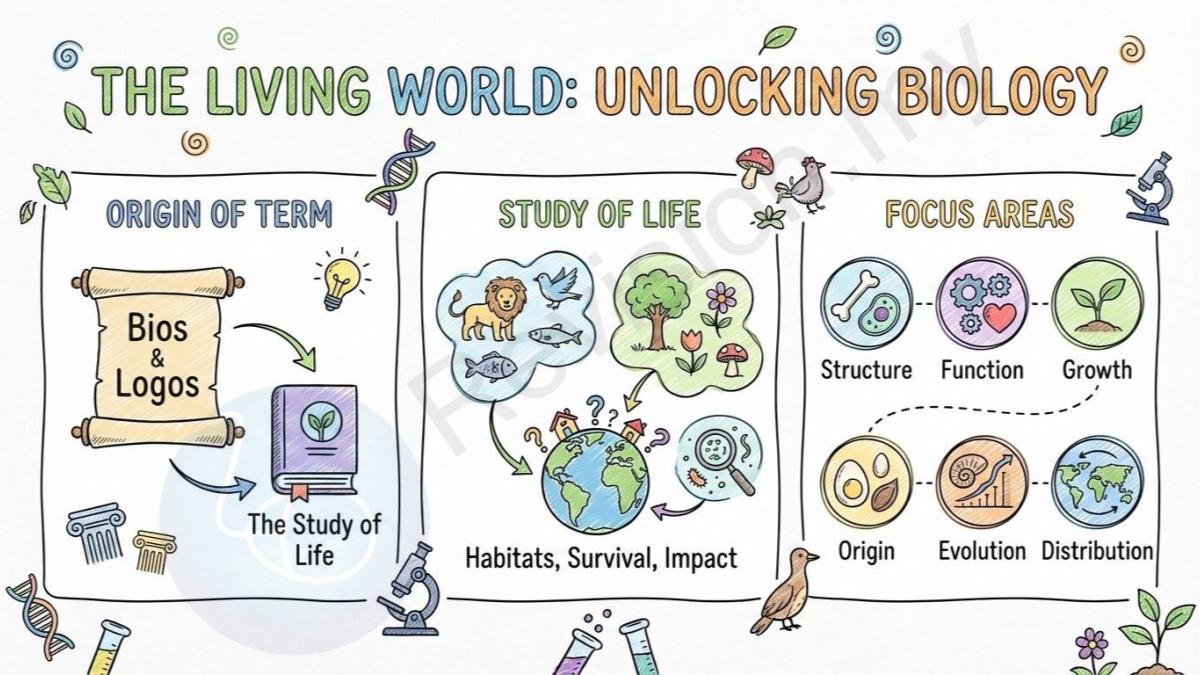
Origin of Term: The word “Biology” comes from two Greek words. “Bios” means life, and “logos” means study or knowledge. So, Biology simply means the study of life. Scientists chose this name to describe the subject that helps us learn about living things.
Study of Life: Biology is a science that helps us understand all forms of life. It includes the study of living things like animals, plants, and tiny organisms you can’t see without a microscope. It also explores where these organisms live, how they survive, and how they affect the world around them.
Focus Areas: In Biology, scientists study many different things about living organisms. They look at how living things are built (structure), how they work (function), how they grow, where they came from (origin), how they change over time (evolution), and how they are spread across the planet (distribution).
Branches of Biology
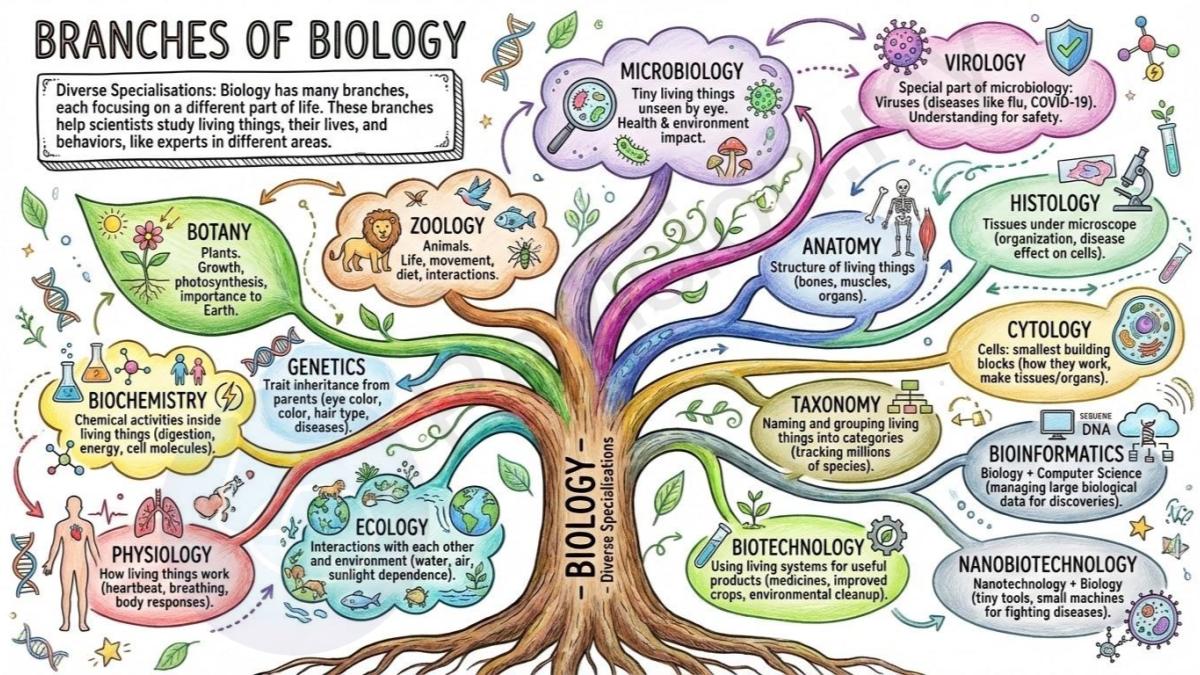
Diverse Specialisations: Biology has many branches, and each one focuses on a different part of life. These branches help scientists study different kinds of living things and how they live and behave. It’s like having different experts who focus on different areas.
Botany: This branch of biology is all about plants. Scientists who study botany learn how plants grow, how they make food through photosynthesis, and how they are important to the Earth.
Zoology: This branch is about animals. Zoologists study how animals live, how they move, what they eat, and how they interact with other animals and their environment.
Microbiology: Microbiology is the study of tiny living things that we can’t see with our eyes. These include bacteria, viruses, fungi, and protozoa. They might be small, but they can have a big impact on health and the environment.
Genetics: Genetics is the branch that studies how traits are passed from parents to their babies. It looks at how living things inherit features like eye color, hair type, or even diseases.
Biochemistry: Biochemistry focuses on the chemical activities inside living things. It studies things like digestion, how we get energy from food, and how cells use different molecules.
Physiology: Physiology looks at how the parts of living things work. For example, it studies how your heart beats, how you breathe, and how your body responds when you run or rest.
Ecology: Ecology is the study of how living things interact with each other and with their environment. It shows us how animals and plants depend on water, air, sunlight, and each other to survive.
Virology: Virology is a special part of microbiology that focuses just on viruses. These tiny particles can cause diseases like the flu or COVID-19, and virologists try to understand them to keep people safe.
Anatomy: Anatomy is the study of the structure of living things. It explores how our bodies are built—bones, muscles, organs, and how everything fits together.
Histology: Histology means looking at tissues under a microscope. This helps scientists and doctors understand how our bodies are organized and how diseases affect our cells.
Cytology: Cytology is the study of cells—the smallest building blocks of life. It helps us understand how cells work and how they make up tissues and organs.
Taxonomy: Taxonomy is the system of naming and grouping living things. It helps scientists keep track of all the millions of species on Earth by organizing them into categories.
Bioinformatics: Bioinformatics mixes biology with computer science. It helps scientists manage large sets of biological information, like DNA data, to find new discoveries.
Biotechnology: This branch uses living things and their systems to make useful products. For example, it helps create medicines, improve crops, and clean up the environment.
Nanobiotechnology: This is a new field that combines very tiny tools (nanotechnology) with biology. It helps make small machines that can work inside the body to fight diseases or deliver medicines.
Contributions of Biology to Daily Life
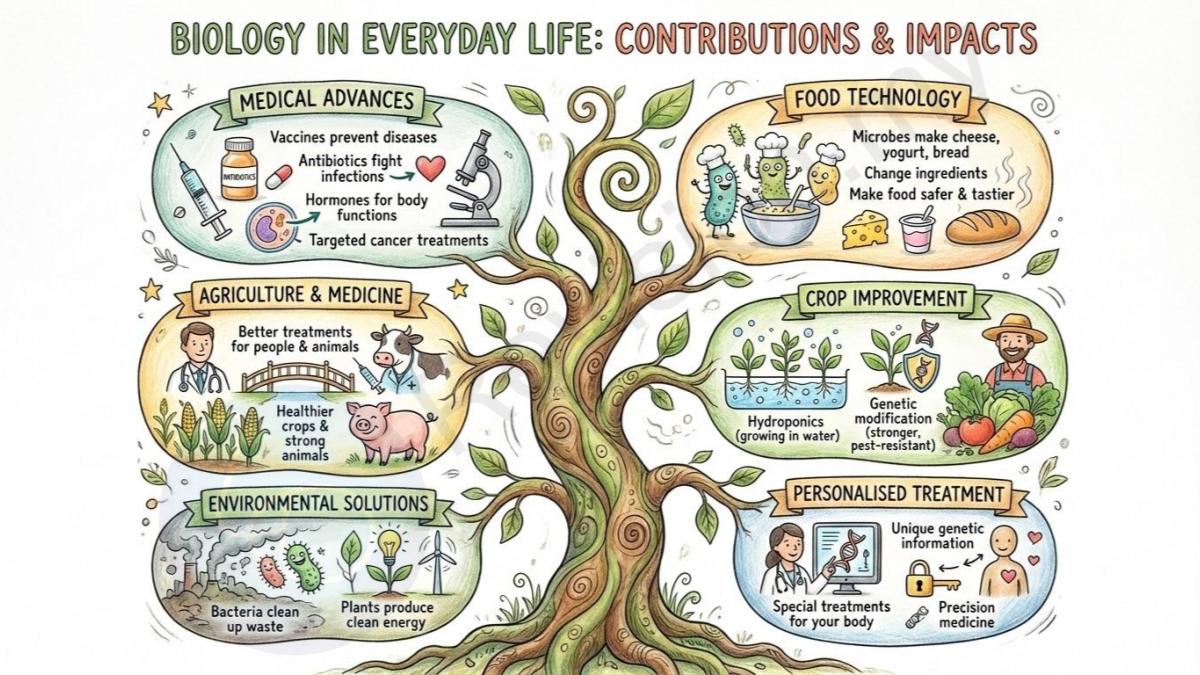
Medical Advances: Because of biology, we now have important medicines like vaccines to prevent diseases, antibiotics to fight infections, hormones to help with body functions, and even cancer treatments that target specific cells.
Agriculture and Medicine: Biology helps improve both health and farming. It leads to better medical treatments for people and animals, and it helps farmers grow healthier crops and raise strong animals.
Food Technology: Thanks to biology and helpful microorganisms, we can make delicious and healthy food like cheese, yogurt, and bread. These microbes help change the ingredients and make the food safer and tastier.
Crop Improvement: Biology helps farmers grow more crops in better ways. Techniques like growing plants in water (hydroponics) or changing their genes (genetic modification) make plants stronger and better at resisting pests.
Environmental Solutions: Biology gives us tools to solve environmental problems. For example, certain bacteria can clean up waste, and plants can help produce clean energy.
Personalised Treatment: Using your unique genetic information, doctors can now create special treatments that work best for your body. This is called personalized or precision medicine.
Careers in Biology
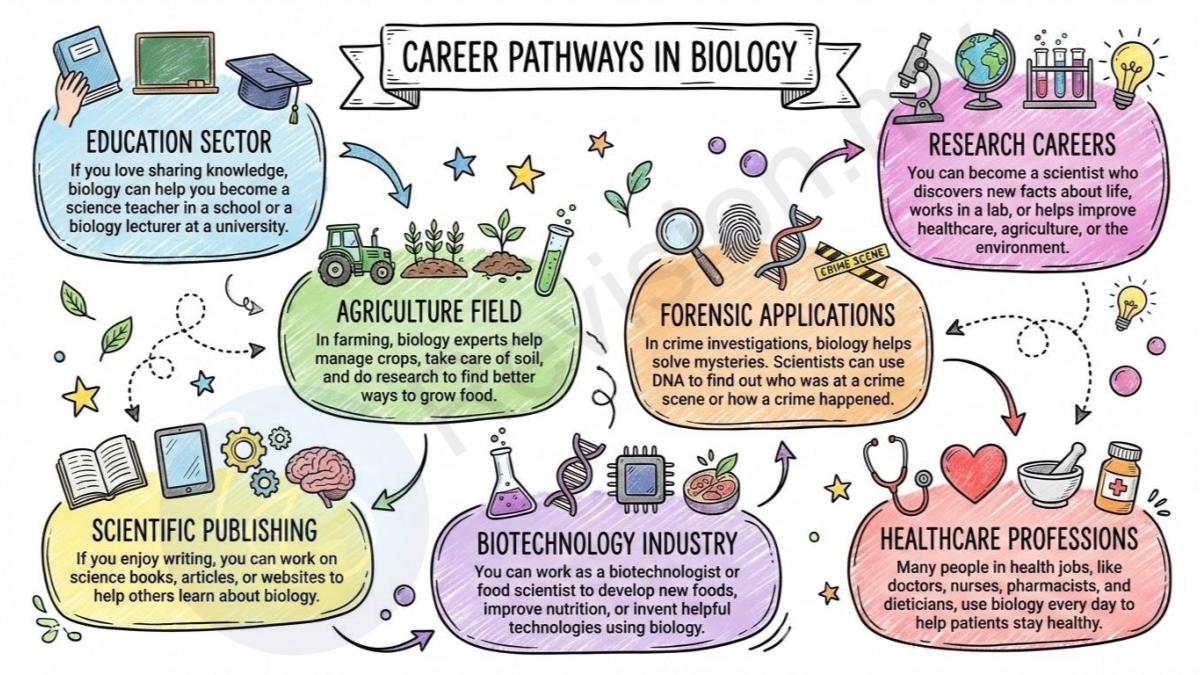
Education Sector: If you love sharing knowledge, biology can help you become a science teacher in a school or a biology lecturer at a university.
Agriculture Field: In farming, biology experts help manage crops, take care of soil, and do research to find better ways to grow food.
Scientific Publishing: If you enjoy writing, you can work on science books, articles, or websites to help others learn about biology.
Biotechnology Industry: You can work as a biotechnologist or food scientist to develop new foods, improve nutrition, or invent helpful technologies using biology.
Healthcare Professions: Many people in health jobs, like doctors, nurses, pharmacists, and dieticians, use biology every day to help patients stay healthy.
Forensic Applications: In crime investigations, biology helps solve mysteries. Scientists can use DNA to find out who was at a crime scene or how a crime happened.
Research Careers: You can become a scientist who discovers new facts about life, works in a lab, or helps improve healthcare, agriculture, or the environment.
Key Points to Note
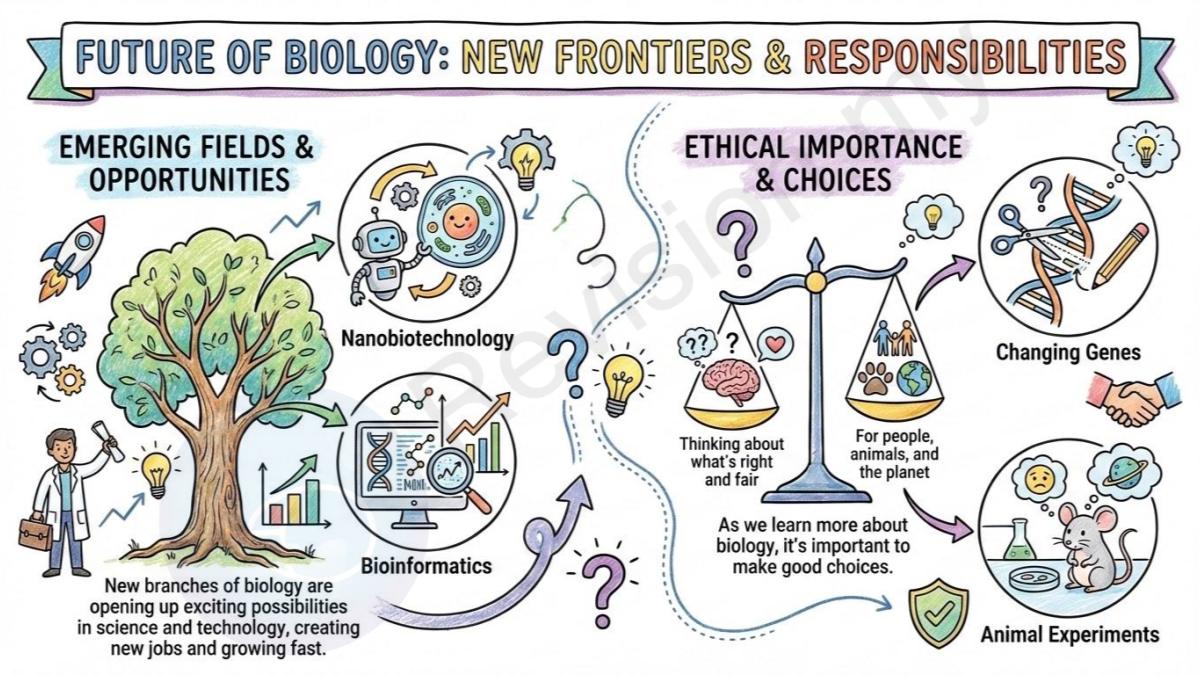
Emerging Fields: New branches of biology, like nanobiotechnology and bioinformatics, are opening up exciting possibilities in science and technology. These fields are growing fast and creating new jobs.
Ethical Importance: As we learn more about biology, it’s important to make good choices. For example, when changing genes or using animals in experiments, scientists must think about what’s right and fair for people, animals, and the planet.