2.1 Cardiopulmonary Resuscitation (CPR)
Definition (No Flashcards)
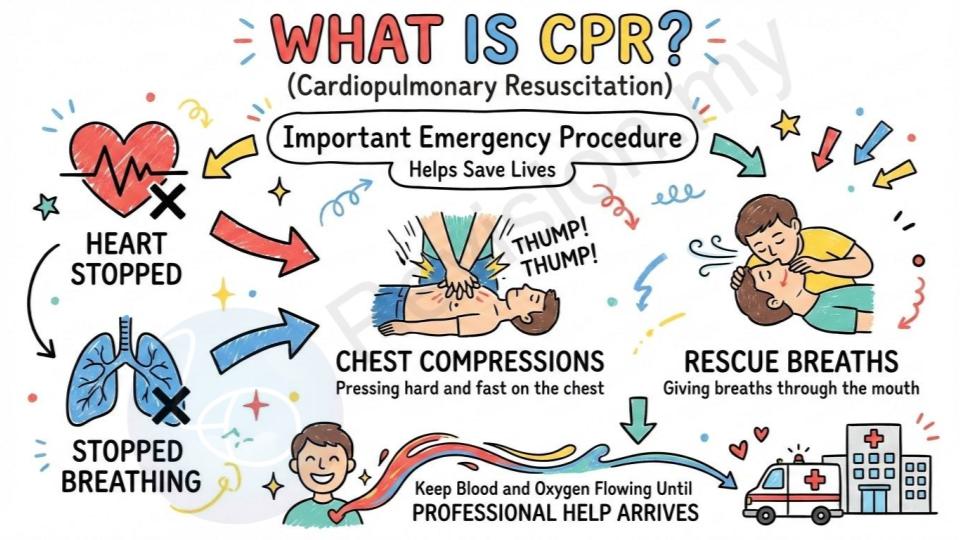
What is CPR?: Cardiopulmonary Resuscitation, or CPR, is a very important emergency procedure that can help save a person’s life. It is used when someone’s heart has stopped beating or they have stopped breathing. CPR involves pressing hard and fast on the chest (called chest compressions) and giving breaths through the mouth (called rescue breaths) to keep blood and oxygen flowing in the body until professional help arrives.
Purpose of CPR
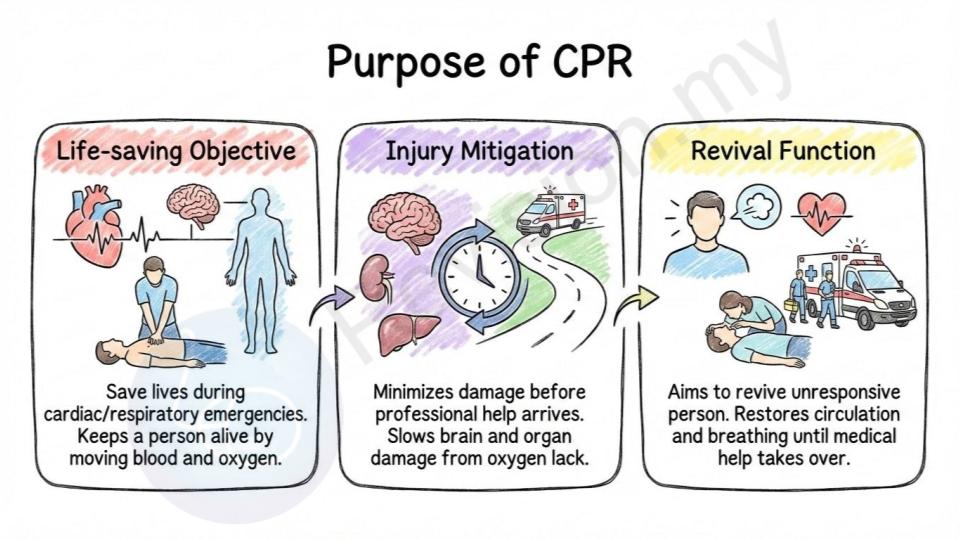
Life-saving objective: The main purpose of CPR (Cardiopulmonary Resuscitation) is to help keep a person alive when their heart has stopped beating or their lungs have stopped breathing. These are very serious emergencies that can lead to death in just a few minutes if nothing is done. CPR is one of the most important things you can try right away to help someone who is in a life-threatening situation. It helps by trying to keep their blood moving and getting some oxygen to the brain and body.
Injury mitigation: When a person’s heart or breathing stops, their brain and other organs stop getting oxygen. This can cause serious damage very quickly — even in just a few minutes. By starting CPR right away, you are helping to slow down this damage. It gives the person a better chance of recovering without having brain damage or problems with their organs. Acting quickly really matters in these situations.
Revival function: CPR helps the person have a better chance of waking up or starting to breathe again. By doing chest compressions and giving breaths, CPR helps push blood and oxygen through the body, even though the heart is not working. This can keep the person alive long enough for emergency medical help, like an ambulance, to arrive with equipment and training to take over.
When to Administer CPR
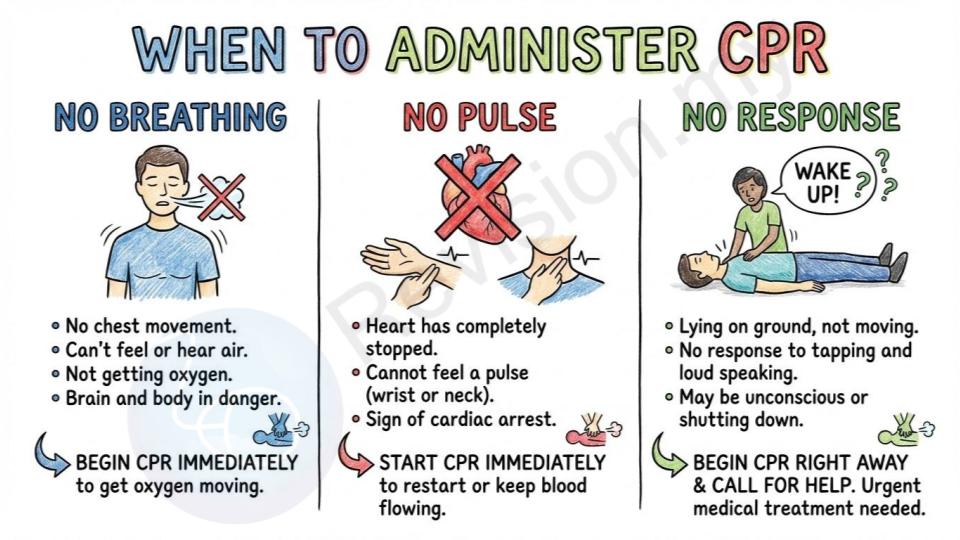
No breathing: If you see that someone is not breathing at all — meaning their chest isn’t moving and you can’t feel or hear any air coming from their mouth or nose — then they are not getting oxygen, and their brain and body are in danger. You need to begin CPR immediately to try to get oxygen moving through their body again.
No pulse: If the person’s heart has completely stopped and you cannot feel a pulse — which means you don’t feel any heartbeat when you gently check their wrist or neck — this is a sign of cardiac arrest. The heart has stopped doing its job, and CPR should be started immediately to try to restart it or at least keep blood flowing.
No response: If the person is lying on the ground and not moving, and you try to wake them up by tapping their shoulder and speaking loudly but they don’t respond at all, this is a big warning sign. It means they may be unconscious or their body is shutting down. You should begin CPR right away and call for help, because they may need medical treatment urgently.
CPR Steps
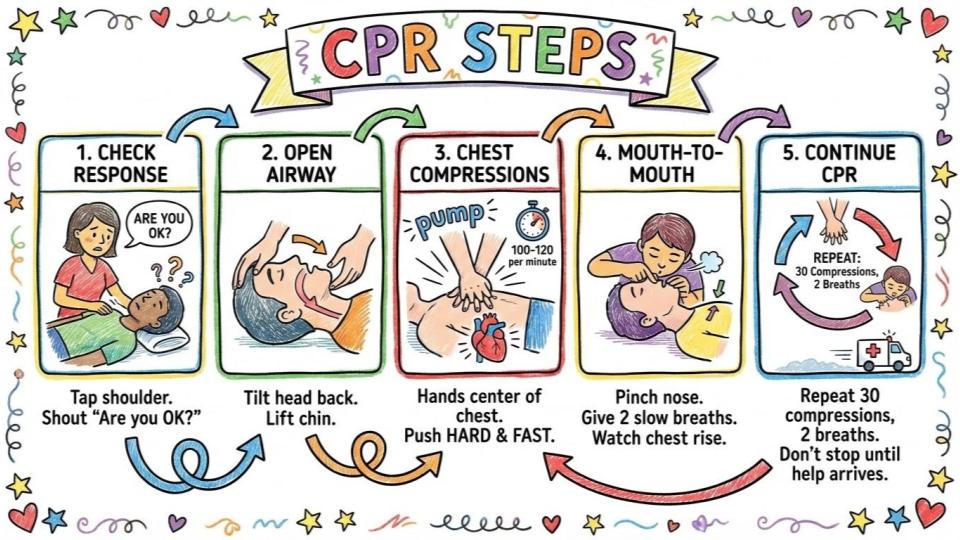
Step 1 – Check response: The very first thing you should do is gently tap the person’s shoulder to see if they react, while also speaking loudly with a phrase like, “Are you OK?” or “Can you hear me?” This is important because you need to quickly figure out if the person is just asleep or dizzy, or if they are completely unconscious and not responding at all. If the person doesn’t move, speak, or blink, then it’s a sign that they need help right away, and you may need to start CPR.
Step 2 – Open airway: If the person is not responding, the next step is to make sure their airway — the path where air goes in and out — is open. Gently tilt their head back by pressing on their forehead and lifting their chin with your other hand. This action moves the tongue away from the back of the throat, which can help air get into the lungs more easily. If the airway is blocked, the person won’t be able to breathe even if you give them air.
Step 3 – Chest compressions: Next, place the heel of one hand in the center of the person’s chest, right between the nipples. Put your other hand on top and interlock your fingers. Push down firmly and fast — about 5–6 centimeters deep, and at a speed of 100 to 120 compressions per minute, which is about two compressions every second. This helps pump the person’s blood to their brain and other vital organs. Chest compressions are the most important part of CPR because they help keep the body alive even when the heart is not working.
Step 4 – Mouth-to-mouth: After you’ve done 30 chest compressions, you need to give the person air. First, pinch their nose shut to stop air from escaping, then cover their mouth with yours and give a slow, deep breath that lasts about one second. Watch to see if the person’s chest rises — this means the air went into their lungs. Give a second breath the same way. These breaths help get oxygen into the body when the person isn’t breathing.
Step 5 – Continue CPR: Keep repeating the cycle of 30 chest compressions followed by 2 rescue breaths. Don’t stop unless one of these things happens: the person starts breathing on their own again, someone else trained in CPR takes over, professional medical help arrives, or you are too tired or it becomes dangerous for you to continue. Every minute counts, so continuing CPR can help save the person’s life until help arrives.
Important Considerations
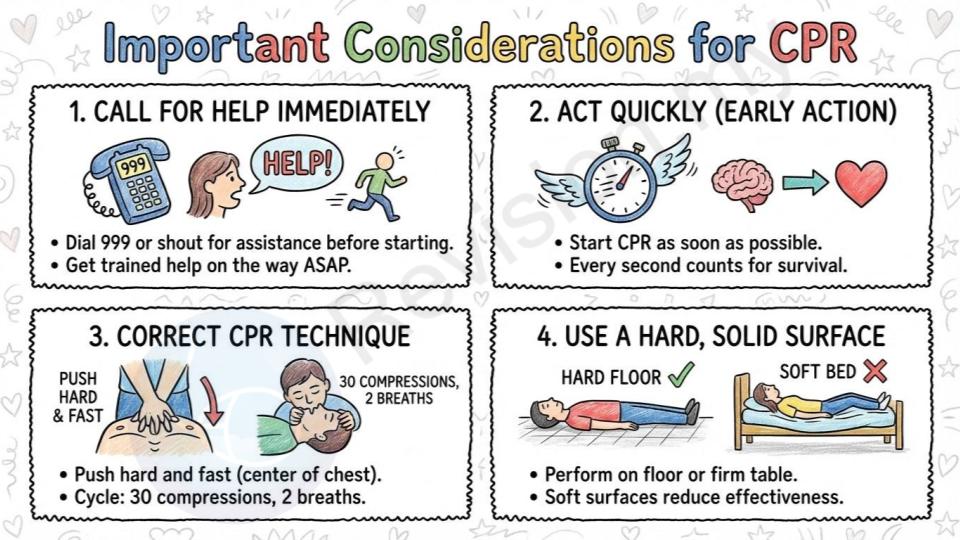
Call for help: If you are by yourself and discover that someone is not moving or responding to you, the first thing you must do is call for help immediately. Dial 999 to reach emergency services, or if you’re in a public place, shout loudly for someone nearby to assist you. It’s really important to do this before you begin CPR so that trained medical help can be on the way as soon as possible. Having someone else to assist also means one person can do CPR while the other gets help or retrieves an automated external defibrillator (AED).
Early action: Acting quickly can truly save someone’s life. The sooner you begin CPR, the greater the chance the person has to survive and recover without serious problems. If you wait too long, the person’s brain and other organs might not get enough oxygen, which can lead to permanent damage or death. Every second counts, so don’t hesitate — starting CPR immediately is critical in giving the person the best chance.
CPR technique: When performing CPR, using the correct method is very important. You need to press down hard and fast on the center of the chest in a steady rhythm. After every 30 compressions, you should give 2 rescue breaths to help move oxygen into the person’s lungs. This cycle — compressions and breaths — keeps blood flowing and helps the person’s heart and lungs start working again. Doing it properly increases the chances of saving the person’s life.
Surface position: Always make sure the person is lying flat on their back on a hard and solid surface like the floor, a sidewalk, or a firm table. This position makes it easier and more effective to push on their chest. If the person is on a soft surface like a bed or couch, your compressions won’t work well because the surface will absorb some of the pressure. A firm surface helps you push the chest down deeply enough to move blood around the body.
Why CPR is Important
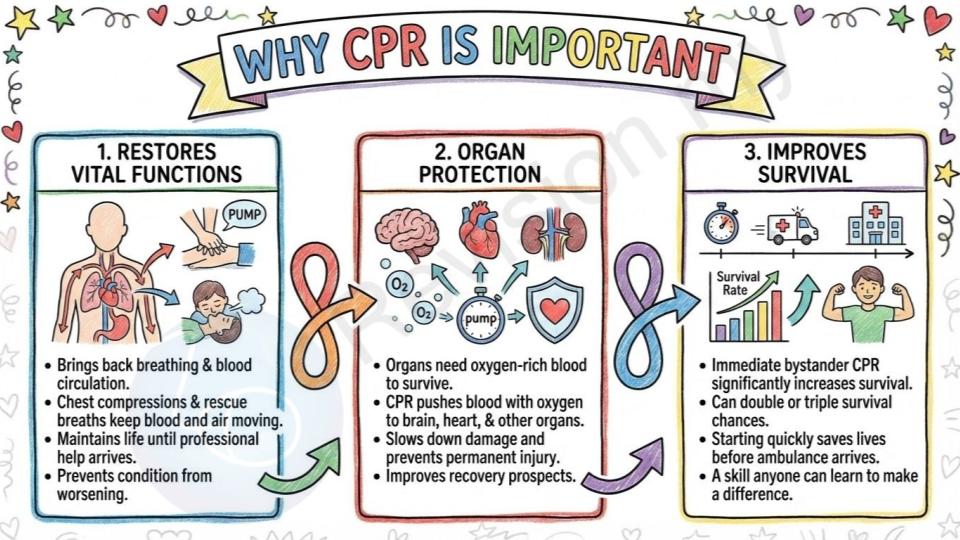
Restores vital functions: CPR plays a critical role in trying to bring back two of the body’s most important life functions: breathing and blood circulation. When someone’s heart has stopped beating — a condition known as cardiac arrest — their body can no longer pump blood, and their breathing may also stop. CPR uses chest compressions and rescue breaths to manually keep blood flowing and air moving in and out of the lungs. This can help maintain life until professional medical help arrives. It gives the person a fighting chance to recover and prevents their condition from getting worse.
Organ protection: When a person’s heart stops, their organs — especially the brain and the heart itself — stop receiving oxygen-rich blood. Without oxygen, brain cells can begin to die within minutes, leading to permanent brain injury. CPR helps by pushing blood through the body, carrying oxygen to the brain, heart, and other essential organs. This action slows down the damage that would normally happen and can make a big difference in how well the person recovers if they survive.
Improves survival: Statistics show that people who receive CPR from a bystander immediately after their heart stops are much more likely to survive than those who don’t get help right away. In some cases, CPR can even double or triple a person’s chance of surviving cardiac arrest. Starting CPR quickly — even before an ambulance arrives — is one of the most powerful tools we have for saving lives in emergencies. It’s a skill that anyone can learn and use to truly make a difference.
Additional Steps – D.R.A.B.C Principles
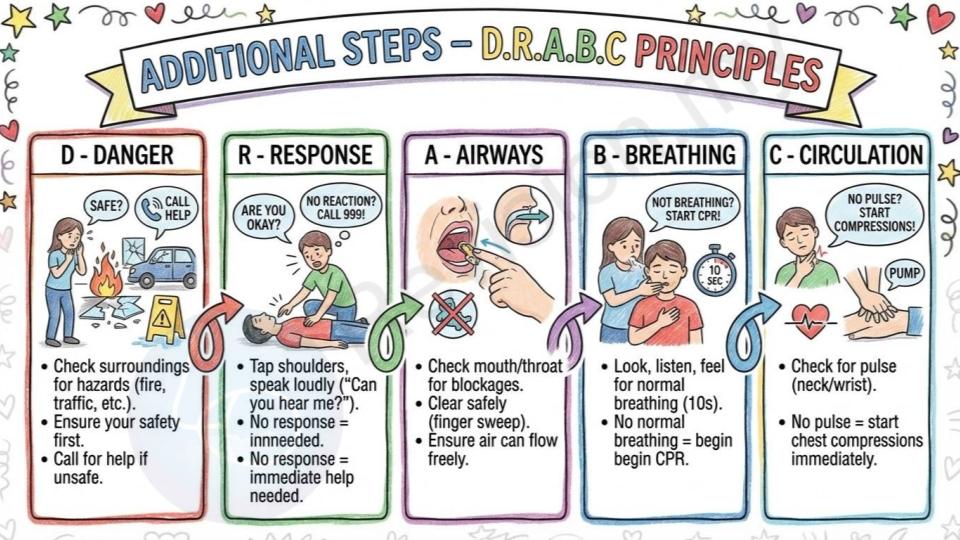
Danger: Before you rush to help someone in trouble, always take a few seconds to check your surroundings for danger. This could be things like a fire burning nearby, a wet and slippery floor, broken glass, traffic, or even something like falling debris. You don’t want to become a victim yourself. Make sure it’s totally safe for you to help before you go near the person who needs help. If it’s not safe, call for professional help instead.
Response: Once you know the area is safe, check to see if the person can respond. You can do this by gently tapping their shoulders and speaking loudly, like saying, “Can you hear me?” or “Are you okay?” If they talk back, move, or even blink or groan, they are at least somewhat responsive. But if they don’t react at all, they may be unconscious or in serious trouble and need emergency help immediately.
Airways: The next step is to check their airway. This means making sure the person’s mouth and throat are not blocked by anything that would stop them from breathing. Look to see if there’s food, vomit, or an object like gum or a toy (especially with kids) inside. If there is something, gently remove it if you can do so safely, using a finger sweep if needed. Keeping the airway clear is crucial so air can go in and out freely.
Breathing: Now you need to check if the person is breathing normally. This involves looking to see if their chest is rising and falling, listening close to their mouth for the sound of breathing, and feeling with your cheek to detect air movement. Do this for about 10 seconds. If they are not breathing, or only gasping, they are not getting enough oxygen, and you should begin CPR immediately to help keep their blood and oxygen flowing.
Circulation: Finally, check to see if the person has a pulse. You can gently press two fingers on the side of their neck (called the carotid artery) or on their wrist (the radial artery). Feel for a steady beat. If there’s no pulse, that means their heart has stopped — this is a life-threatening emergency. Start chest compressions right away to try to get the heart beating and keep blood moving to the brain and other organs until help arrives.
What to Do After CPR
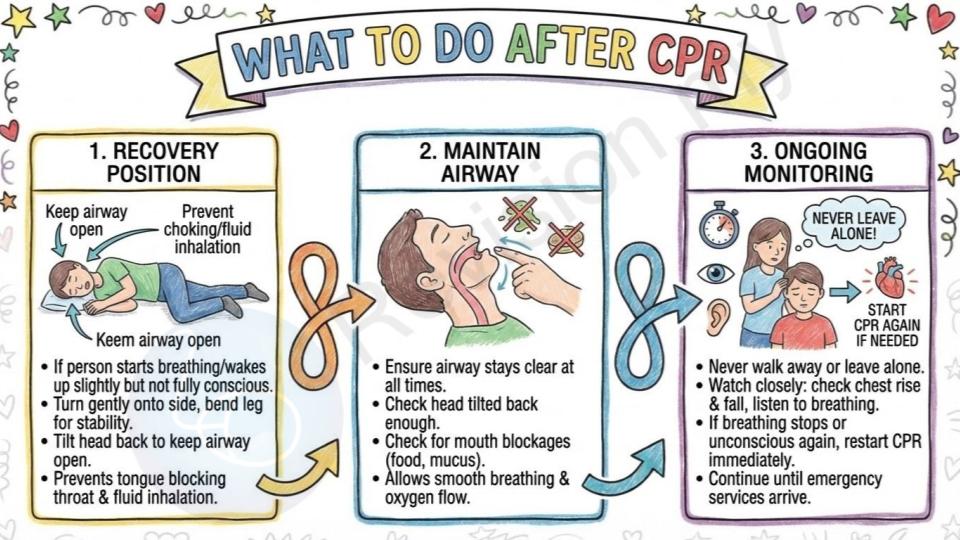
Recovery position: If the person starts to breathe on their own again or wakes up slightly but is still not fully conscious, it’s important to place them in what is called the recovery position. This means turning the person gently onto their side, bending one of their legs to keep them steady, and tilting their head slightly back to keep their airway open. This position helps prevent the tongue from blocking the throat and also keeps any fluid, like vomit or saliva, from going into their lungs, which could cause choking or breathing problems.
Maintain airway: Even after placing the person in the recovery position, you still need to make sure their airway stays clear at all times. This includes checking that their head is tilted back enough to keep the throat open and making sure there’s nothing inside their mouth, such as food or mucus, that could stop them from breathing properly. A clear airway allows the person to breathe smoothly and continue to get the oxygen their body needs to stay alive.
Ongoing monitoring: Never walk away or leave the person alone, even if they appear to be getting better. You must continue to watch them closely. Look at their chest to see if it’s still rising and falling with each breath, and listen for any changes in their breathing. If they stop breathing again, or if they become unconscious once more, you need to begin CPR right away and keep going until emergency medical services arrive to take over. Your attention during this time is very important and could save their life.