2.1 Cell Structure and Function (Sample Lesson)
Basic Unit of Life
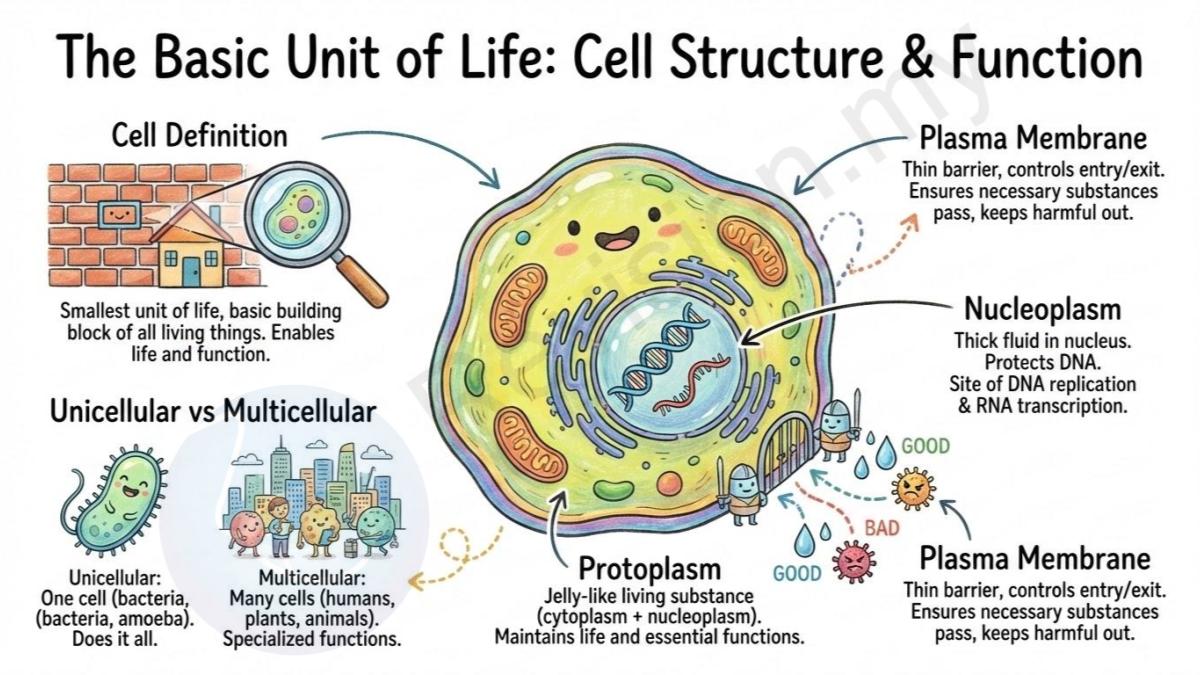
Cell Definition: All living organisms, whether they are tiny bacteria or large animals, are made up of cells. A cell is the smallest unit of life, meaning it is the basic building block that makes up all living things. Without cells, living organisms cannot exist or function properly.
Unicellular vs Multicellular: Organisms can be:
- Unicellular: Made up of only one cell, such as bacteria and amoeba. These organisms carry out all their life processes within a single cell.
- Multicellular: Made up of many cells, such as humans, plants, and animals. Different cells in these organisms perform specific functions to keep the organism alive.
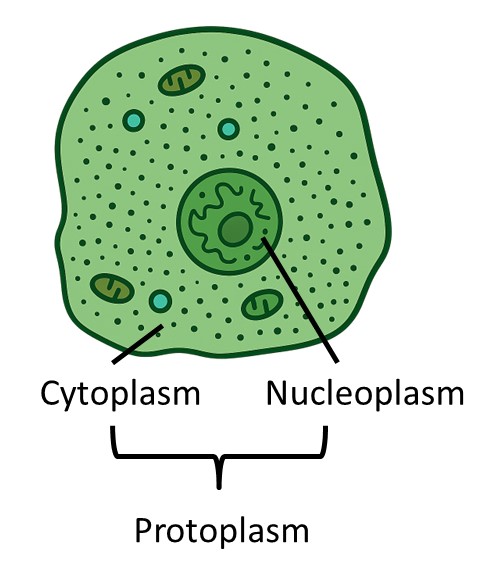
Protoplasm: Protoplasm is the jelly-like living substance inside a cell. It includes both the cytoplasm (the fluid outside the nucleus) and the nucleoplasm (the fluid inside the nucleus). It plays a crucial role in maintaining the life of the cell and carrying out essential functions.
Nucleoplasm: Nucleoplasm is the thick fluid found inside the nucleus. It surrounds and protects the genetic material (DNA), allowing important cellular processes like DNA replication and RNA transcription to occur.
Plasma Membrane: The plasma membrane, also known as the cell membrane, is a thin barrier that surrounds the cell. It controls what enters and leaves the cell, ensuring that only necessary substances can pass through while keeping harmful materials out.
Cell Wall
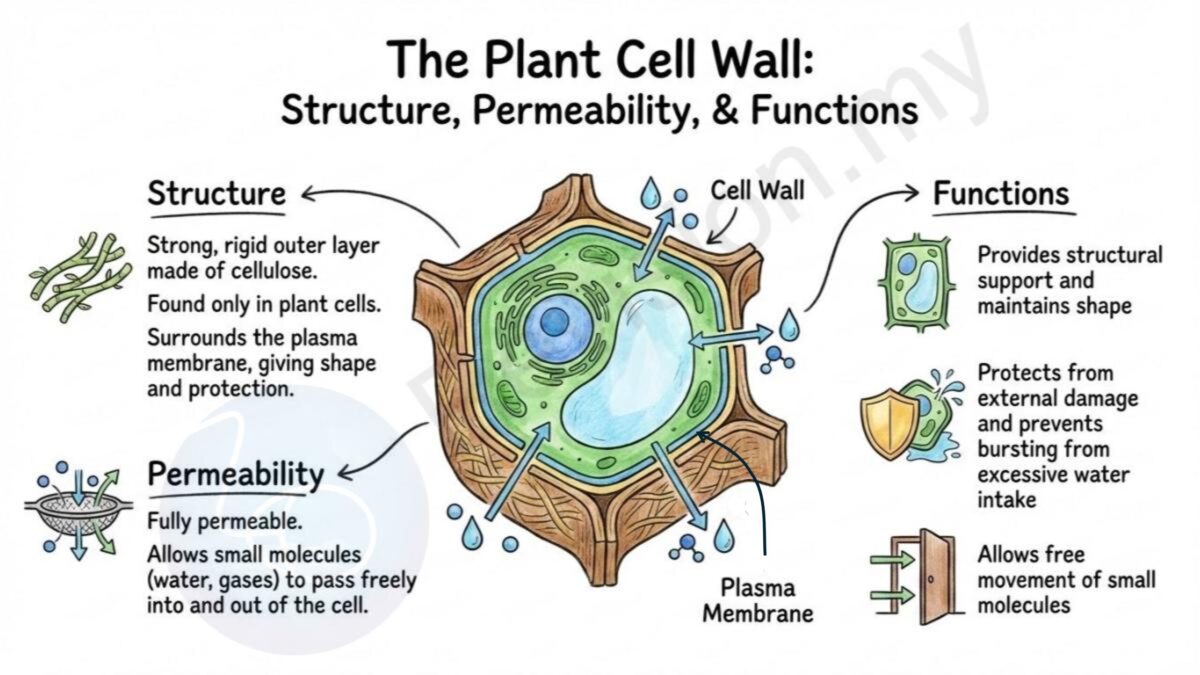
Structure: The cell wall is a strong, rigid outer layer made of cellulose that is found only in plant cells. It surrounds the plasma membrane, giving the cell its shape and protection.
Permeability: The cell wall is fully permeable, meaning it allows small molecules, such as water and gases, to pass freely into and out of the cell.
Functions:
- Provides structural support and maintains the shape of the plant cell.
- Protects the cell from external damage and prevents it from bursting due to excessive water intake.
- Allows free movement of small molecules.
Plasma Membrane (Cell Membrane)
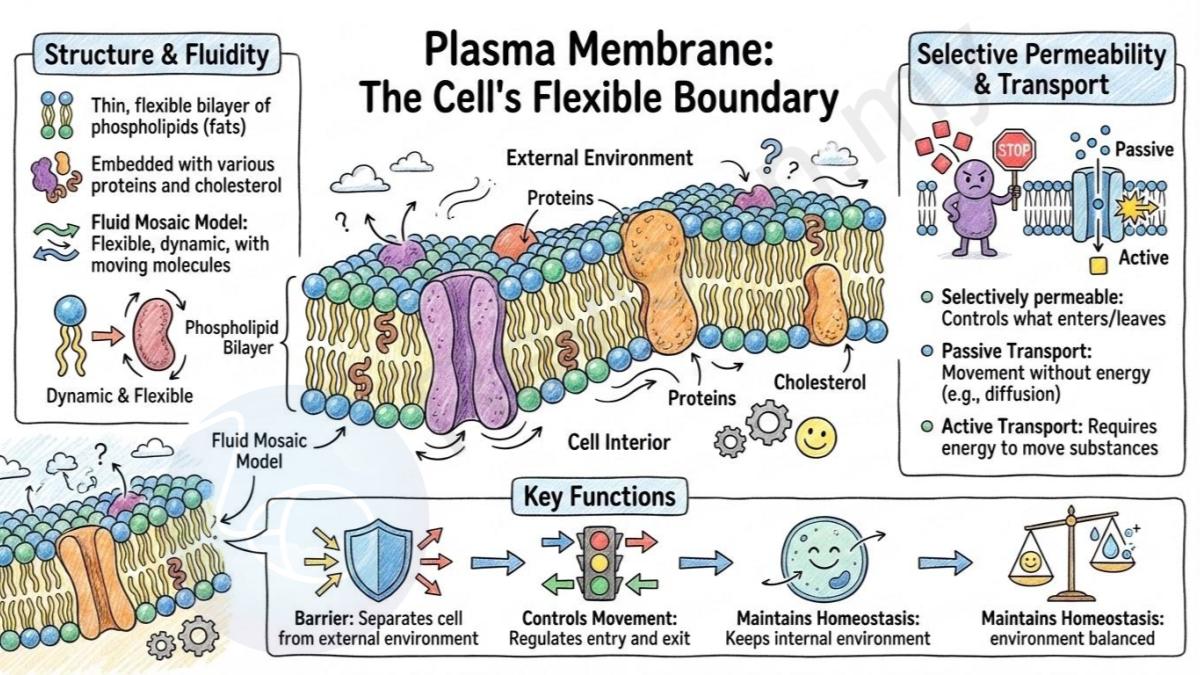
Structure: The plasma membrane is a thin, flexible layer made up of two layers of phospholipids (fats) with embedded proteins and cholesterol. It forms a boundary between the cell and its environment.
Fluid Mosaic Model: The plasma membrane is described by the fluid mosaic model, which suggests that the membrane is flexible like a liquid and contains different types of molecules that move around within it.
Permeability: The plasma membrane is selectively permeable, meaning it allows certain substances to enter or leave the cell while blocking others.
Functions:
- Acts as a barrier, separating the cell from the external environment.
- Controls the movement of substances into and out of the cell through active and passive transport.
- Maintains homeostasis, keeping the internal environment of the cell balanced.
Cytoplasm
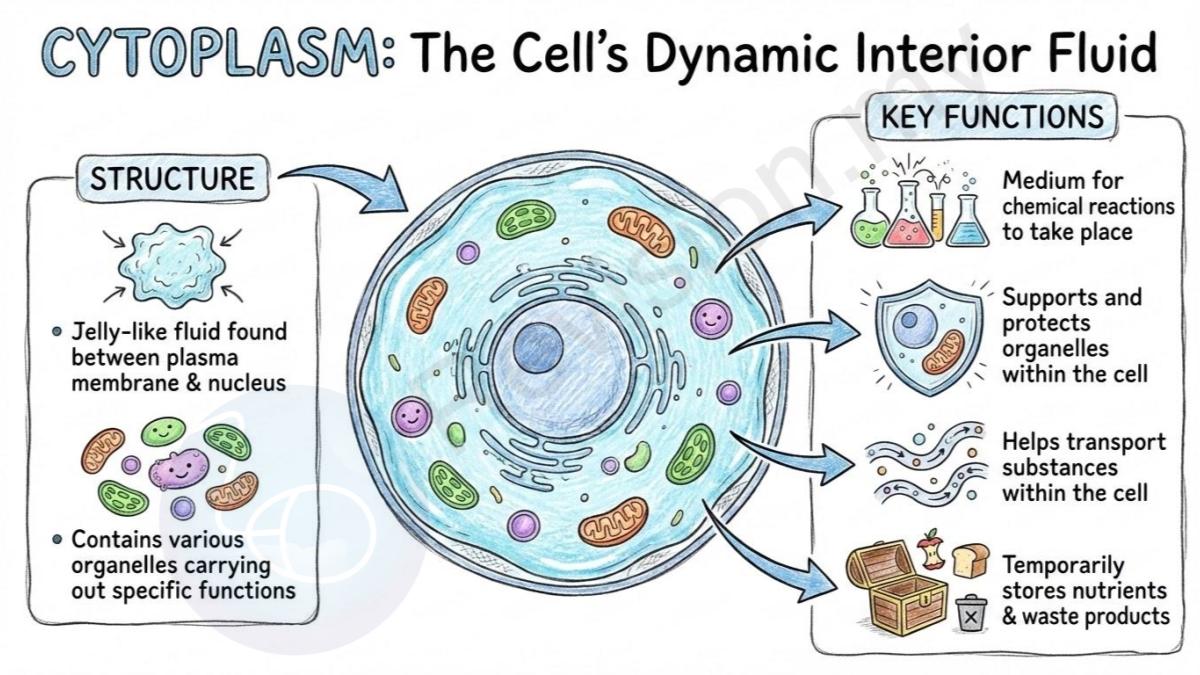
Structure: The cytoplasm is a jelly-like fluid found between the plasma membrane and the nucleus. It contains various organelles that carry out specific functions.
Functions:
- Acts as a medium where chemical reactions take place.
- Supports and protects the organelles within the cell.
- Helps transport substances within the cell.
- Temporarily stores nutrients and waste products.
Nucleus
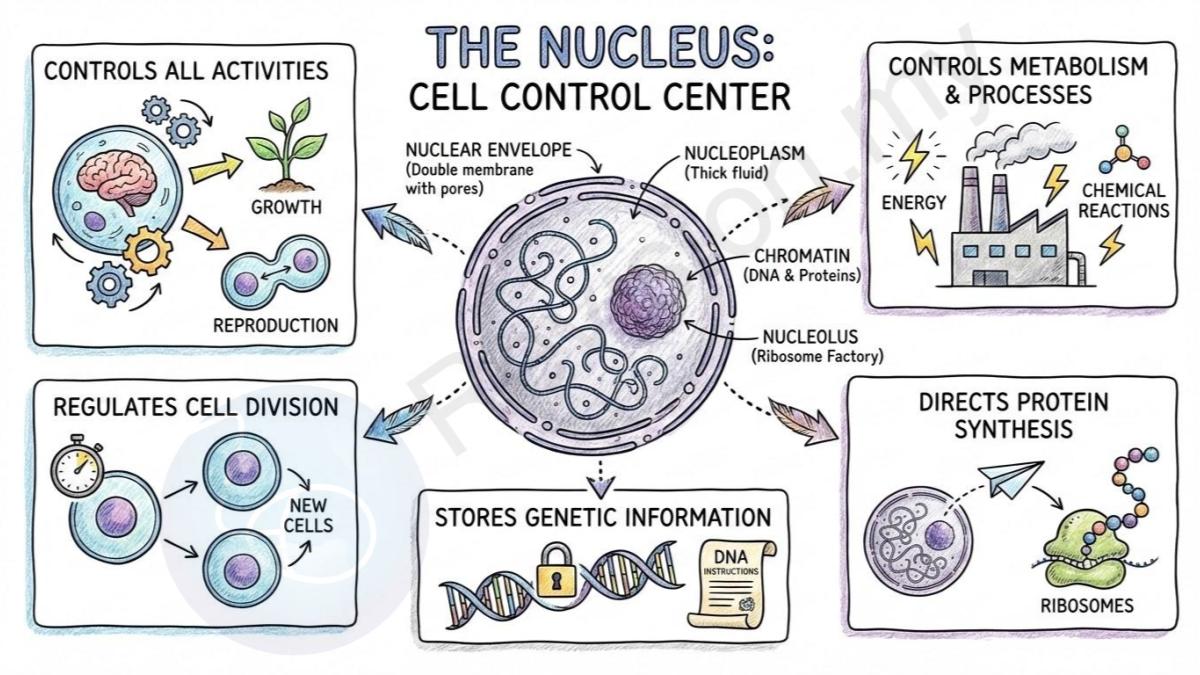
Structure: The nucleus is a large, spherical organelle surrounded by a double-layered membrane called the nuclear envelope. It is often referred to as the “control center” of the cell.
Nuclear Envelope: The nuclear envelope surrounds the nucleus and contains small pores that allow the exchange of materials between the nucleus and the cytoplasm.
Nucleoplasm: The nucleoplasm is the thick fluid inside the nucleus where chromatin (DNA) and the nucleolus are suspended.
Chromatin: Chromatin is made up of DNA and proteins. During cell division, chromatin condenses to form structures called chromosomes, which carry genetic information.
Nucleolus: The nucleolus is a dense, round structure inside the nucleus that produces ribosomes, which are responsible for protein synthesis.
Functions:
- Controls all activities of the cell, including growth and reproduction.
- Regulates cell division to produce new cells.
- Stores genetic information in the form of DNA.
- Directs protein synthesis by sending instructions to the ribosomes.
- Controls cellular metabolism and other essential processes.
Vacuoles and Vesicles
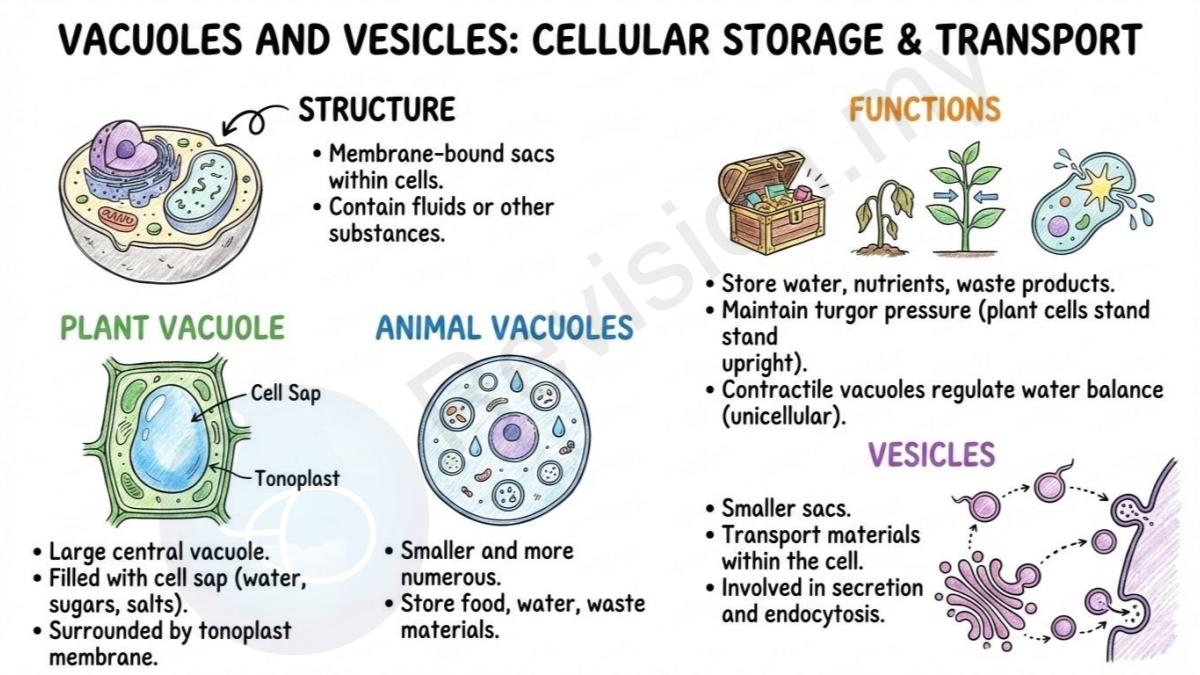
Structure: Vacuoles and vesicles are membrane-bound sacs found within cells that contain fluids or other substances.
Plant Vacuole: Plant cells contain a large central vacuole filled with cell sap, which is a mixture of water, sugars, and salts. It is surrounded by a membrane called the tonoplast.
Animal Vacuoles: Animal cells have smaller and more numerous vacuoles that store food, water, and waste materials.
Functions:
- Store water, nutrients, and waste products.
- Maintain turgor pressure in plant cells to keep the plant upright.
- Contractile vacuoles in unicellular organisms help regulate water balance.
Vesicles: Vesicles are smaller sacs that transport materials within the cell and are involved in processes like secretion and endocytosis.
Ribosomes
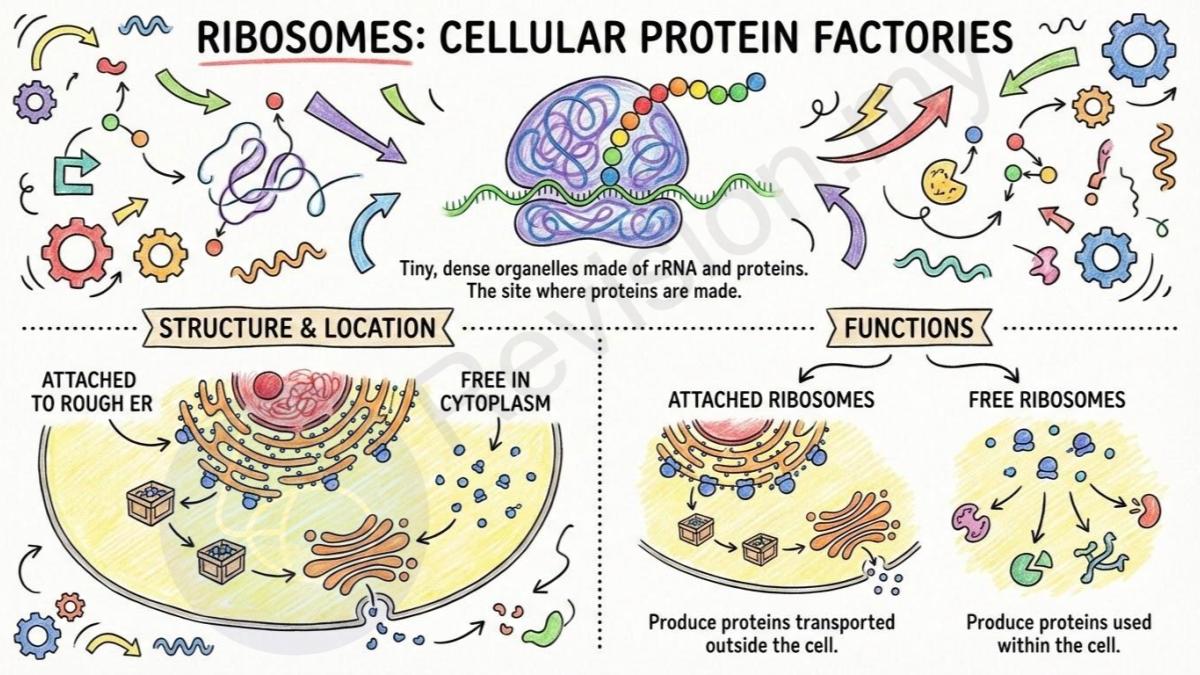
Structure: Ribosomes are tiny, dense organelles made of ribosomal RNA (rRNA) and proteins. They can be found attached to the rough endoplasmic reticulum (ER) or floating freely in the cytoplasm.
Functions:
- Act as the site where proteins are made.
- Ribosomes attached to the rough ER produce proteins that are transported outside the cell.
- Free ribosomes produce proteins that are used within the cell.
Endoplasmic Reticulum (ER)
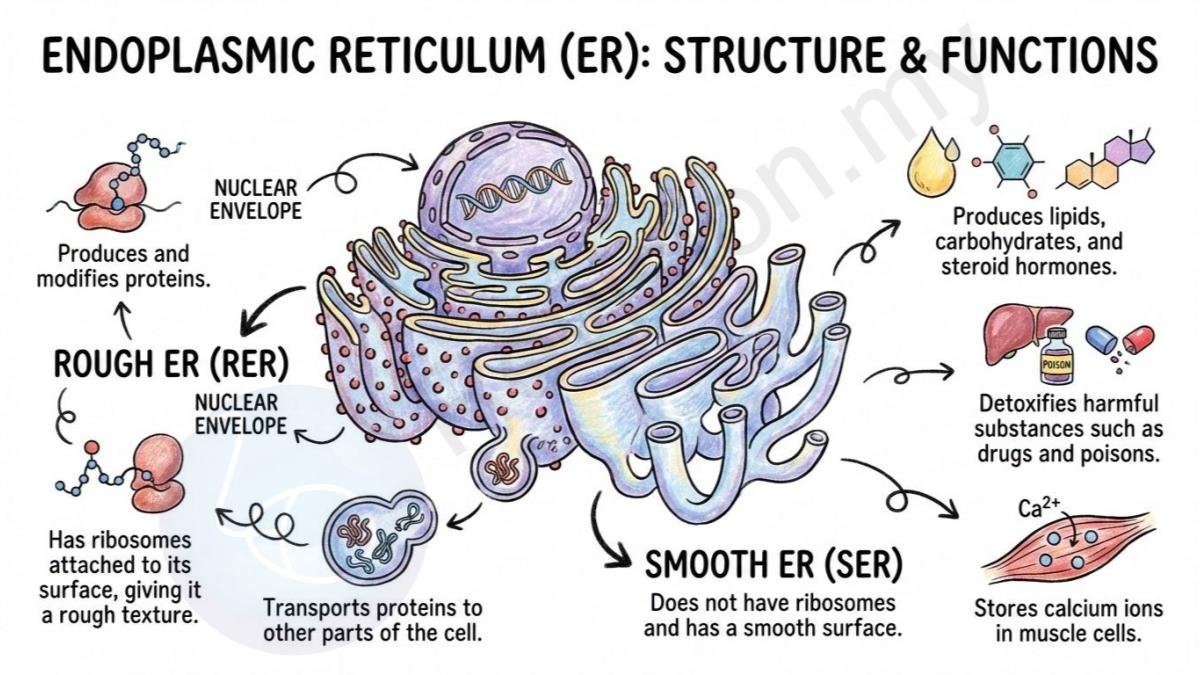
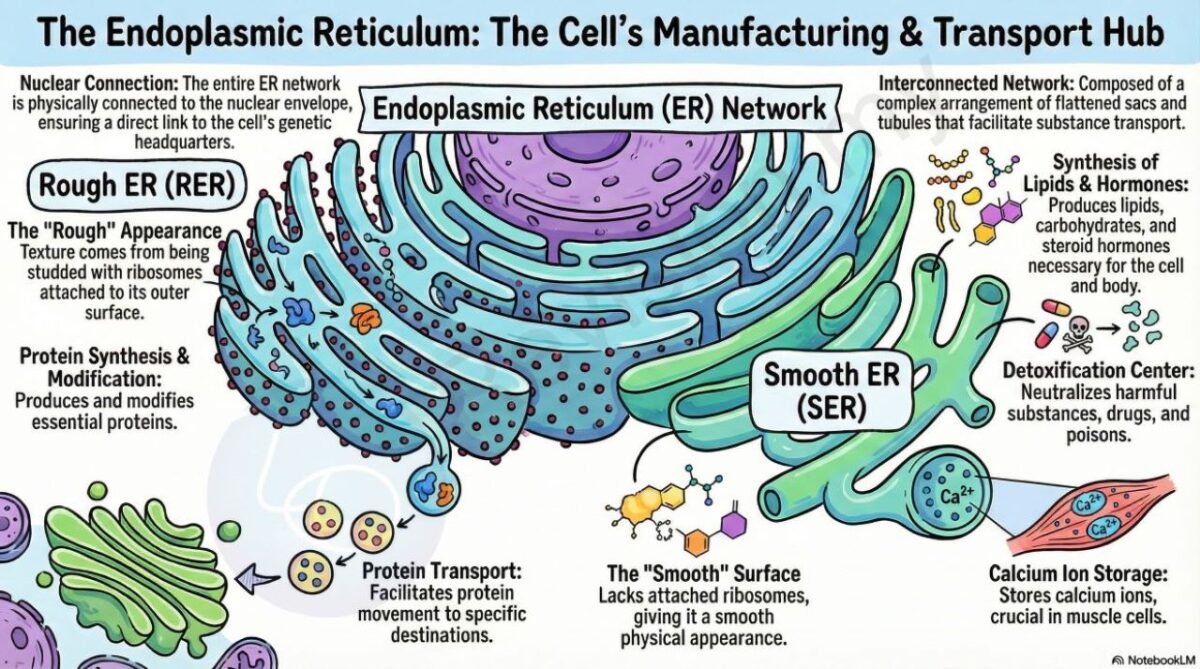
Structure: The endoplasmic reticulum (ER) is a network of flattened sacs and tubules connected to the nuclear envelope. It helps in the synthesis and transport of various substances.
Types of ER:
- Rough ER (RER): Has ribosomes attached to its surface, giving it a rough texture.
- Smooth ER (SER): Does not have ribosomes and has a smooth surface.
Rough ER Functions:
- Produces and modifies proteins.
- Transports proteins to other parts of the cell.
Smooth ER Functions:
- Produces lipids, carbohydrates, and steroid hormones.
- Detoxifies harmful substances such as drugs and poisons.
- Stores calcium ions in muscle cells.
Mitochondria
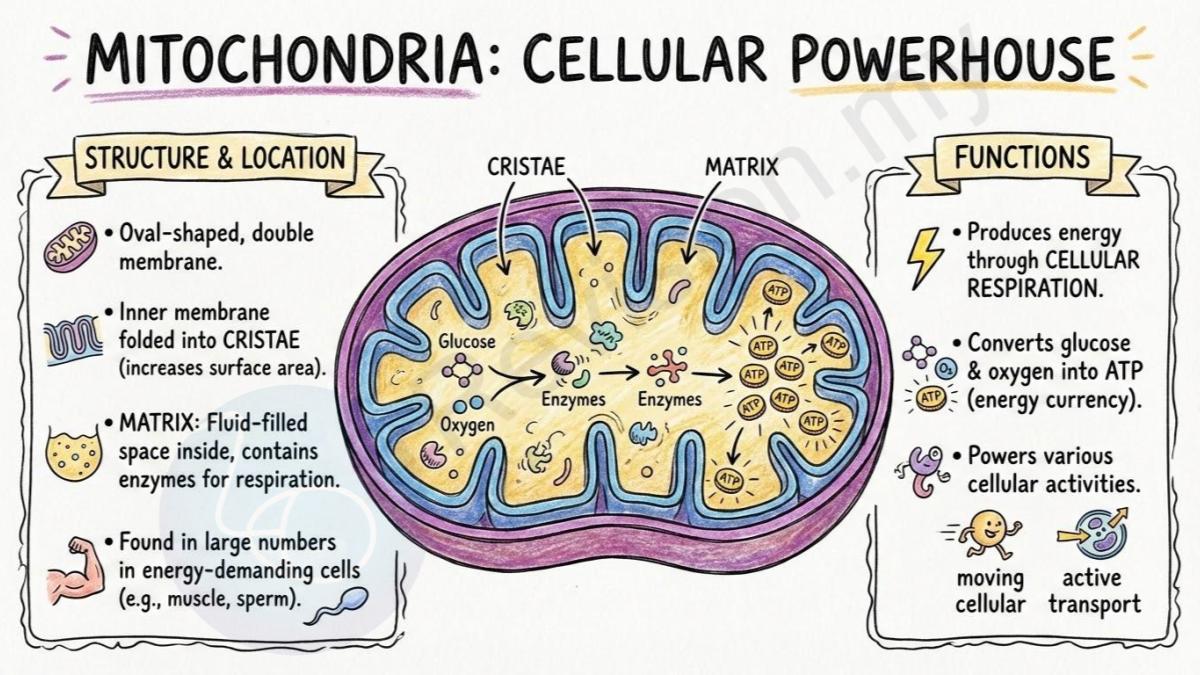
Structure: Mitochondria are oval-shaped organelles with a double membrane. The inner membrane is folded into structures called cristae, which increase the surface area for energy production.
Matrix: The matrix is the fluid-filled space inside the inner membrane that contains enzymes and other molecules needed for cellular respiration.
Functions:
- Produces energy through cellular respiration, converting glucose and oxygen into ATP (adenosine triphosphate), the energy currency of the cell.
- Provides energy to power various cellular activities.
- Found in large numbers in energy-demanding cells like muscle and sperm cells.
Golgi Apparatus
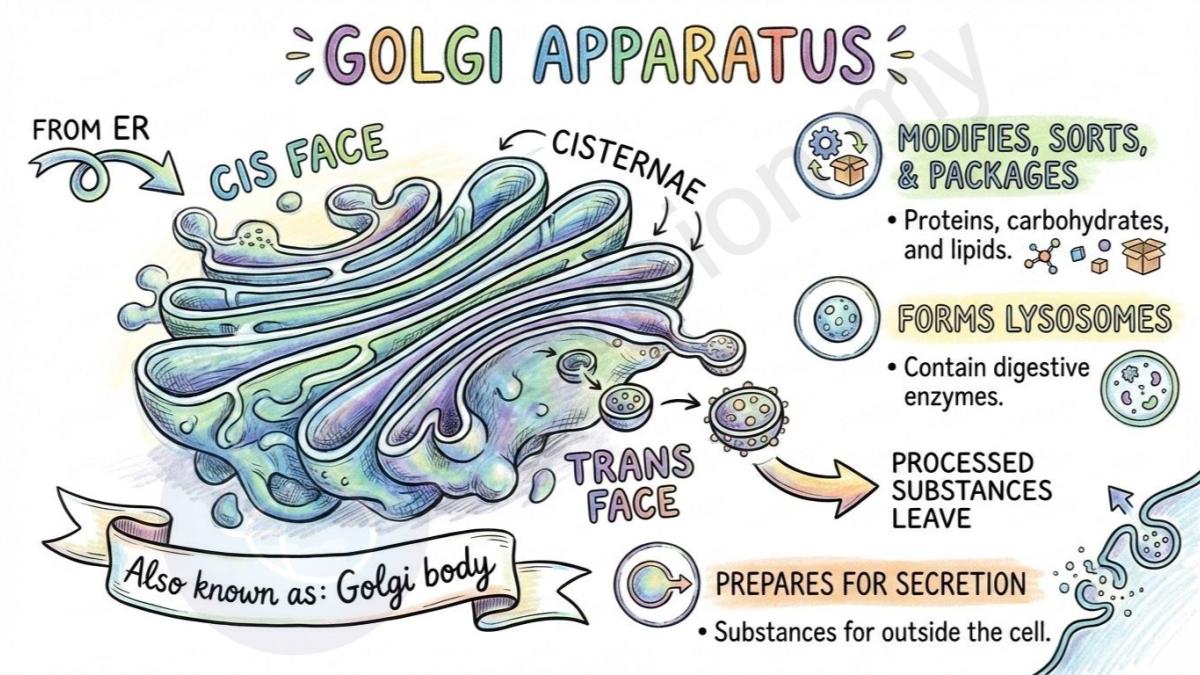
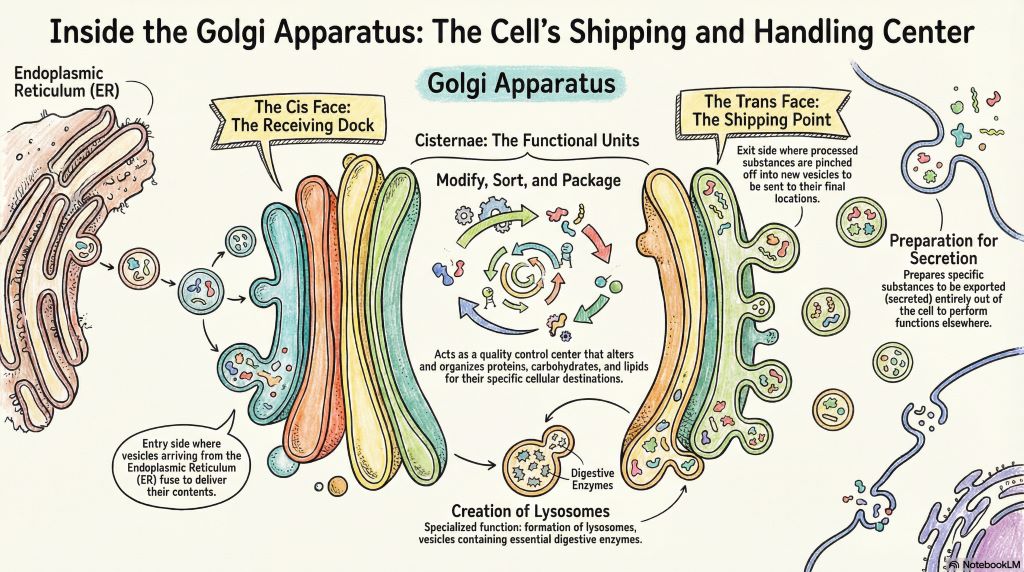
Structure: The Golgi apparatus, also known as the Golgi body, is a stack of flattened, membrane-bound sacs called cisternae.
Cis and Trans Faces: The Golgi apparatus has two faces:
- Cis Face: The side where vesicles from the ER enter.
- Trans Face: The side where processed substances leave the Golgi.
Functions:
- Modifies, sorts, and packages proteins, carbohydrates, and lipids.
- Forms lysosomes that contain digestive enzymes.
- Prepares substances for secretion outside the cell.
Lysosomes
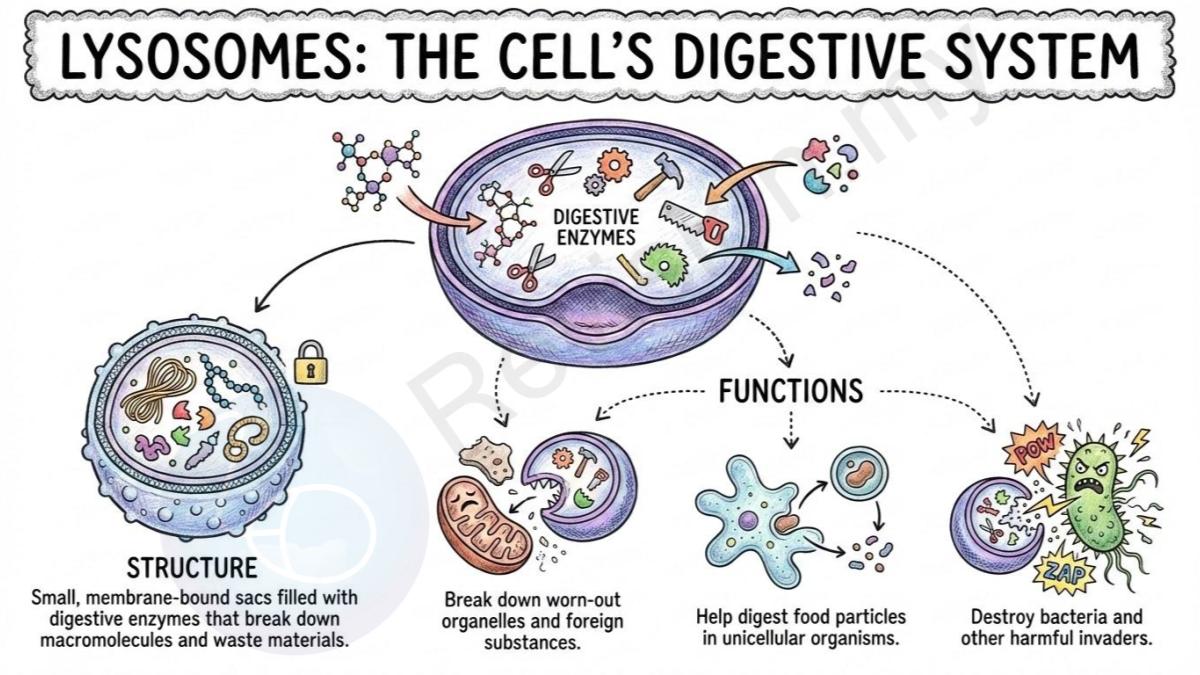
Structure: Lysosomes are small, membrane-bound sacs filled with digestive enzymes that break down macromolecules and waste materials.
Functions:
- Break down worn-out organelles and foreign substances.
- Help digest food particles in unicellular organisms.
- Destroy bacteria and other harmful invaders.
Centrioles
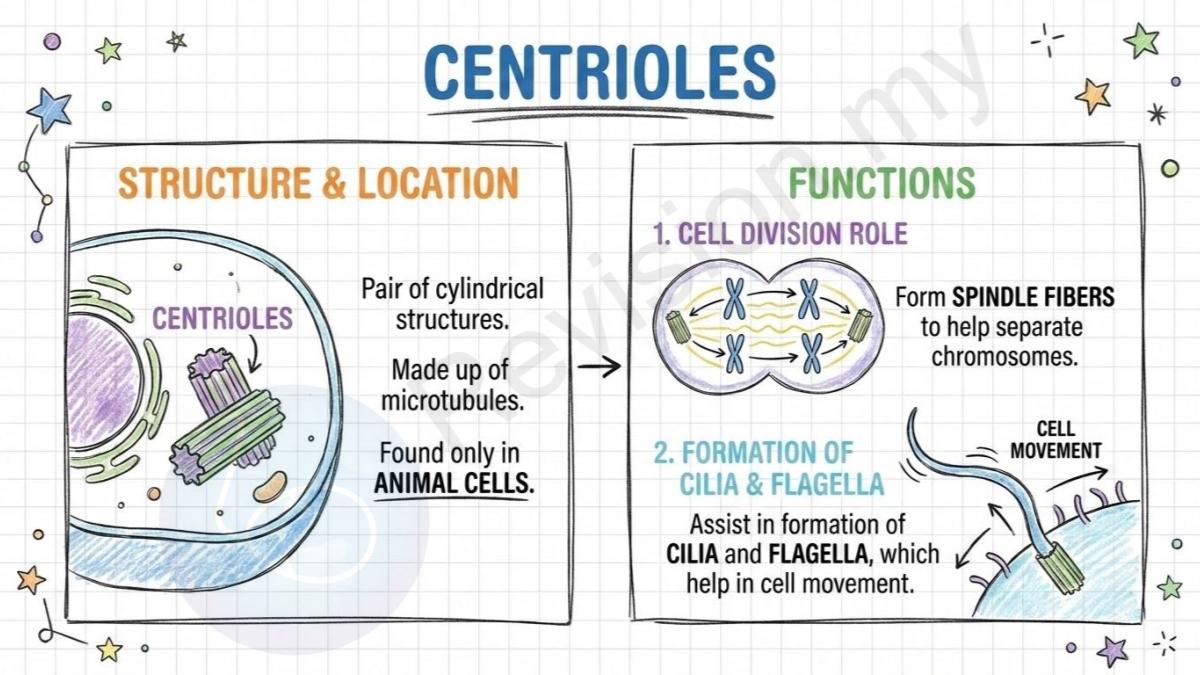
Structure: Centrioles are a pair of cylindrical structures made up of microtubules, found only in animal cells.
Functions:
- Play a role in cell division by forming spindle fibers that help separate chromosomes.
- Assist in the formation of cilia and flagella, which help in cell movement.
Chloroplasts
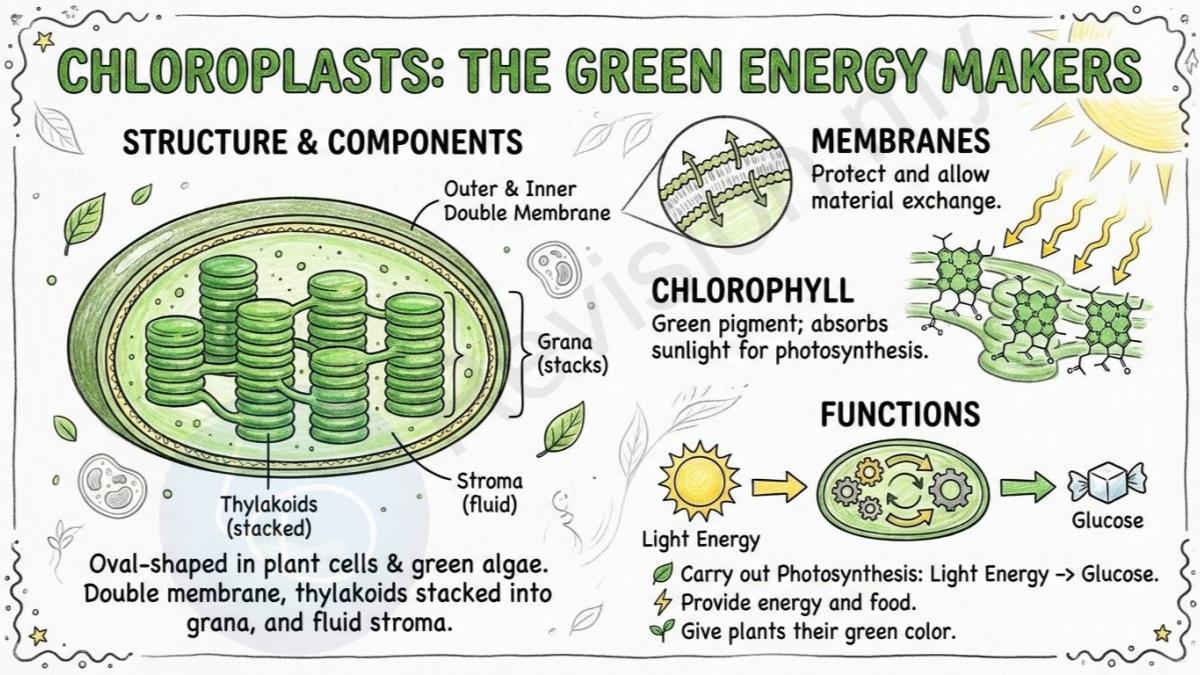
Structure: Chloroplasts are oval-shaped organelles found in plant cells and green algae. They contain a double membrane and structures called thylakoids, which are stacked to form grana. The fluid-filled space inside is known as the stroma.
Membranes: The double membrane protects the chloroplast and allows the exchange of materials.
Chlorophyll: Chloroplasts contain chlorophyll, a green pigment that absorbs sunlight for photosynthesis.
Functions:
- Carry out photosynthesis, converting light energy into glucose.
- Provide energy and food for the plant.
- Give plants their green color due to the presence of chlorophyll.
Plant Cells
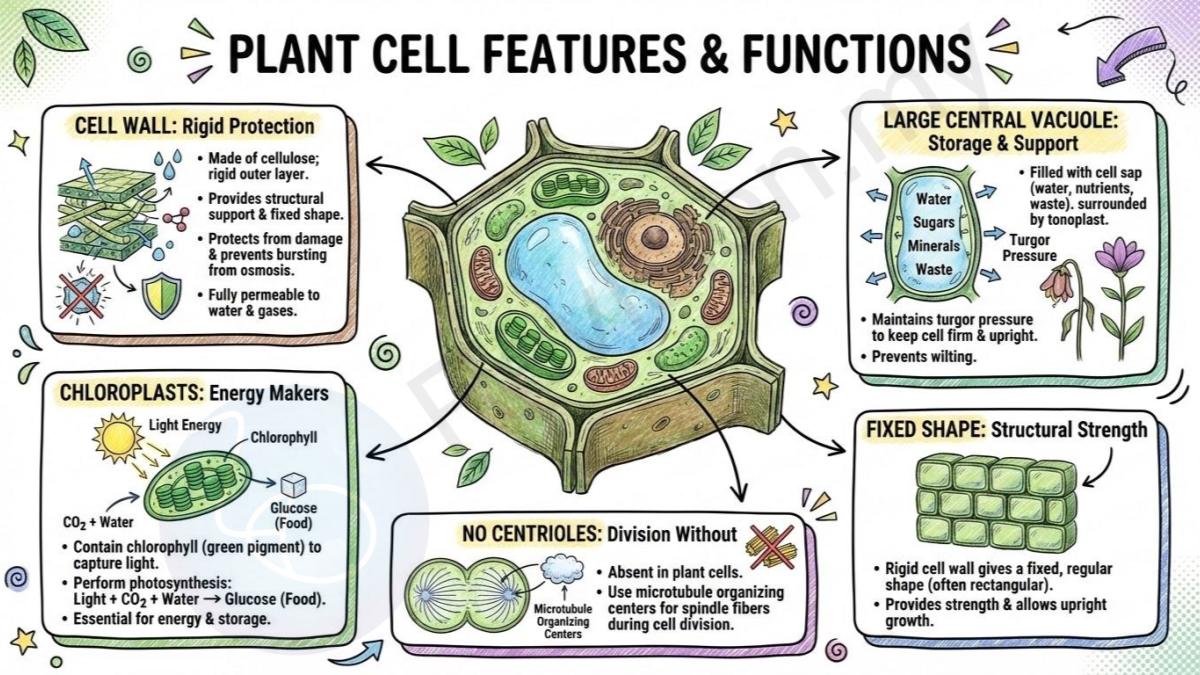
Cell Wall:
- Plant cells have a rigid outer layer called the cell wall, which is made of cellulose. It provides structural support, giving the cell a fixed, regular shape.
- The cell wall protects the plant cell from mechanical damage and prevents it from bursting when too much water enters the cell through osmosis.
- It is fully permeable to small molecules like water and gases, allowing these substances to move freely in and out of the cell.
Chloroplasts:
- Chloroplasts are found only in plant cells and some algae. These organelles contain chlorophyll, a green pigment that captures light energy from the sun.
- Through the process of photosynthesis, chloroplasts convert light energy, carbon dioxide, and water into glucose, which serves as food for the plant.
- Chloroplasts are essential for the plant’s survival, as they provide energy and store food needed for growth and development.
Vacuole:
- Plant cells have a large central vacuole that is filled with cell sap. This vacuole is surrounded by a membrane called the tonoplast.
- The vacuole stores water, sugars, minerals, and other nutrients. It also contains waste products that the cell no longer needs.
- The large vacuole helps maintain turgor pressure, which keeps the plant cell firm and upright. This pressure ensures that the plant maintains its structure and does not wilt.
Shape:
- Due to the presence of a rigid cell wall, plant cells have a fixed, regular shape, often appearing rectangular or square under a microscope.
- This defined shape provides strength and support to the plant, allowing it to grow upright.
Centrioles:
- Centrioles are absent in plant cells. Instead, plant cells use microtubule organizing centers to help organize the spindle fibers during cell division.
Animal Cells
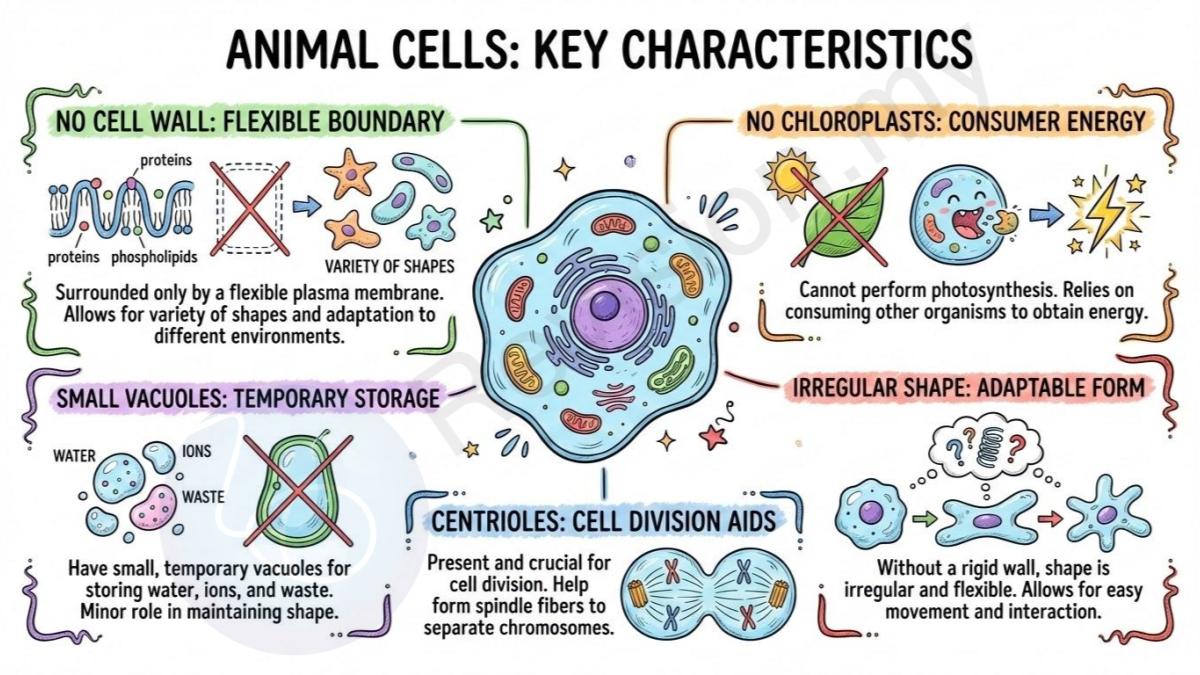
Cell Wall:
- Animal cells do not have a cell wall. They are surrounded only by a plasma membrane, which is a flexible layer made of phospholipids and proteins.
- The absence of a cell wall makes animal cells more flexible, allowing them to take on a variety of shapes and adapt to different environments.
Chloroplasts:
- Chloroplasts are absent in animal cells, which means they cannot perform photosynthesis.
- Since animal cells do not produce their own food, they rely on consuming other organisms to obtain energy.
Vacuole:
- Animal cells have small and temporary vacuoles that store water, ions, and waste materials.
- Unlike the large central vacuole in plant cells, animal cell vacuoles are smaller and play a minor role in maintaining cell shape and structure.
Shape:
- Without a cell wall, animal cells have an irregular and flexible shape, allowing them to change shape as needed.
- This flexibility allows animal cells to move and interact with their environment more easily.
Centrioles:
- Centrioles are present in animal cells and play a crucial role in cell division.
- During cell division, centrioles help form spindle fibers that separate chromosomes, ensuring that each new cell gets the correct genetic material.