13.2 Useful Microorganisms
Role of Microorganisms (No Flashcards)
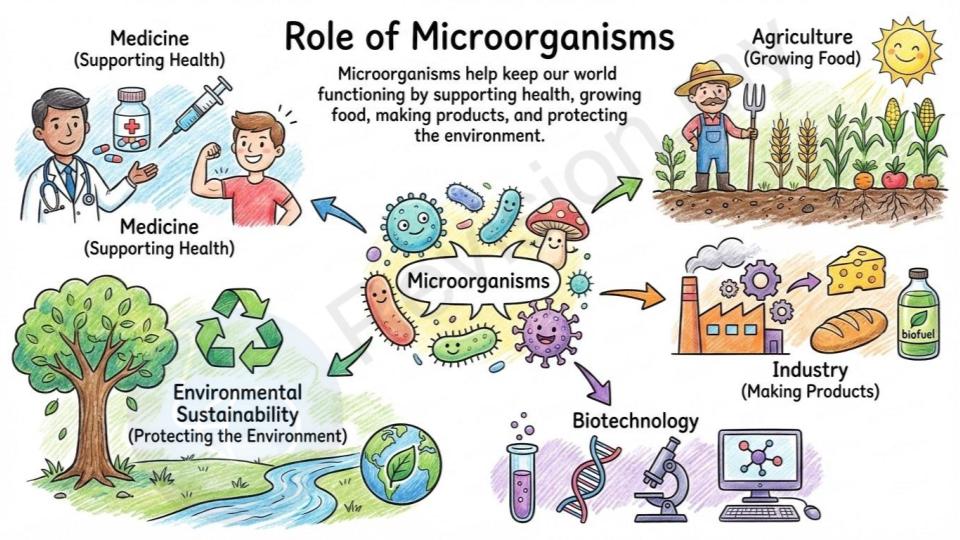
Key Roles: Microorganisms play essential roles in medicine, agriculture, industry, biotechnology, and environmental sustainability. These tiny organisms help keep our world functioning by supporting health, growing food, making products, and protecting the environment.
Use in Medicine
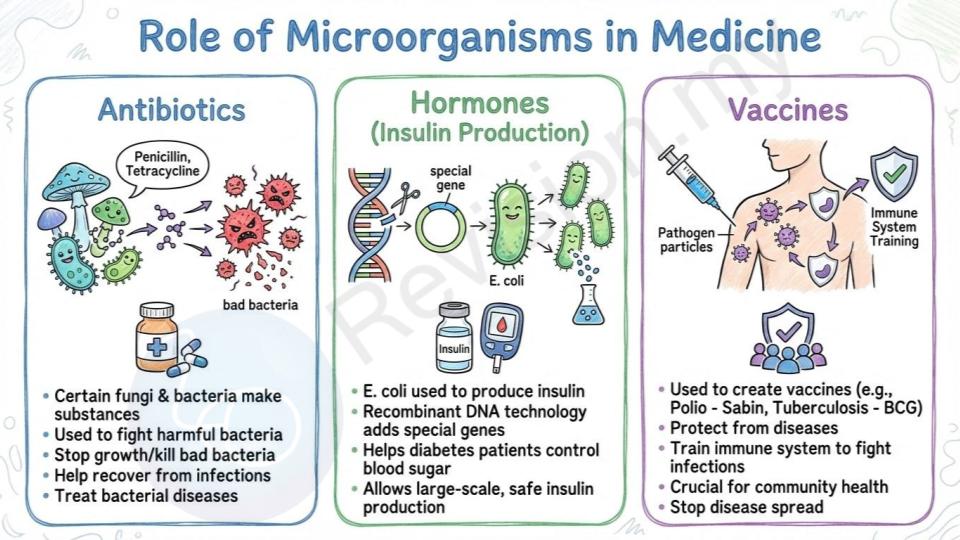
Antibiotics: Certain fungi and bacteria make substances like penicillin and tetracycline, which are used as medicines to fight harmful bacteria. These antibiotics stop the growth of bad bacteria and kill them, helping people recover from infections. This makes them very important for treating bacterial diseases.
Hormones: The bacterium E. coli is used in laboratories to produce insulin using a method called recombinant DNA technology. Scientists add special genes to E. coli to make it produce insulin, a hormone that helps people with diabetes control their blood sugar levels. This method allows us to make large amounts of insulin safely and effectively.
Vaccines: Microorganisms are used to create vaccines that protect people from diseases like polio (with the Sabin vaccine) and tuberculosis (with the BCG vaccine). These vaccines help the body learn how to fight off infections by training the immune system. Vaccines are very important for keeping communities healthy and stopping the spread of dangerous diseases.
Use in Agriculture
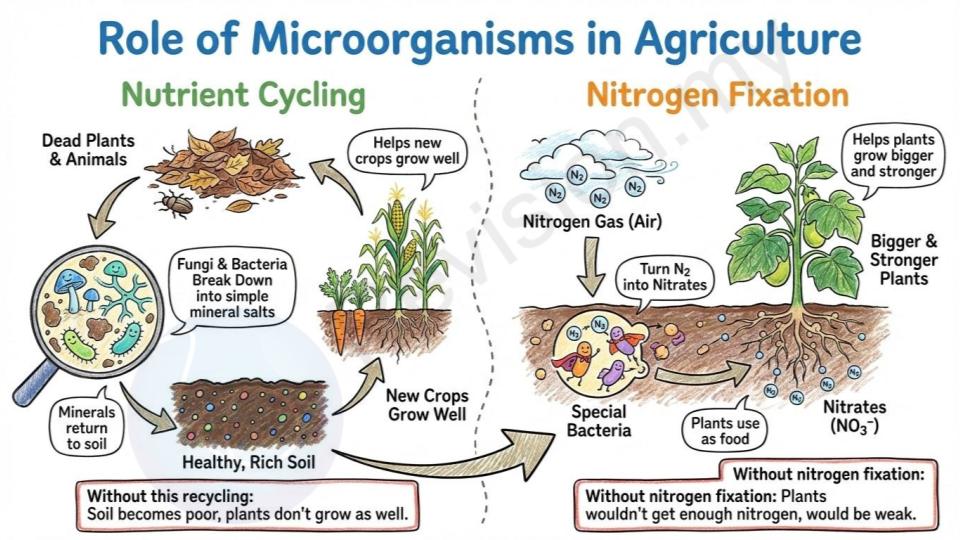
Nutrient Cycling: Fungi and bacteria play an important role in nutrient cycling by breaking down dead plants and animals into simple mineral salts. These minerals, which are nutrients for plants, return to the soil. This process makes the soil healthy, rich, and fertile, which helps new crops grow well. Without this recycling, the soil would become poor and plants wouldn’t grow as well.
Nitrogen Fixation: Special bacteria living in the soil have a unique ability to take nitrogen gas from the air and turn it into nitrates, which plants can use as food. This process helps plants grow bigger and stronger because nitrogen is an essential nutrient for them. Without nitrogen fixation, plants would not get enough nitrogen to grow properly and would be weak.
Use in Industry
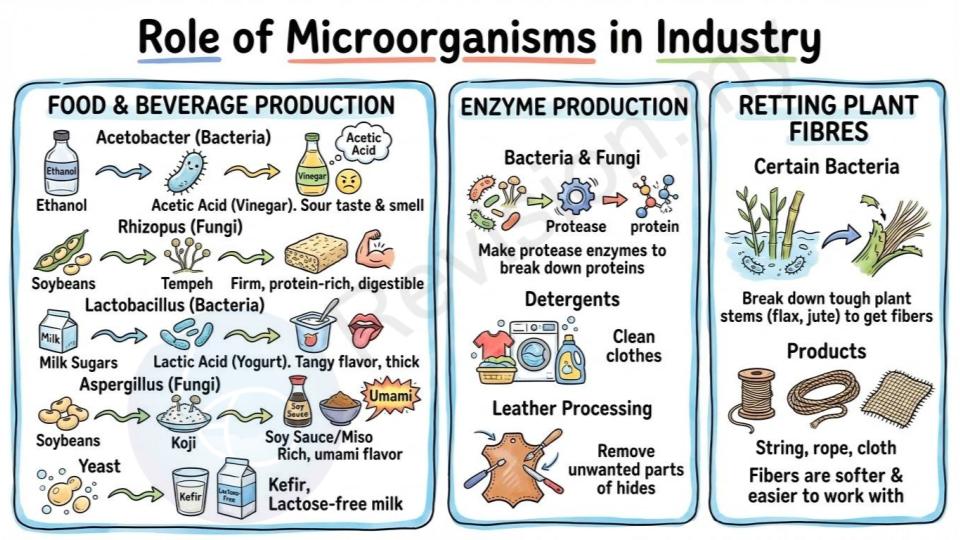
Food and Beverage Production:
- Acetobacter: This type of bacteria changes ethanol (which is a type of alcohol) into acetic acid, which is the main ingredient in vinegar. This means it plays a big role in giving vinegar its sour taste and smell.
- Rhizopus fungi: This fungus is used in making tempeh, a food made from soybeans that has a firm texture and is full of protein. It helps break down the soybeans and make them easier to digest.
- Lactobacillus bacteria: These bacteria are used to make yogurt and other milk products that have a tangy flavor. They help turn the milk sugars into lactic acid, which makes the yogurt thick and gives it a sour taste.
- Aspergillus fungi: This fungus is used in fermenting soybeans to make koji, which is then used to make sauces like soy sauce and miso. Koji gives these sauces their rich, umami flavor.
- Yeast: Yeast is used to make kefir, a fermented milk drink, and also helps make lactose-free milk products for people who can’t digest regular milk.
Enzyme Production: Bacteria and fungi make enzymes like protease, which are proteins that help break down other proteins. These enzymes are used in detergents to help clean clothes and in leather processing to help remove unwanted parts of animal hides.
Retting Plant Fibres: Certain bacteria are used to break down the tough outer layers of plant stems, like flax or jute, to get the fibers inside. These fibers can then be used to make string, rope, and cloth. This process makes the fibers softer and easier to work with.
Biotechnology and Environmental Sustainability
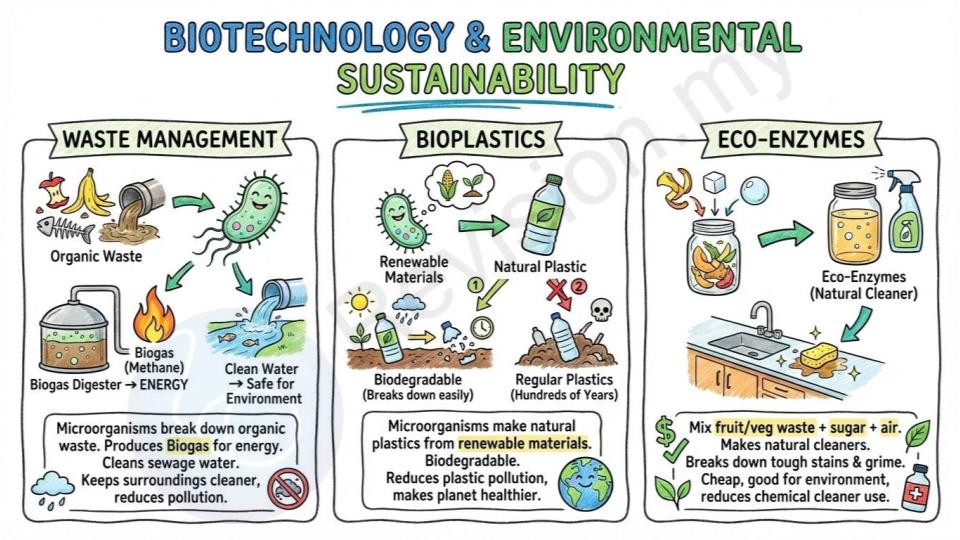
Waste Management: Microorganisms are used to break down organic waste, like food scraps and sewage, into a gas called biogas, which includes methane that can be used as energy. They also help clean sewage water by breaking down harmful substances and turning it into water that is safe to return to the environment. This means these microbes help keep our surroundings cleaner and reduce pollution.
Bioplastics: Some special microorganisms can make natural plastics from renewable materials. These bioplastics can break down easily in the environment, unlike regular plastics, which take hundreds of years to decompose. Using bioplastics helps reduce plastic pollution and makes our planet healthier.
Eco-Enzymes: By mixing fruit and vegetable waste with sugar and air, people can make eco-enzymes, which are natural cleaners. These eco-enzymes can break down tough stains and grime on surfaces, like in kitchens or bathrooms. They are cheap to make, good for the environment, and help reduce the use of chemical cleaners.
Examples of Useful Microorganisms
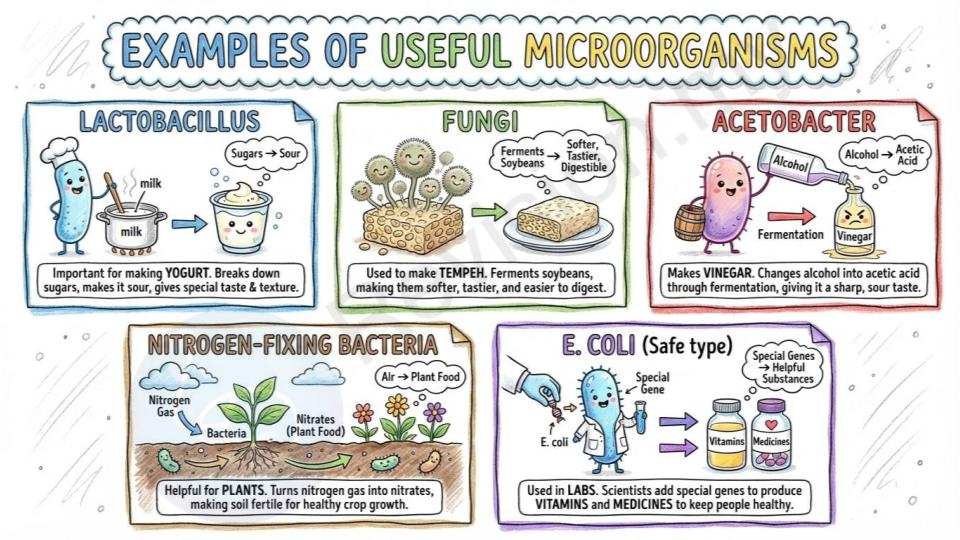
Lactobacillus: This type of bacteria is very important in making yogurt. It helps change milk into yogurt by breaking down sugars and making it sour, which gives yogurt its special taste and texture.
Fungi: Certain fungi are used to make tempeh, a traditional food made from soybeans. The fungi help ferment the soybeans, making them softer, tastier, and easier to digest.
Acetobacter: This bacterium is used to make vinegar, which is a sour liquid often used in cooking. Acetobacter changes alcohol into acetic acid, which gives vinegar its sharp, sour taste. This happens through a process called fermentation, where the bacteria work on alcohol to create vinegar.
Nitrogen-fixing Bacteria: These bacteria live in the soil and are very helpful for plants. They can take nitrogen gas from the air and turn it into a type of food that plants can use, called nitrates. This helps plants grow better and stronger. Because of this, nitrogen-fixing bacteria make the soil more fertile and healthy for crops to grow in.
E. coli: In laboratories, a safe type of this bacterium is used to produce vitamins and medicines. Scientists can add special genes to E. coli to make it produce helpful substances that are used to keep people healthy.
Applications of Lactobacillus sp.
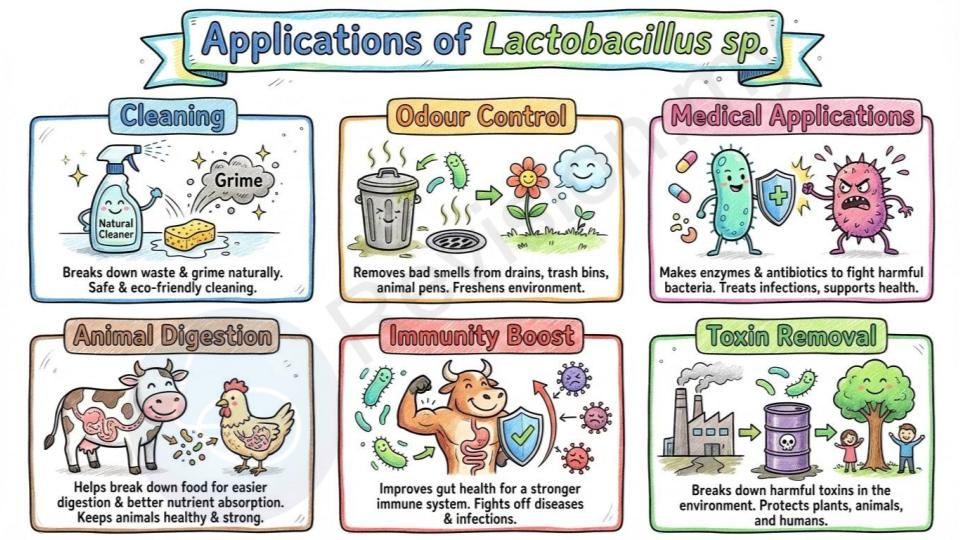
Cleaning: Lactobacillus bacteria are used to clean surfaces and drains in a natural way. They help by breaking down waste and grime, which makes the surface cleaner without using harsh chemicals. This is a safe and eco-friendly way to keep places clean.
Odour Control: These bacteria can help remove bad smells from places like drains, trash bins, and even animal pens. They do this by breaking down the substances that cause the smells, making the environment fresher and cleaner.
Medical Applications: Lactobacillus bacteria can make special enzymes and antibiotics that help fight harmful bacteria in the body. These helpful substances can be used to treat infections and support health.
Animal Digestion: In animals, these bacteria help break down food so it is easier to digest. They also help animals absorb more nutrients from their food, which keeps them healthy and strong.
Immunity Boost: By improving digestion and gut health, Lactobacillus bacteria help animals have a stronger immune system. This means they can fight off diseases and infections more easily.
Toxin Removal: These bacteria can help remove harmful toxins from the environment. They break down or change dangerous substances into safer ones, which helps protect plants, animals, and humans.