16.3 Growth Curves
Growth Curves
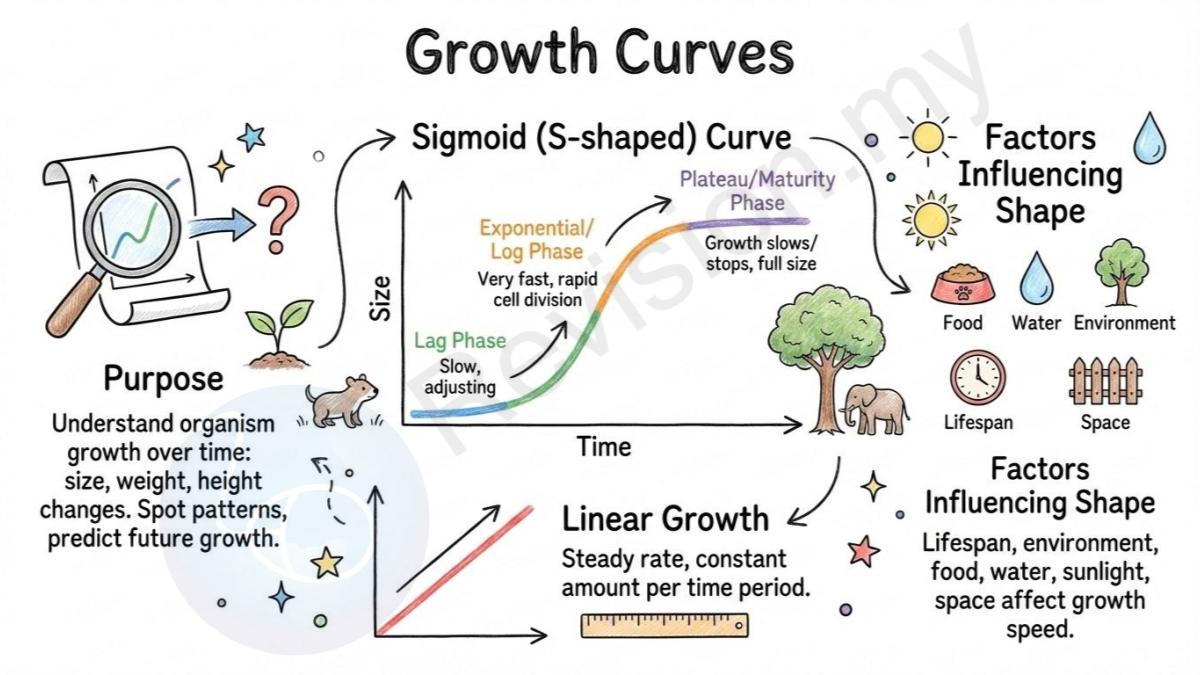
Purpose of growth curves: Growth curves are useful tools that help scientists and students understand how a living organism grows over a period of time. They show how an organism’s size, weight, or height changes from the time it starts growing until it stops or dies. These curves make it easier to spot patterns and trends, and they can also help us predict how the organism might grow in the future.
Sigmoid curve: The sigmoid curve, also known as the S-shaped curve, is the most common type of growth curve. It starts off slowly, then speeds up during the middle stage, and finally slows down again when the organism is mature. This smooth curve looks like the letter “S” and is often used to describe how plants and animals grow.
Sigmoid phases: The sigmoid curve has three main phases that show how growth happens. First is the lag phase, where growth is slow because the organism is just beginning to adjust. Second is the exponential or log phase, where growth becomes very fast because cells divide quickly. The last is the plateau or maturity phase, where the organism has grown as much as it can and growth slows or stops.
General pattern: Most living things follow this S-shaped growth pattern, which makes the sigmoid curve very useful in biology. It helps us understand not just how things grow, but also when they reach their full size and how long it takes.
Linear growth: Sometimes, organisms grow at a steady rate instead of speeding up and slowing down. This kind of growth forms a straight, slanted line when plotted on a graph and is called linear growth. It means the organism grows by the same amount in each time period.
Factors influencing shape: The shape of a growth curve depends on many things. These include how long the organism lives, the kind of environment it lives in, and whether it gets enough food, water, sunlight, and space. All of these factors affect how fast or slow it grows.
Types of Plant Lifespans
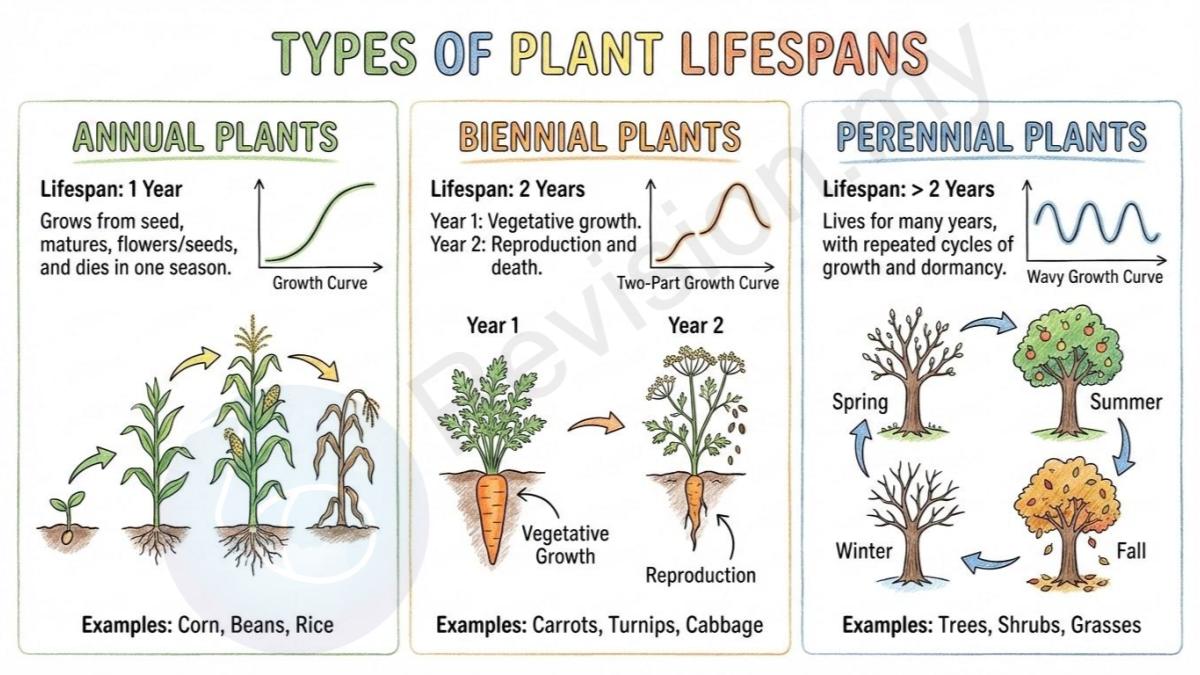
Growth pattern linkage: Plants can be grouped based on how long they live and how they grow during their lives. Each group shows a different kind of growth curve that matches its life cycle and way of reproducing.
Annual plants: Annual plants are those that grow from a seed, become mature, produce flowers and seeds, and then die all in the same year. Their entire life cycle fits into one growing season, and their growth usually follows a complete sigmoid curve from start to finish.
Annual cycle stages: These plants go through several clear stages. First, they germinate, which means the seed starts to grow. Then, they go through vegetative growth, where they grow leaves and stems. Next, they reproduce by forming flowers and seeds. Finally, the plant dies after completing its life cycle.
Annual examples: Some common examples of annual plants that people grow are corn, beans, and rice. These plants grow fast and are harvested in a short time.
Biennial plants: Biennials need two full years to finish their life cycle. In the first year, they grow roots, leaves, and stems but don’t flower. In the second year, they produce flowers and seeds, and then they die.
Biennial examples: Carrots, turnips, and cabbage are examples of biennial plants. You often eat them after the first year before they produce seeds.
Biennial curve shape: The growth curve for biennials also looks like a sigmoid curve, but it’s divided into two parts: one for the first year of vegetative growth, and another for the second year when the plant focuses on reproduction.
Perennial plants: Perennials are plants that live for more than two years. They don’t die after flowering once but keep growing and flowering many times during their life.
Perennial examples: Trees, shrubs, and some types of grasses are perennial plants. They can live for many years and produce flowers and seeds again and again.
Perennial growth pattern: Perennial plants usually grow during certain times of the year and rest during others. For example, many grow in the spring and summer and become dormant in the fall and winter. This pattern creates waves of growth instead of just one smooth curve.
Curve variability: Because they live for a long time and face changing seasons and environments, the growth curves of perennials can look quite different from the simple sigmoid shape. Their curves may have several peaks and dips depending on conditions.
Phases of Growth
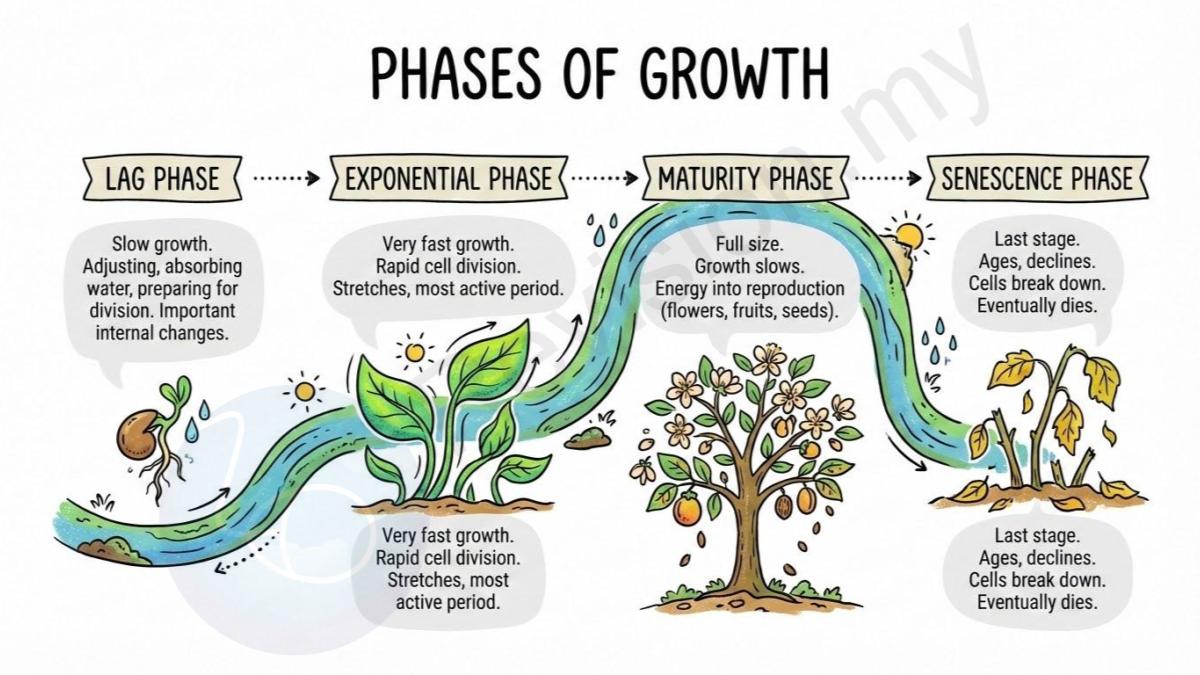
Growth phase definition: Growth doesn’t happen all at once. Every living thing grows in different stages or phases, and these phases usually follow a predictable pattern that scientists can study and understand.
Lag phase characteristics: The lag phase is the very beginning of growth. During this time, growth is slow because the organism is adjusting to its surroundings. In plants, this includes absorbing water, starting metabolism, and preparing for cell division. You might not see any big changes yet, but important things are happening inside.
Exponential phase traits: During the exponential phase, growth becomes very fast. Cells start dividing quickly, the plant stretches and grows taller, and different cells begin to do different jobs. This is the most active growth period for a plant.
Maturity phase traits: In this phase, the organism has reached its full size. Growth slows down, and the plant begins to put energy into making flowers, fruits, and seeds. The plant is now focused more on reproduction than on getting bigger.
Senescence phase traits: The senescence phase is the last stage of the plant’s life. During this time, the plant slowly begins to age and decline. Cells start to break down, and the plant stops producing new tissues. Eventually, the plant dies.
Factors Affecting Growth
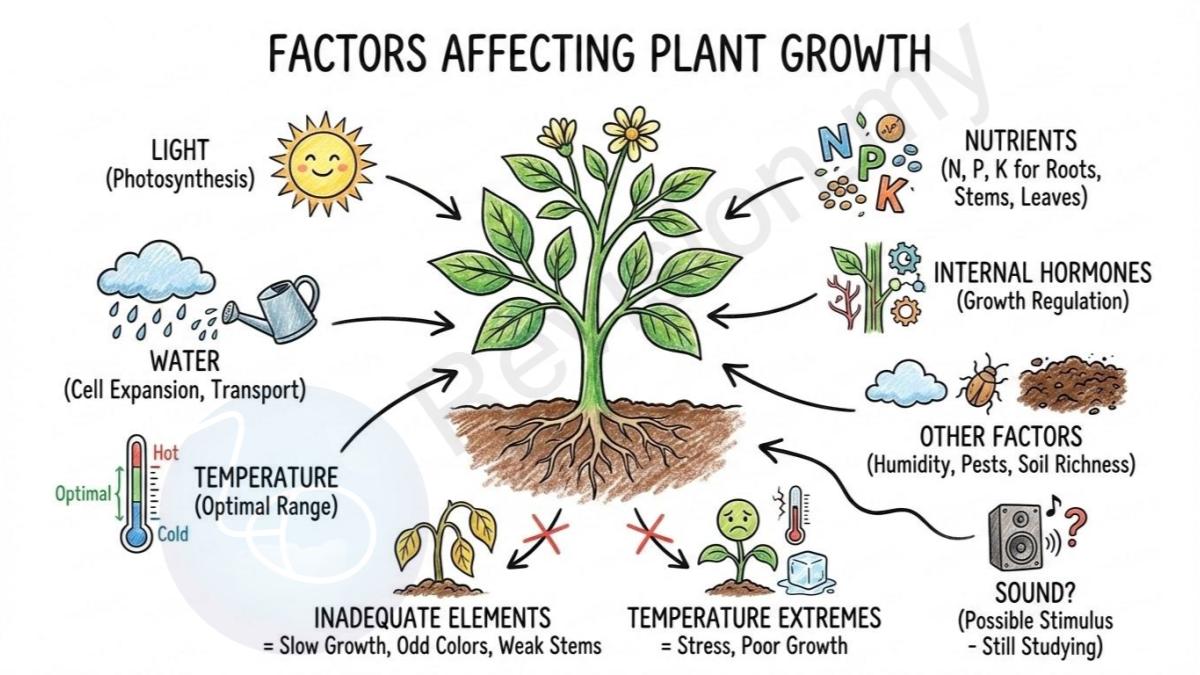
Combined influences: A plant’s growth is affected by many things working together. Some of these come from inside the plant, like plant hormones. Others come from the outside, like weather, sunlight, water, and soil quality.
Nutrient importance: Just like people need a healthy diet, plants need certain nutrients to grow strong. These include nitrogen, phosphorus, and potassium, which help plants build roots, stems, leaves, and flowers.
Nutrient deficiency effects: If a plant doesn’t get enough of the nutrients it needs, it may grow slowly, develop odd colours like yellow leaves, or have weak stems. Some parts may not grow properly at all.
Water and light roles: Water helps cells expand and keeps the plant firm and upright. It also helps carry nutrients throughout the plant. Light is needed for photosynthesis, the process by which plants make their own food using sunlight.
Inadequate water/light: If a plant does not get enough water or light, it may not be able to carry out photosynthesis or expand its cells. This can cause growth to slow down or stop completely.
Temperature limits: Every plant grows best within a certain temperature range. If it gets too hot or too cold, the plant can become stressed, and its enzymes may not work properly, leading to poor growth or damage.
Sound as a stimulus: Some experiments show that certain types of sound or music might help plants grow better. These sounds may affect the way cells work, but scientists are still studying this.
Other influencing factors: Many other things can affect how a plant grows. These include how rich the soil is, how humid the air is, whether pests or diseases are present, and how much of each hormone the plant produces.
Detailed Look at Growth Curve Phases and Their Characteristics
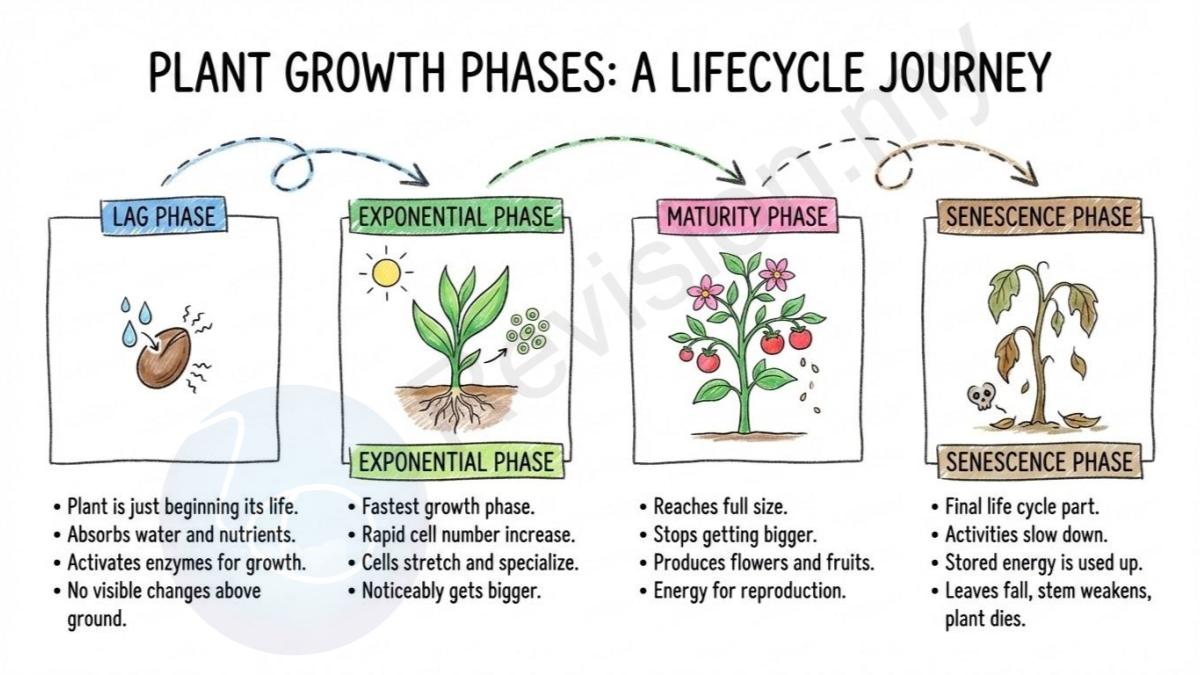
Lag phase details: In the lag phase, the plant is just beginning its life. It takes in water and nutrients from the environment and starts activating enzymes that help with growth. Even though the plant is getting ready to grow, you may not see any visible changes above the ground.
Exponential phase details: This phase is where the plant grows the fastest. The number of cells increases rapidly, and cells stretch and specialise to do specific jobs like making food or supporting the plant. The plant gets noticeably bigger in this phase.
Maturity phase details: Once the plant reaches its full size, it enters the maturity phase. At this point, it stops focusing on getting bigger and starts producing flowers and fruits. The plant’s energy is now directed toward making seeds and reproducing.
Senescence phase details: The senescence phase is the final part of the plant’s life cycle. The plant slows down all activities, uses up its stored energy, and begins to break down. The leaves may fall off, the stem may become weak, and eventually the plant dies, completing its life journey.